Inclusive excellence requires more than welcoming diverse learners into the same fixed pathway.
Students arrive with different backgrounds, goals, responsibilities, interests, identities, learning histories, strengths, constraints, and support needs. Some are traditional students. Some are working adults. Some are first-generation learners. Some are parents, veterans, career changers, multilingual learners, neurodivergent learners, or students balancing school with work and caregiving.
A one-size-fits-all model often fails to see the full person.
Gobekli helps schools and learning providers build a Human Intelligence Layer: a trusted, living layer of context that helps learners, educators, institutions, systems, and AI understand learning, experience, evidence, goals, capability, and opportunity over time.
This use case explores how schools can use learner-owned records, trusted evidence, Passport Pages, Pythia-guided reflection, and institutional insight to create more customized educational pathways.
Personalization is not about giving every student a different, isolated experience.
It is about making education responsive enough to recognize each learner’s context while still holding meaningful standards, shared expectations, and institutional purpose.
A more inclusive school can ask:
When schools can answer these questions with care, they can move from generic support to more meaningful guidance.
The goal is not to lower expectations.
The goal is to build pathways that help more students reach them.
Gobekli’s ecosystem connects individual agency with institutional learning.
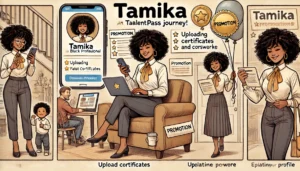
TalentPass gives learners a place to build and control a living profile of their learning, experiences, skills, goals, projects, credentials, and evidence.
TalentSync helps organizations and learning providers understand patterns across people, programs, needs, outcomes, and opportunities.
Passport Pages create trusted, permission-based relationships between people and institutions. They can support resource sharing, credential exchange, advising, employer partnerships, learner support, and long-term engagement.
Pythia helps learners, advisors, educators, and institutions turn context into useful reflection, questions, recommendations, and next steps.
Together, these systems support a more adaptive educational model. A learner can own and share relevant context. An institution can respond with better guidance. Advisors and educators can see patterns without reducing students to static categories. AI tools can work from better human context.
Course selection is often treated as a scheduling task. For many students, it is actually a meaning-making task.
A student may be interested in environmental science, but unsure how it connects to career options, research, community work, policy, design, public health, sustainability, or entrepreneurship.
Through a TalentPass profile and Pythia-guided conversations, the student can explore interests, strengths, goals, past experiences, and emerging possibilities. Instead of only receiving a list of courses, the student can see how different courses connect to pathways and future opportunities.
A personalized pathway might connect:
This helps students understand why a pathway matters, not just what they need to register for.
When students can see themselves in the pathway, engagement becomes more durable.
The transition from school to work is not the same for every learner.
Some students need help choosing a direction. Some need help translating experience into employer language. Some need internships. Some need confidence. Some need credentials. Some need stronger evidence. Some need help seeing how their identity, values, and skills can belong in a field.
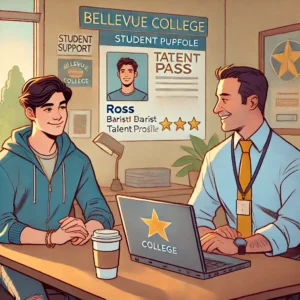
TalentPass can help students share a purpose-specific profile with a career advisor, mentor, faculty member, employer partner, or workforce program.
That profile might include academic achievements, projects, internships, work experience, extracurricular leadership, community contributions, reflections, goals, skills, and credentials.
With richer context, career guidance becomes more specific:
This turns career guidance from generic advice into an individualized planning conversation.
Personalized pathways do not only happen in advising offices.
They can also shape classroom and program design.
When educators understand the aggregate profile of a class, they can adapt examples, assignments, supports, projects, and discussions to fit the students actually in the room.
For example, a professor teaching multicultural studies may learn that the class includes students with varied languages, international experiences, community leadership, military experience, or caregiving responsibilities. That context can help the professor choose examples and assignments that make the course more relevant and inclusive.
A technical program may learn that many students need additional writing support. A writing-intensive program may learn that students bring strong workplace problem-solving but need help translating that experience into academic form. A career pathway program may learn that students need more employer-connected projects earlier in the sequence.
The point is not to expose individual student details broadly.
The point is to help programs become more responsive using appropriate, permissioned, and aggregated insight.
Students’ needs change over time.
A student may enter a program feeling confident, then struggle with time management after taking on more work hours. Another may face a difficult project that affects motivation. Another may need help navigating childcare, transportation, financial stress, academic expectations, or a shift in career goals.
A more responsive support model uses context to offer timely help.
With appropriate permissions and boundaries, Passport Pages and learner profiles can help advisors, tutors, counselors, and support staff understand what kind of support may be useful.
Support might include:
Pythia can also support reflection by helping a learner prepare for an advising conversation, clarify what they are struggling with, or identify questions they want to ask.
This keeps support human-centered. AI can help organize and prompt. People still make the caring, contextual decisions.
Inclusive excellence requires institutional learning.
Schools need to understand where students are thriving, where pathways are unclear, where support is arriving too late, which barriers are common, which credentials matter, and which experiences lead to stronger outcomes.
TalentSync can help learning providers see patterns across programs and learner groups while preserving appropriate privacy boundaries.
Leaders might ask:
This kind of insight should be used to improve systems, not label students.
That distinction matters. Inclusive excellence is not achieved by predicting who will struggle and sorting them accordingly. It is achieved by redesigning learning environments so more people can succeed.
Customized pathways require trust.
Learners should know what information they control, what they are sharing, why it is useful, who can access it, and how it may affect advising, support, recognition, or opportunity.
Schools should be careful not to turn personalization into surveillance.
A responsible system should protect:
The goal is not to collect every detail about students.
The goal is to help learners use relevant context to receive better guidance, support, recognition, and opportunity.
Customized educational pathways can make inclusive excellence more practical.
Learners can see how their experiences, interests, goals, and evidence connect to courses, credentials, projects, support, and careers.
Educators can design learning experiences with better context.
Advisors can guide students with more precision.
Institutions can improve programs based on real learner journeys.
AI tools can become more useful because they are grounded in trusted human context rather than disconnected data.
A school committed to inclusive excellence does not need to choose between personalization and rigor.
It can build pathways that recognize each learner more fully while helping them meet meaningful standards and move toward opportunity.
This article describes Gobekli’s product vision and related future-state use cases. Current product capabilities, availability, and implementation options may differ as TalentPass, TalentSync, Passport Pages, Pythia, and related features continue to develop. For the latest status, see our Product Availability page.