What a Gobekli Partnership Could Look Like for a School or Learning Provider

What a Gobekli Partnership Could Look Like for a School or Learning Provider

Schools and learning providers create enormous value every day, but much of that value becomes difficult to see once learning is spread across courses, projects, credentials, advising, work experience, internships, extracurricular activities, and life after graduation.

Gobekli helps institutions build a Human Intelligence Layer: a trusted, living layer of context that helps learners, educators, institutions, systems, and AI understand learner growth, capability, evidence, goals, and opportunity over time.

This article uses a fictional school partnership to show how Gobekli could help a learning institution move from disconnected records toward a more continuous learner intelligence system.

Product status note: This article describes Gobekli’s product vision and an illustrative school partnership scenario. TalentPass is currently available in public beta. TalentSync is available through Launch Partnerships, Executive Workshops, and collaborative implementation. For current product availability and implementation status, see our Product Availability page.

The Scenario: A School Wants Learning to Stay Visible

Imagine a regional school, college, or learning provider serving students who are preparing for work, continuing education, internships, career transitions, and lifelong growth.

The institution already creates meaningful learner development every day. Faculty teach. Advisors guide. Students complete projects. Career services builds employer connections. Departments issue credentials. Learners gain confidence, skills, relationships, and direction.

But the full picture is fragmented.

Grades, transcripts, badges, portfolios, advising notes, internship feedback, projects, and career outcomes often live in different places. Students may struggle to explain what they can actually do. Employers may struggle to understand learner capability beyond a credential. The institution may lose visibility into growth after graduation.

A Gobekli partnership would not begin by forcing the school into a fixed software rollout.

It would begin by understanding the institution’s goals, learners, systems, constraints, and opportunities.


Phase 1: Strategic Planning and Readiness

The partnership would start with collaborative planning sessions.

Gobekli and the school would identify the learner success challenge that matters most. That might be career readiness, advising, internships, workforce partnerships, continuing education, alumni engagement, credential visibility, or AI-enabled learner support.

Together, the school and Gobekli would clarify:

  • Which learner population should be supported first
  • What outcomes the school wants to improve
  • Which records, credentials, or experiences matter
  • Where learner growth is currently hard to see
  • Which students, staff, faculty, or partners need to participate
  • What information should remain private, shared, verified, or portable
  • How the pilot should define success

This phase is important because a Human Intelligence Layer is not simply a data project. It depends on trust, participation, clear purpose, and returned value for learners.


Phase 2: A Focused Pilot With Students and Educators

Instead of rolling out a broad institutional transformation all at once, the school would begin with a focused pilot.

A pilot might include a career pathway program, internship cohort, advising office, workforce development initiative, continuing education program, or student success team.

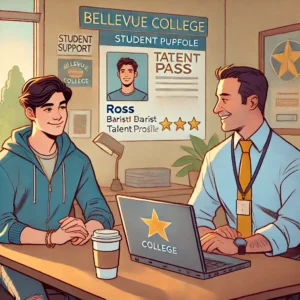
Students could use TalentPass to begin building a living, learner-controlled record of their experiences, skills, goals, projects, credentials, and evidence. Educators and advisors could help students connect what they are learning to real outcomes and next steps.

TalentSync could support the institutional side of the pilot by helping the school understand participation, learner needs, capability patterns, workforce alignment, and opportunities for improvement.

The goal would not be to create more administrative burden.

The goal would be to make the learning already happening more visible, useful, and connected.

Photo placement: if there is a pilot/testing/student group image, place it here after Phase 2.


Phase 3: Connecting Records, Evidence, and Learner Stories

Traditional academic records remain important, but they rarely tell the whole story.

A transcript may show that a student completed a course. It may not show the project they completed, the problem they solved, the teamwork they demonstrated, the reflection that clarified their direction, or the evidence that shows what they can now do.

In a Gobekli-supported pilot, the school could help learners connect formal records with richer evidence:

  • Courses and credentials
  • Projects and assignments
  • Internships and work-based learning
  • Faculty or mentor feedback
  • Skills demonstrated through real work
  • Student reflections and goals
  • Career-readiness milestones
  • Authorized work samples or portfolio items

This creates a more meaningful learner profile without reducing the student to a static score or transcript.

Phase 4: TalentPass for Learner Ownership

TalentPass gives learners a personal foundation for understanding and sharing their growth.

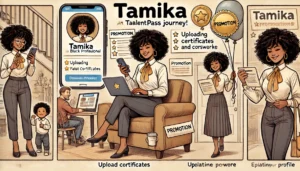
Students can use TalentPass to organize experiences, capabilities, goals, and evidence in a way that stays useful beyond a single class, program, or institution.

That matters because learners move through many contexts. They apply for internships. They seek jobs. They pursue more education. They join teams. They build careers. They continue growing long after graduation.

A Universal Talent Passport should help them carry a clearer, more trusted story forward.

For schools, this creates a better learner experience: students can see their own growth, build confidence, prepare for opportunities, and make the value of their education more visible.


Phase 5: Passport Pages and Permission-Based Institutional Connections

A future-facing school partnership would also involve permission-based connections between learners and the institution.

Passport Pages are designed to create trusted relationships between people and organizations. In a school context, that could help the institution share resources, request relevant information, issue or connect credentials, support advising, and maintain lifelong learner relationships.

The key is permission.

Learners should understand what is being shared, why it is useful, who can access it, and how it supports them. A learner-controlled record should not become an institutional surveillance file.

Done well, this creates shared value:

  • Learners receive better guidance, recognition, and opportunity support
  • Schools gain better insight into learner needs and outcomes
  • Advisors can work from richer context
  • Employers can understand capability more clearly
  • Alumni relationships can continue after graduation

Phase 6: TalentSync for Institutional Learning

TalentSync helps organizations build a shared understanding of people, work, capabilities, needs, and outcomes.

For a school or learning provider, that means the institution can begin to understand learner growth across programs, pathways, experiences, and time.

Leaders could ask better questions:

  • Which experiences are helping students build confidence and capability?
  • Where are students struggling to connect learning to opportunity?
  • Which credentials need more context to be useful?
  • Which programs are creating strong workforce outcomes?
  • Where do advisors need better information?
  • Which employer partnerships are producing meaningful learner growth?
  • How can AI support students more responsibly and personally?

This turns learner records into institutional learning.

Phase 7: Future Planning and Continuous Improvement

After the pilot, Gobekli and the school would review what was learned.

The next step might be expanding to another program, strengthening employer partnerships, improving advising workflows, connecting additional credential systems, supporting alumni, or building more structured learner profiles for specific opportunities.

The partnership would evolve based on real use, not abstract technology promises.

That is the deeper point: schools do not need another disconnected system. They need a way to continuously understand learner growth and turn that understanding into better support, better opportunities, and better institutional decisions.

Trust, Privacy, and Student Agency

Any system involving learner records must be designed with care.

Gobekli’s vision depends on learner agency, transparency, permission, and appropriate use. Students should not be treated as raw data sources. They should benefit directly from the intelligence they help create.

A responsible school partnership should define:

  • What information belongs to the learner
  • What information belongs to the institution
  • What can be shared
  • What requires consent
  • What evidence supports a claim
  • Who can access which views
  • How learners can correct, update, or choose not to share information

The goal is not more surveillance. The goal is more useful, trusted, learner-centered intelligence.

What This Partnership Makes Possible

A Gobekli school partnership could help institutions move beyond isolated records and one-time credentials.

It could help learners understand themselves more clearly, show what they can do, connect learning to opportunity, and carry evidence of growth forward throughout life.

It could help educators and advisors support students with better context.

It could help institutions strengthen programs, workforce relationships, alumni engagement, and learner outcomes.

And it could help AI tools become more useful by grounding them in trusted human context rather than disconnected data.

For schools and learning providers, the future is not just digital records.

It is a living Human Intelligence Layer for lifelong learner success.

Product vision note: This article describes Gobekli’s product vision and illustrative future-state use cases. Current product capabilities, availability, and implementation options may differ as TalentPass, TalentSync, Passport Pages, Pythia, and related features continue to develop. For the latest status, see our Product Availability page.