Revolutionizing the Digital Realm: Solid and Pythia-UTP’s Shared Vision
Originally published September 21, 2023. Updated to distinguish the Solid Project from Gobekli’s current technology while exploring the principles they share.
This article does not announce a partnership, endorsement, or technical integration between the Solid Project and Gobekli.
The internet depends on personal data, but most people have limited control over how their information is stored, combined, interpreted, and reused.
Education and employment data are especially fragmented.
Schools maintain transcripts and learning records. Employers hold work histories and performance information. Credential platforms store badges and certifications. Professional networks capture relationships and self-reported experience. Job platforms collect applications that candidates may never be able to access again.
Each organization sees one part of the person.
The individual is expected to repeatedly reconstruct the whole.
The Solid Project, initiated by World Wide Web inventor Sir Tim Berners-Lee, offers a different architectural vision: people can maintain data in personal online data stores called Pods and decide which people, applications, and AI agents are permitted to access it.
Gobekli is approaching a related human problem from the perspective of learning, work, and life.
TalentPass helps people build a living source of truth about their experiences, capabilities, credentials, evidence, goals, and growth. Pythia helps them understand and use that information. TalentSync helps organizations participate in trusted, mutually beneficial exchanges with individuals.
Solid and Gobekli are separate projects with different technical scopes.
But the principles behind Solid illuminate several questions that every Human Intelligence Layer must confront:
- Who controls human data?
- Can people continue using their information after leaving an application or institution?
- Can multiple services work with the same source of truth?
- Can an individual grant access for one purpose without exposing everything?
- Can AI help people without taking control away from them?
- Does intelligence created from personal data return value to the person?
These questions are becoming more important as AI gains the ability to interpret and act on increasingly complete representations of our lives.
What Is Solid?
Solid is an open-source project working to create a more person-centered web.
Its central concept is the Solid Pod, a personal online data store in which someone can maintain information and control which applications, people, and AI agents can read or modify particular parts of it.
The application and data do not have to remain permanently bundled together.
This distinction matters.
In most digital services, a company stores a person’s information inside its own application. If the person changes services, they may lose the context, relationships, and history they created. Even when an export is available, it may be incomplete or difficult to reuse.
Solid envisions a model in which people can maintain data independently and authorize compatible applications to work with it.
The person could use one application today and another tomorrow without necessarily abandoning the underlying information.
Solid uses open and interoperable formats and protocols to support this separation among:
- The individual
- Their data
- The application
- The data-storage provider
- Other people or systems receiving permission
This is infrastructure for personal data control. It is not specifically a talent, education, or employment product.
Why This Matters for Talent Data
Talent data accumulates throughout a person’s life.
It can include:
- Education and training
- Jobs and professional roles
- Activities and responsibilities
- Credentials and licenses
- Projects and work samples
- Skills and knowledge
- Assessments and outcomes
- Endorsements and recognition
- Goals, interests, and reflections
- Relationships and community participation
This information does not naturally belong to one school, employer, platform, or application.
An employer may verify that someone held a role, but the person carries the experience forward. A school may issue a credential, but the learner should still be able to use it after graduating. A platform may help organize a profile, but it should not become the only place where that person’s professional identity can exist.
The deeper a talent system becomes, the more important these questions become.
A résumé contains limited information. A lifelong Human Intelligence Layer could eventually contain an extraordinarily detailed record of a person’s experiences, capabilities, relationships, aspirations, and growth.
That record can create enormous value.
It can also create enormous risk if people cannot understand, control, correct, move, or selectively share it.
From Pythia-UTP to TalentPass
The original version of this article referred to Pythia-UTP as if it were one product.
Gobekli’s product architecture has since evolved.
TalentPass is the individual platform. It helps a person build and maintain a trusted digital talent identity.
Pythia is the private AI guide within TalentPass and TalentSync. Pythia helps people reflect on their experiences, build profiles, prepare for opportunities, and understand the intelligence available to them.
The Talent Tree provides a developing framework for connecting experiences, activities, capabilities, evidence, goals, and growth.
Profiles and Passport Pages allow selected information to be organized and shared for particular purposes.
TalentSync is the organizational side of Gobekli’s Human Intelligence Layer. It helps employers, schools, membership organizations, and public institutions work with richer human information through defined relationships and workflows.
This architecture is not currently presented as a Solid implementation.
The connection is conceptual: both visions recognize that people need greater agency over the information describing their lives and that data should be able to create value across multiple relationships.
Shared Principle One: The Person Should Remain at the Center
Organizations need information to make decisions and deliver services.
That does not mean an organization should become the permanent center of a person’s identity.
A school sees someone as a learner. An employer sees them as an employee or candidate. A professional organization sees them as a member. A workforce agency sees them as a participant. Each view is legitimate, but none is complete.
The person is the only participant who continues across all of these relationships.
A human-centered system should therefore help individuals:
- Maintain continuity across institutions
- Review information about themselves
- Add missing context
- Correct errors
- Decide what they share
- Understand how their information is being interpreted
- Carry value forward when a relationship ends
This does not mean every record must be self-asserted or that institutions lose authority over the credentials they issue.
It means the individual should remain an active participant rather than becoming a passive subject moving between databases.
Shared Principle Two: Data Should Be Usable Across Applications
People should not have to recreate their history whenever they encounter a new platform.
Open standards and interoperable data can allow trusted information to move among:
- Credential systems
- Learning platforms
- Workforce programs
- Professional communities
- Employment applications
- Career services
- Personal AI tools
- Organizational systems
Learning and Employment Records and verifiable credentials provide part of this infrastructure by making achievements more structured, portable, and trustworthy.
Solid approaches the problem more broadly by separating data storage from the applications authorized to use it.
Gobekli’s Human Intelligence Layer focuses on the experience and meaning created when records connect with activities, evidence, goals, relationships, and continued feedback.
These are complementary architectural questions even when they are not implemented through the same technology.
One concerns where information can live and how access can be controlled.
The other concerns how human information becomes understandable and useful.
Shared Principle Three: Permission Must Be Specific and Understandable
People do not need one privacy choice for their entire lives.
They need the ability to make different decisions in different relationships.
Someone applying for a job may share:
- Relevant experience
- Selected credentials
- Supporting evidence
- Particular skills and activities
- Information necessary to evaluate eligibility
They may not want to expose unrelated goals, personal reflections, health information, family circumstances, or every experience in their history.
Similarly, someone may share different information with a coach, school, manager, mentor, professional association, or public agency.
A person-controlled system should therefore support purpose-specific sharing.
The individual should be able to understand:
- What is being requested
- Why it is relevant
- Who will receive it
- What access permits
- Whether it can be reused
- How long access continues
- Whether the information can be withdrawn or updated
- What consequences may follow from declining
True agency requires more than placing an “I agree” button beneath a long policy.
It requires understandable choices connected to real purposes.
Shared Principle Four: People Should Be Able to Change Services
Digital identity should not depend entirely on continued loyalty to one platform.
If a person invests years building a detailed record, the cost of leaving should not be the loss of that history.
This is one of the most important ideas behind separating applications from data.
A healthy ecosystem should make it increasingly possible for people to:
- Export their records
- Retain verifiable credentials
- Move information to another service
- Use multiple compatible applications
- Preserve provenance and verification
- Avoid reconstructing their history from the beginning
Portability is technically difficult when different systems use different structures and meanings. It also raises questions about permissions, security, revocation, and the responsibility of receiving applications.
But difficulty does not make the principle less important.
The value a person contributes to a platform should not become a permanent mechanism for locking them inside it.
Shared Principle Five: AI Should Work for the Individual
The rise of AI makes person-controlled data substantially more powerful.
An AI agent with appropriate access could help someone:
- Reflect on years of experience
- Identify patterns across learning and work
- Prepare for an opportunity
- Organize supporting evidence
- Recognize capabilities they have overlooked
- Find relevant relationships or resources
- Plan continued growth
- Communicate different parts of themselves to different audiences
But the same access could also be misused.
An AI system might infer sensitive information, produce permanent labels, make unexplained judgments, or share conclusions beyond the purpose for which access was granted.
The Solid Project explicitly recognizes AI agents as applications that may read and write authorized information in a Pod.
Gobekli is exploring the individual side of this relationship through Pythia.
Pythia is intended to act as a private guide that helps people understand and use their own Human Intelligence Layer. The individual should be able to review its work, correct its interpretations, and determine what becomes part of a shared profile.
The principle is not merely that an AI agent has access to personal data.
It is that the AI remains accountable to the person whose life the data represents.
Data Control Is Not Enough by Itself
Giving people control over storage and access is essential, but it does not solve every problem.
Data must also be:
- Understandable
- Accurately sourced
- Semantically interoperable
- Secure
- Correctable
- Useful in real workflows
- Accessible to people with different levels of technical confidence
A person can technically control a large collection of data while having no practical way to understand what it contains.
They may not know which credential matters, why an employer requested a particular field, what an AI inferred, or how separate experiences connect.
This is where experience design, conversational guidance, visualization, standards, and human support become critical.
People need more than possession of data.
They need the ability to turn it into intelligence they can use.
A Possible Future Architecture
Although Gobekli does not currently present TalentPass as a deployed Solid integration, it is useful to imagine how these approaches could complement one another.
In a future interoperable ecosystem:
- A school could issue a verifiable learning record.
- The individual could retain that record in a personal data store or wallet.
- TalentPass could receive permission to interpret the record.
- Pythia could help the person connect it with experiences and goals.
- The person could create a purpose-specific Passport Page.
- An employer could request selected information through a defined workflow.
- TalentSync could help the employer understand the information in relation to an Opportunity Profile.
- New experience and evidence could return value to the individual’s continuing record.
The person would not need to expose their complete history.
The employer would not need permanent access to the underlying personal store.
The credential issuer would remain the authoritative source for what it verified.
The application would create value without becoming the unquestioned owner of the person’s digital identity.
This remains a broader architectural possibility, not a statement about currently deployed Gobekli functionality.
Toward a More Human-Centered Data Economy
Solid asks us to imagine a web in which people can choose which applications work with their data.
Gobekli asks what becomes possible when people can use that agency to build a living understanding of their experiences, capabilities, relationships, goals, and growth.
The two projects operate at different layers.
Solid focuses on open, person-controlled data infrastructure.
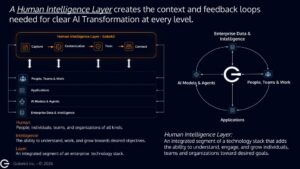
Gobekli is building a Human Intelligence Layer for turning fragmented human information into trusted understanding that individuals, organizations, and AI can use.
The shared lesson is larger than either technology:
People should not have to surrender control of their digital lives in order to benefit from intelligent services.
The future of AI will depend on access to richer personal context. The systems earning that access should be transparent, interoperable, secure, and accountable to the people they serve.
A more intelligent digital world should also make individuals more capable, more informed, and more powerful.
Otherwise, it is not truly human-centered.
Relationship and integration notice: Gobekli is not affiliated with the Solid Project, and this article does not announce a partnership, endorsement, or currently deployed Solid integration. Solid and Gobekli are discussed together because they address related principles of individual agency, portability, interoperability, and responsible use of personal data.
Product availability notice: This article discusses Gobekli’s broader vision for person-controlled data and the Human Intelligence Layer. Some capabilities described may be in development, expanding release, or available only through Launch Partnerships. Visit the Product Availability page for the current status of TalentPass, TalentSync, Pythia, Profiles, Passport Pages, and the Talent Tree.