The LER Ecosystem: Building Human-Centered Infrastructure for Learning, Work, and Opportunity
Originally published September 20, 2023. Updated to reflect the continued development of the Learning and Employment Record ecosystem, TalentPass, and the Human Intelligence Layer.
Learning and Employment Records, or LERs, have the potential to change how people carry learning, skills, achievements, and evidence throughout their lives.
Instead of leaving valuable information behind whenever they change schools, employers, programs, or platforms, people could maintain access to trusted records that travel with them.
But that future cannot be created by a single credential, standard, wallet, application, employer, or institution.
It requires an ecosystem.
Schools and training providers must describe and issue learning records. Employers must recognize and use skills-based information. Standards organizations must establish common ways to structure and exchange data. Technology providers must make that information secure and interoperable. Policymakers and workforce organizations must help ensure that the resulting infrastructure expands opportunity rather than reinforcing existing inequities.
Most importantly, people need applications that help them understand and use their own information.
The LER ecosystem will succeed only if these different parts work together—and if the people whose lives are being represented remain at its center.
What Is the LER Ecosystem?
The LER ecosystem is the growing network of people, organizations, standards, technologies, policies, and practices supporting the creation and use of portable learning and employment information.
It includes:
- Learners and workers
- Schools, colleges, and training providers
- Employers and industry groups
- Credential issuers
- Workforce development organizations
- Membership and professional organizations
- State and federal agencies
- Standards bodies and data networks
- Digital wallet and passport providers
- Human resources and education technology companies
- Researchers, funders, and community organizations
Each participant contributes a different part of the system.
A school may issue a digital credential. A standards organization defines how that credential is structured. A wallet allows the individual to receive it. An employer determines whether it is relevant to an opportunity. An application helps the person connect it with other experiences and explain what it means.
No single component is sufficient by itself.
The ecosystem creates value when these components work together without requiring the individual to repeatedly reconstruct their history.
The Layers Required for a Functional LER Ecosystem
It can be helpful to think of the LER ecosystem as a series of connected layers.
1. Experiences
Everything begins with what people actually do.
Learning happens through courses, jobs, apprenticeships, projects, military service, volunteering, creative work, caregiving, community participation, and countless other experiences.
These experiences are the source of human capability. However, much of their value is never formally documented.
2. Recognition
Schools, employers, professional organizations, peers, and other trusted parties can recognize what a person has learned or accomplished.
That recognition might take the form of a degree, license, certification, microcredential, assessment, endorsement, performance record, or verified achievement.
Recognition makes parts of a person’s experience more visible and trustworthy.
3. Standards
Common data standards allow records created by different organizations and technologies to be exchanged and understood.
Without standards, every credential or record becomes an isolated document that must be interpreted separately. With standards, different systems can begin to communicate across institutional boundaries.
Standards do not eliminate every difference between organizations, industries, or skills frameworks. They provide common structures through which those differences can be described, translated, and connected.
4. Trust and verification
People and organizations need ways to determine:
- Who issued a record
- Whether it has been altered
- What the record actually verifies
- Whether it remains valid
- What evidence supports it
- Whether the person presenting it is entitled to do so
Verifiable credentials and related technologies strengthen trust without requiring every relying organization to contact the original issuer manually.
5. Portability and consent
Individuals need practical ways to receive, retain, organize, and share their records.
Portability should mean more than moving information between institutional databases. People should be able to access their records after leaving an organization and decide when and where those records are used.
That requires meaningful consent, privacy protection, understandable permissions, and the ability to share selected information rather than exposing an entire lifelong history.
6. Translation and interoperability
Even when two systems can exchange data, they may describe learning and skills differently.
A course, credential, job, and industry framework may all use different language for related capabilities. The ecosystem therefore needs methods for translating between taxonomies, connecting records with occupational requirements, and preserving the context behind each claim.
Technical exchange is part of interoperability. Shared meaning is the harder part.
7. Human understanding and use
This is the layer most likely to be overlooked.
People need to understand what their records reveal, how different experiences connect, and which information matters for a particular goal.
Employers and other organizations also need workflows that help them interpret richer talent information without simply replacing one automated filter with another.
The ecosystem must turn records into experiences that people can actually use.
The Individual Cannot Be an Afterthought
Much of the LER ecosystem has understandably focused on infrastructure: credential formats, data standards, verification, interoperability, and institutional adoption.
This work is essential. But a technically successful ecosystem can still fail people if its applications are confusing, inaccessible, or designed primarily for institutional administration.
Individuals should not be treated as containers that transport data between organizations.
They should be active participants who can:
- Understand what information exists about them
- Add context to formal records
- Document experiences that have not been credentialed
- Connect learning with real-world application
- Correct inaccurate or incomplete information
- Decide what they want to share
- Present different parts of themselves for different purposes
- Use their histories to make better decisions about the future
A worker may possess dozens of credentials and still be unable to explain how they fit together. A learner may complete valuable projects without recognizing the capabilities demonstrated through them. A veteran may have extensive experience that does not translate cleanly into civilian job language.
Human-centered applications must help close these gaps.
Beyond Credential Wallets
Credential wallets play an important role in receiving, storing, and sharing verifiable records.
But storing credentials is only one part of what people need.
A person’s capabilities are also shaped by experiences that may not produce credentials. Their goals, interests, responsibilities, relationships, reflections, and evidence add essential context. Different opportunities require different representations of that larger story.
This is why Gobekli began using the term Universal Talent Passport to describe a broader person-facing experience.
The original idea was not simply to build a larger credential wallet. It was to give people a place where records could connect with experiences, evidence, capabilities, and aspirations—and where those connections could become useful throughout work and life.
That idea has developed into TalentPass.
TalentPass and the Human Intelligence Layer
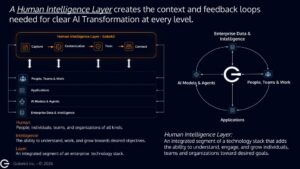
TalentPass is the individual side of Gobekli’s Human Intelligence Layer.
It helps people bring their experiences, capabilities, credentials, evidence, goals, and reflections together in a living source of truth they own and control.
Pythia, Gobekli’s private AI guide, helps individuals reflect on their experiences, build profiles, prepare for opportunities, and communicate what they can do.
The Talent Tree provides a developing framework for connecting experiences with capabilities and growth. Profiles and Passport Pages allow people to select and present information for particular audiences and purposes.
TalentPass is not intended to replace credential issuers, standards, learning systems, employment systems, or other LER applications. It is designed to work as part of that larger ecosystem—helping translate trusted records and lived experiences into intelligence that the individual can understand and use.
TalentSync extends this approach to organizations. It helps employers, schools, membership organizations, and public institutions develop a clearer understanding of people, opportunities, teams, capabilities, and relationships while creating new ways to exchange trusted information with TalentPass users.
Together, these products are intended to create a continuous, consent-based feedback loop between individuals and the organizations they interact with.
Why the LER Ecosystem Matters Even More in the Age of AI
AI systems are increasingly involved in decisions about hiring, learning, advancement, workforce planning, and organizational transformation.
But most of these systems operate with incomplete human data.
They can see job titles, course completions, résumé keywords, performance fields, and other isolated records. They usually cannot see the full context of how someone developed a capability, the evidence behind it, the conditions under which it was demonstrated, or how that person is continuing to grow.
This creates a dangerous imbalance.
We are rapidly increasing the intelligence available to machines without building an equally strong layer of trusted, person-controlled human intelligence.
LER infrastructure can help address that imbalance by making verified learning and employment information more portable and usable. But people must retain agency over how that information is interpreted and applied.
AI should help individuals and organizations understand human capability more completely. It should not silently turn fragmented data into permanent judgments.
A human-centered LER ecosystem must therefore combine:
- Trusted and verifiable information
- Transparent sources and context
- Individual control and consent
- Opportunities to correct and challenge interpretations
- Recognition of formal and informal experience
- Human judgment in consequential decisions
- Benefits that flow back to the people contributing the data
What the Ecosystem Must Build Next
The next phase of LER development is not only about issuing more digital credentials.
The ecosystem must also make those credentials—and the experiences surrounding them—more useful.
That means continuing to invest in:
Interoperability that preserves meaning
Systems must do more than transfer fields. They need to preserve context and help translate between different descriptions of learning, skills, work, and achievement.
Applications people want to use
Learners and workers need clear, useful experiences that provide immediate value. Adoption cannot depend entirely on an employer, school, or government agency requiring participation.
Connections with existing workflows
LERs must work with the résumés, applications, learning systems, HR platforms, and workforce services people encounter today while helping those systems gradually evolve.
Better recognition of informal experience
The ecosystem must create responsible ways to document and evaluate learning that happens outside formal credential programs.
Stronger privacy and agency
People must be able to understand, control, and benefit from the use of their information.
Sustainable value for every participant
Schools, employers, workforce organizations, technology providers, and individuals all need reasons to contribute to and maintain the ecosystem. The system will not scale if value flows in only one direction.
An Ecosystem Built Around People
LERs can provide the trusted infrastructure for a more connected future of learning and work.
But the goal should not be to create the world’s largest collection of education and employment data.
The goal should be to help people carry the value of their experiences forward.
That requires standards, credentials, verification, interoperability, wallets, institutional systems, worker-facing applications, organizational tools, and responsible AI. It requires collaboration among participants with different roles and priorities.
Above all, it requires remembering why the ecosystem exists.
Records matter because people should not have to lose the value of what they have learned and done.
Interoperability matters because opportunity should not depend on remaining inside one institution or platform.
Verification matters because people deserve to have their real achievements trusted.
AI matters because it can help turn fragmented information into greater understanding—if it remains accountable to the people it affects.
The LER ecosystem becomes transformative when all of these pieces work together to help people understand themselves, demonstrate what they can do, continue growing, and participate more fully in the decisions shaping their lives.
Product availability notice: This article describes Gobekli’s broader vision for the LER ecosystem and the Human Intelligence Layer. Some TalentPass and TalentSync capabilities discussed may be in development, expanding release, or available only through Launch Partnerships. Visit the Product Availability page for the current status of TalentPass, TalentSync, Pythia, Profiles, Passport Pages, and the Talent Tree.