Balancing the Promise and Peril of AI-Generated Personal Statements with UTPs.
Originally published in 2023. Updated to reflect the growing use of AI in applications, professional profiles, and person-controlled talent records.
AI can help almost anyone produce a polished personal statement in seconds.
It can write a professional summary, restructure a cover letter, improve an admissions essay, translate a biography, or turn a collection of experiences into a coherent narrative.
For people who struggle with writing, language, organization, confidence, or knowing where to begin, this can be genuinely empowering.
But it also creates a difficult question:
When AI helps tell your story, what makes the result authentically yours?
The answer cannot be determined by whether AI contributed any words.
People have always received help expressing themselves—from teachers, editors, career counselors, mentors, family members, translators, and assistive technology.
The more important questions are:
- Did the ideas and experiences come from the person?
- Are the claims accurate?
- Does the person understand what the statement says?
- Does it represent what they genuinely believe?
- Can they support it with evidence or further explanation?
- Did AI help the person express their story—or quietly replace it?
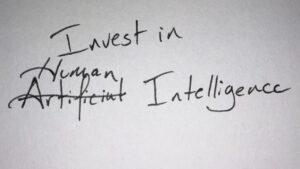
The future of personal representation will not be AI-free.
It must become more truthful, transparent, and person-controlled.
Why Personal Statements Are So Difficult
A personal statement asks someone to do several complex things at once.
They must:
- Decide which experiences matter
- Understand what those experiences reveal
- Select details for a particular audience
- Connect the past with a current goal
- Communicate clearly
- Sound confident without exaggerating
- Remain concise
- Preserve an authentic voice
This work is difficult even for strong writers.
It can become a major barrier for people with dyslexia, limited confidence, different language backgrounds, disabilities, unfamiliarity with professional conventions, or limited access to expert coaching.
Writing quality is not the same as human potential.
Yet applications frequently reward people who are already skilled at self-presentation—or who can afford help from someone who is.
AI can reduce that inequity by giving more people access to patient, individualized writing support.
That is part of its promise.
AI Can Help People Discover What They Want to Say
The most valuable role for AI may begin before drafting.
A conversational guide can ask someone:
- Which experience are you most proud of?
- What were you responsible for?
- What made the situation difficult?
- What action did you take?
- Who else was involved?
- What changed because of your contribution?
- What did you learn?
- Why does this opportunity matter to you?
- What do you want the reader to understand about you?
These questions help the person recover details, recognize patterns, and make meaning from their own experience.
The AI is not inventing a story.
It is helping the person find the story that is already there.
This distinction matters.
A generated paragraph may be technically polished but emotionally empty. A genuine dialogue can help someone understand what they want to communicate before deciding how to phrase it.
Four Different Roles AI Can Play
Not all AI assistance is ethically equivalent.
1. Reflection partner
AI asks questions and helps the person explore their experiences, values, decisions, and goals.
The substance comes from the person.
2. Editor or translator
AI helps organize, shorten, clarify, proofread, or translate ideas the person has already expressed.
The meaning remains intact while the presentation improves.
3. Ghostwriter
AI produces most of the substance and language with limited personal contribution.
The person may approve the result without deeply understanding or identifying with it.
4. Fabricator
AI creates achievements, motivations, evidence, responsibilities, or experiences that did not occur.
The resulting statement is false regardless of how convincingly it is written.
The boundaries among reflection, editing, and ghostwriting can sometimes be unclear.
Fabrication is not.
AI should never be used to create a life the applicant did not live.
Authenticity Is More Than Original Wording
A statement is not automatically authentic because the applicant typed every word without help.
People can write exaggerated or misleading claims on their own.
Likewise, a statement is not automatically inauthentic because AI helped clarify the language.
A more useful definition of authenticity includes:
Factual truth
The experiences, activities, responsibilities, and outcomes described are accurate.
Personal meaning
The interpretation reflects what the person genuinely thinks, values, or learned.
Comprehension
The person understands the statement and can discuss it in their own words.
Accountability
The person accepts responsibility for what the statement claims.
Voice
The language represents how the person wants to be understood rather than making them sound like a generic model of the “ideal candidate.”
Evidence
Where appropriate, important claims can be connected with examples, records, artifacts, credentials, or other supporting context.
Authorship is not merely a question of who produced the first draft.
It is a question of whether the final representation truthfully belongs to the person presenting it.
The Danger of the Perfectly Generic Person
AI systems are very good at producing language that sounds polished, enthusiastic, collaborative, resilient, and strategic.
As more people use similar tools, applications can begin to sound alike.
Everyone becomes a “results-driven professional” with a “passion for innovation,” a “proven track record,” and a commitment to “meaningful impact.”
The writing may be technically competent while revealing almost nothing about the person.
This creates a problem for both sides.
The applicant’s distinct experience disappears beneath conventional language. The reviewer receives an increasingly uniform collection of statements that are difficult to trust or differentiate.
A useful AI guide should move in the opposite direction.
It should ask for:
- Specific moments
- Concrete activities
- Actual decisions
- Relevant relationships
- Observable outcomes
- Personal lessons
- Language the person would genuinely use
The objective should not be to make everyone sound professionally identical.
It should be to help each person communicate what is specifically true about them.
Personalization Must Not Become Fabrication
AI can tailor a statement to a particular opportunity.
That can be helpful when it selects the most relevant parts of a person’s real history.
It becomes misleading when the system changes the person to match the opportunity.
For example, AI might:
- Inflate someone’s role in a project
- Convert participation into leadership
- Present introductory exposure as proficiency
- Invent quantitative results
- Claim enthusiasm the person does not feel
- Add credentials or tools absent from the record
- Hide uncertainty or gaps
- Recast an experience so aggressively that its original meaning disappears
A responsible system should tailor emphasis—not manufacture alignment.
If the person does not yet meet a requirement, the statement can still discuss transferable experience, willingness to learn, or the context surrounding the gap.
Honest incompleteness is more trustworthy than fabricated perfection.
A Better Workflow for AI-Supported Personal Statements
A human-centered process should begin with the person’s experience, not a blank prompt asking the model to produce an ideal answer.
1. Understand the purpose
What is the statement for? Who will read it? What do they legitimately need to understand?
2. Gather relevant experiences
Identify real activities, responsibilities, challenges, outcomes, learning, credentials, and evidence.
3. Reflect before drafting
Ask why these experiences matter and what the person wants the reader to understand.
4. Preserve the original source
Keep the person’s own words, notes, records, or conversation as the foundation for the draft.
5. Generate options—not a final identity
AI can offer different structures, lengths, tones, or areas of emphasis.
The person chooses what fits.
6. Verify every claim
Check names, dates, responsibilities, outcomes, credentials, and quantitative statements.
If the person cannot explain or support a claim, it should be revised or removed.
7. Restore the person’s voice
Remove generic phrases and language the person would never use. Add specific details and natural phrasing.
8. Review the complete representation
Ask:
- Is this accurate?
- Does this sound like me?
- Does it communicate what I intended?
- Is anything important missing?
- Is anything overstated?
- Would I feel comfortable discussing every sentence?
9. Follow applicable rules
Schools, employers, grant programs, publishers, and other organizations may establish different policies for AI assistance. People should understand and follow the rules governing the particular submission.
10. Take ownership of the final version
The person—not the AI—decides what is submitted and remains accountable for it.
Evidence Can Strengthen Trust
Traditional personal statements ask the reader to evaluate prose without access to much of the underlying context.
A person-controlled talent record creates another possibility.
Important claims can be connected with:
- Roles and activities
- Work samples
- Projects
- Credentials
- Assessments
- Endorsements
- Publications
- Outcomes
- Relevant reflections
This does not mean every sentence needs institutional verification.
A person’s interpretation of what an experience meant remains their own.
But evidence helps distinguish between:
- A factual record
- A personal interpretation
- A third-party endorsement
- A verified credential
- An AI-generated suggestion
This makes the representation richer and more transparent than a block of polished text standing alone.
How TalentPass and Pythia Approach the Problem
TalentPass helps people build a living, person-controlled source of truth about their experiences, capabilities, credentials, evidence, goals, and growth.
Pythia is the private AI guide within TalentPass.
Rather than beginning with instructions to generate an ideal candidate, Pythia can help a person reflect on what they have actually done and create a profile from information they review.
The Talent Tree provides a developing structure for connecting experiences with activities, capabilities, evidence, goals, and growth.
Profiles allow the individual to select the parts of that larger record that are relevant to a particular purpose, including a job application or professional introduction.
This creates a stronger foundation for AI-assisted writing.
The system can begin with:
- The person’s own experiences
- Information they have reviewed
- Evidence they have chosen to include
- Credentials connected with known issuers
- The stated requirements of an opportunity
- The person’s own goals and intentions
Pythia can help organize and communicate this information.
The individual should still be able to accept, challenge, correct, or reject what the AI suggests.
The person remains the authority on their own experience.
Provenance Should Remain Visible
As AI becomes embedded in personal representation, systems need clearer ways to show where information came from.
A TalentPass profile may include:
- Information entered directly by the person
- Information imported from a résumé
- A verified credential
- An uploaded artifact
- An endorsement
- An AI-suggested capability
- A narrative drafted with conversational assistance
These elements should not all appear equally verified.
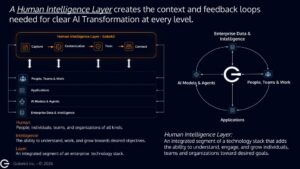
A trustworthy Human Intelligence Layer preserves provenance:
- Who supplied the information
- What supports it
- Whether another party verified it
- Whether AI inferred or edited it
- Whether the person reviewed it
- What was ultimately shared
This does not require attaching an alarming “AI-generated” label to every edited sentence.
It requires preserving enough context to distinguish trustworthy records from unsupported conclusions.
Organizations Must Adapt Their Expectations
Employers and schools cannot address AI-generated applications simply by telling people never to use AI.
AI assistance is already part of writing, translation, accessibility, education, and professional work.
Organizations need clearer and more realistic policies.
They should explain:
- Which forms of assistance are permitted
- Whether disclosure is required
- Which parts of an application must be independently produced
- Why those parts matter to the evaluation
- How applicants with disabilities or language needs will be supported
- How factual claims will be verified
- How interviews or work samples will supplement written statements
- Whether candidates can correct AI-related misunderstandings
Organizations should also reconsider how much weight they place on polished prose when writing skill is not central to the opportunity.
If a personal statement can be generated easily, reviewers may need to focus more on evidence, conversation, reflection, and demonstrated work.
The answer to AI-generated applications is not necessarily more automated detection.
It is better assessment design.
AI Can Expand Voice—or Flatten It
AI can help people communicate experiences that might otherwise remain invisible.
It can support someone who struggles to begin, organize complicated thoughts, translate across languages, or find professional language for unconventional experience.
That is a meaningful expansion of agency.
But AI can also flatten people into generic representations shaped by what an algorithm expects a successful applicant to sound like.
The difference lies in the process.
Does the AI begin with the person’s life?
Does it ask questions before offering conclusions?
Does it preserve uncertainty?
Can the person correct it?
Are claims connected with evidence?
Does the final result sound like someone who actually exists?
AI should help more people become understandable without requiring them to become interchangeable.
Your Story Must Remain Yours
The future of personal statements is not a choice between completely unaided writing and completely automated generation.
It is a spectrum of collaboration.
The responsible point on that spectrum depends on the purpose, the rules of the institution, and the degree to which the person remains the source of truth.
AI can help you remember, reflect, organize, translate, edit, and communicate.
It should not invent your achievements, decide your values, or replace your voice.
A trustworthy personal statement is not defined by the absence of assistance.
It is defined by the presence of truth, comprehension, accountability, and agency.
The best AI-supported statement should leave the reader with a clearer understanding of the person—not a clearer view of what the AI knows how to write.
Product availability notice: This article discusses both currently available TalentPass functionality and Gobekli’s broader vision for AI-supported personal representation. TalentPass currently supports job-application and professional-networking profiles, while Pythia supports guided profile building, career reflection, networking, and job-application conversations. Additional profile types, provenance features, evidence connections, and other capabilities may still be expanding or in development. Visit the Product Availability page for current product status.