
AN AI TRANSFORMATION WORKSHOP MODULE
AI Tool Sprawl:
How to Control a Fragmented AI Portfolio
AI tools, embedded features, pilots, models, and agents are multiplying across organizations faster than leaders can see how they overlap, connect, depend on data, or create value.
The problem is not simply that the organization has too many tools. It is that no one can see the complete portfolio well enough to make coordinated decisions about it.
Does this sound familiar?
Teams buy overlapping AI tools
Different departments purchase or build tools that perform similar tasks without realizing another option already exists.
AI features appear inside existing software
New assistants, agents, and generative features enter the organization through platforms it already uses.
Pilots duplicate similar capabilities
Teams run separate experiments around summarization, drafting, analysis, search, prediction, or automation.
Data is fragmented across systems
AI tools rely on different information sources, permissions, integrations, and versions of organizational context.
Ownership is unclear
No one knows who owns the tool, the workflow it affects, the data it uses, or the outcome it influences.
Leaders cannot see portfolio value
The organization can identify individual tools and licenses but cannot determine what the complete portfolio is producing.
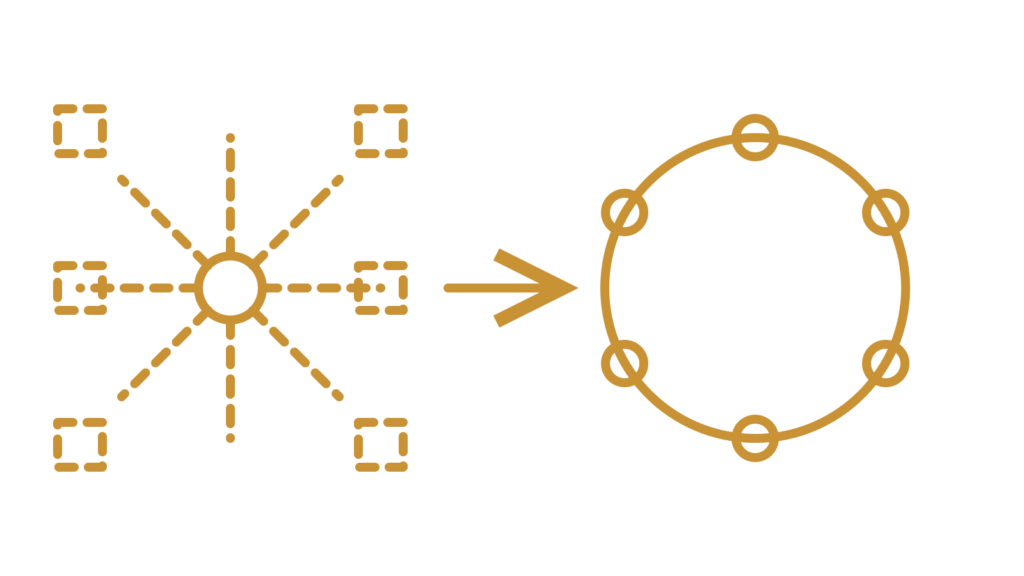
What is AI tool sprawl?
AI tool sprawl is the uncontrolled growth of AI applications, models, agents, integrations, and embedded features across an organization without a shared view of how they relate.
Some tools may be purchased independently by departments. Others may be built internally, introduced through pilots, added by vendors, or activated inside software the organization already uses. Employees may also rely on personal AI accounts or unofficial applications.
Decentralized experimentation can create legitimate value. Teams close to the work are often the first to recognize where AI could help. The problem begins when the organization cannot understand the complete landscape, identify overlap, trace dependencies, or make coordinated decisions about investment, integration, risk, and retirement.
Sprawl is therefore not defined by a specific number of tools. It describes a condition in which the portfolio has become more fragmented than the organization’s ability to understand and manage it.
The value and risk of an AI tool cannot be evaluated in isolation. It depends on what the tool is helping the organization accomplish, the capability it provides, the information it relies on, and who takes responsibility for the result.
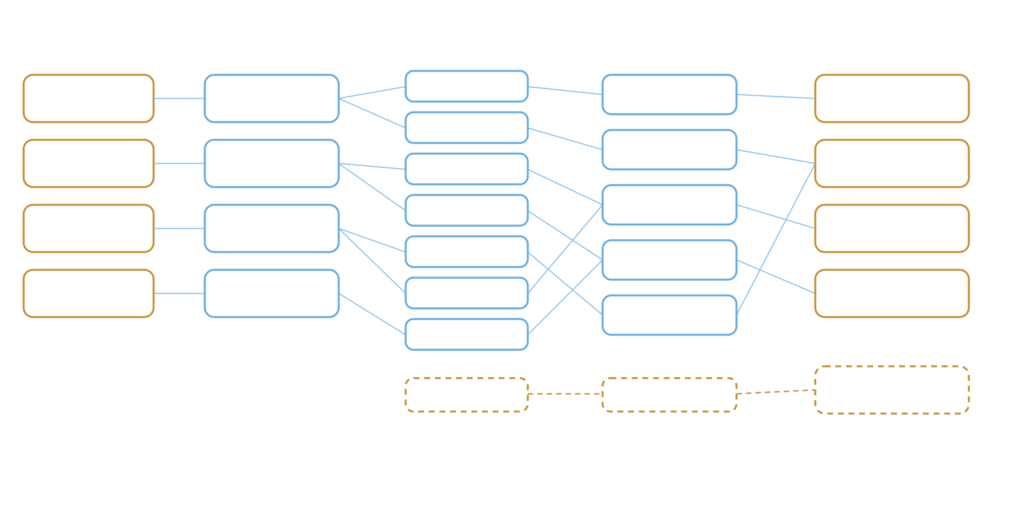
The problem is not the number of tools. It is the missing system view.
A list of AI applications can tell leaders what the organization has discovered or purchased. It cannot explain how those tools function together as part of an operating system.
To understand the real portfolio, leaders need to connect each tool to:
- The work need it is intended to address
- The AI capability it provides
- The workflow in which it operates
- The data and organizational context it uses
- The systems and integrations it depends on
- The people responsible for its operation
- The decisions or outcomes it influences
- The evidence supporting its continued use
Without those connections, two tools may appear different while providing the same underlying capability. One tool may seem inexpensive while creating costly integration or review work. A successful pilot may depend on data, expertise, or manual support that cannot be sustained. An embedded AI feature may alter a workflow without appearing in a conventional technology inventory.
A portfolio view makes these relationships visible.
How AI sprawl takes hold
Teams solve local problems
Departments, functions, and employees identify practical opportunities and begin experimenting independently.
Tools and features multiply
New applications, pilots, models, agents, and embedded capabilities enter the organization through different channels.
Data and ownership fragment
Tools rely on separate information sources, integrations, permissions, processes, and responsible parties.
Cost, risk, and duplication compound
The organization struggles to compare value, coordinate decisions, maintain quality, or understand what depends on what.
Why a simple AI tool inventory is not enough
Why a simple AI tool inventory is not enough
An inventory is an important starting point. It establishes what applications, models, features, pilots, or agents are known to the organization.
But an inventory answers only one question:
What exists?
A useful portfolio review must answer several more.
What organizational need, activity, workflow, customer outcome, or employee task is the tool intended to improve?
Does it analyze, predict, recommend, generate, retrieve, classify, automate, coordinate, or execute?
Which systems, documents, records, customer information, employee information, or organizational knowledge enter the tool?
What integrations, APIs, platforms, vendors, permissions, infrastructure, or manual transfers must remain available?
Who is responsible for the workflow, the quality of the output, the decisions it influences, and any problems it creates?
What demonstrates that the tool is used, reliable, affordable, necessary, and connected to a meaningful organizational outcome?
Without these relationships, the inventory may become another static spreadsheet rather than a foundation for portfolio decisions.
What leaders need to see clearly
Where capabilities overlap
Identify tools, models, agents, and features performing similar work or providing equivalent capabilities.
How data and systems connect
Understand the information sources, integrations, vendors, permissions, and platforms each portfolio element depends on.
Which tools create dependency
Reveal where critical workflows rely on a specific vendor, internal expert, unofficial process, fragile integration, or manual workaround.
Where value, cost, and risk concentrate
Focus leadership attention on the parts of the portfolio with the most significant organizational consequences.
Decentralized AI adoption is not automatically a problem.
Teams closest to the work often understand practical needs better than a centralized technology function can. Local experimentation can help an organization learn quickly and discover capabilities that formal planning would have missed.
The goal should not be to eliminate every decentralized decision. It should be to prevent useful experimentation from turning into an incoherent portfolio.
Useful local innovation
Decentralized adoption can support:
- Faster experimentation and organizational learning
- Solutions designed close to the work
- Discovery of unmet workflow needs
- Emerging capabilities and creative applications
- Employee and team skill development
- Practical evidence about what works
- Greater participation in AI transformation
These benefits can be lost when every AI decision must pass through a slow or disconnected central process.
Portfolio fragmentation
The same activity can create:
- Duplicated tools and capabilities
- Incompatible workflows and processes
- Isolated or inconsistent data
- Repeated implementation effort
- Unclear ownership and accountability
- Overlapping contracts or licenses
- Uneven quality and controls
- Vendor and integration dependencies
- Pilots that cannot connect to broader operations
These conditions make it difficult for teams to build on one another’s work or for leaders to understand the organization’s actual AI position.
The goal is not indiscriminate consolidation.
It is to make each tool, capability, and dependency visible enough to support a deliberate portfolio decision.
WORKSHOP MODULE DETAILS
How To Map Data, Systems & AI Portfolio
This module evaluates AI tools, models, embedded features, data, integrations, duplication, and dependencies across the organization.
Participants connect known portfolio elements to real work and organizational outcomes. The purpose is not merely to create another technology inventory. It is to understand how the pieces relate and what the organization needs to decide about them.
- Map AI tools to real work and organizational capabilities
- Identify overlapping tools, pilots, models, and features
- Trace important data and system dependencies
- Reveal integration and ownership gaps
- Examine where portfolio elements remain isolated
- Clarify what evidence supports continued investment
- Identify questions requiring specialist review
- Develop an evidence-backed portfolio response
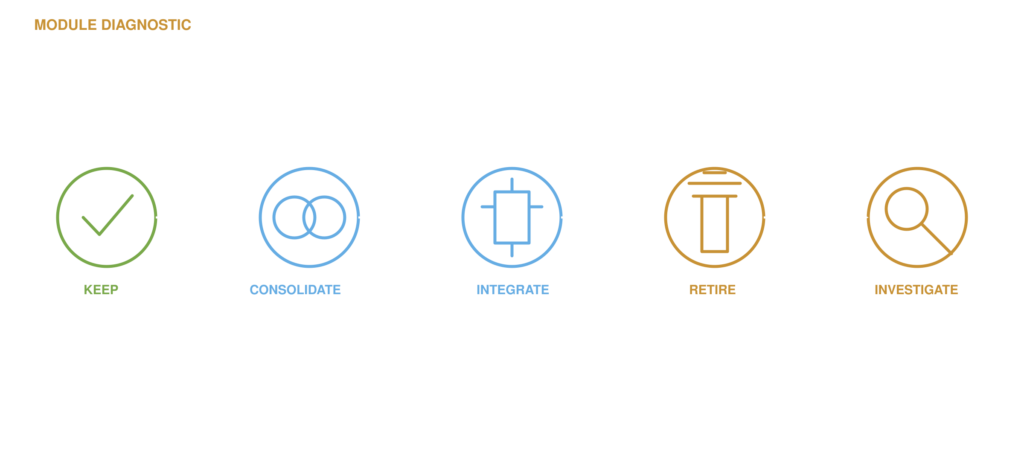
What should happen to each part of the portfolio?
Building an inventory is only the first step. The organization must decide how each tool, capability, pilot, model, agent, feature, or dependency fits into its future portfolio.
The response should be based on the work supported, the value created, the evidence available, and the implications of changing it.
Keep
Distinct value with appropriate support The portfolio element addresses a meaningful need, provides a valuable capability, and has sufficient ownership, evidence, and support to continue.
Consolidate
Overlapping capabilities or spend Several tools or initiatives provide substantially similar capabilities. The organization may benefit from reducing unnecessary duplication while preserving the strongest option.
Integrate
Valuable but disconnected from the workflow The tool or capability creates value but remains isolated from the systems, data, processes, people, or decisions required for sustained use.
Retire
Limited value or avoidable duplication The portfolio element no longer supports a meaningful need, produces insufficient value, duplicates a stronger option, or creates burdens that outweigh its contribution.
Investigate
Insufficient evidence or unresolved exposure The organization lacks enough information to make a responsible decision. Additional evidence, testing, technical review, or specialist judgment is required.
The organization lacks enough information to make a responsible decision. Additional evidence, testing, technical review, or specialist judgment is required.
What should an AI portfolio review examine?
Expected human involvement and actual human effort are not always the same.
A Handoff Load Map helps the team examine where employees are absorbing more work than the workflow design anticipated.
The work
What organizational need or workflow does the portfolio element support? What would happen to the work if it changed or disappeared?
The capability
What does the AI actually provide? Is that capability distinctive, duplicated, essential, emerging, or available elsewhere?
The dependencies
What data, systems, integrations, vendors, infrastructure, people, permissions, and manual processes does it require?
The evidence
What demonstrates value, usage, cost, quality, reliability, adoption, risk, or organizational importance?
What to bring into the conversation
You do not need a perfect enterprise architecture map or a complete inventory of every AI-enabled feature.
We begin with the artifacts and observations your organization already has. The workshop then helps distinguish known facts from assumptions, missing evidence, and areas requiring additional investigation.
Useful inputs may include:
- Known AI applications and employee-facing tools
- Existing software with embedded AI features
- Current pilots, prototypes, models, or agents
- Procurement and contract records
- Relevant data and integration diagrams
- Available usage, cost, quality, and outcome measures
- Ownership and approval information
- Known duplication or integration concerns
- Employee and manager observations
- Unofficial or suspected tools relevant to the bounded workflow
The goal is not to catalog the entire organization in one session. The Decision Foundation establishes the outcome, workflow, and portfolio boundary the module should examine.
What this module can help clarify
Where the portfolio overlaps
Identify duplicated tools, models, agents, pilots, features, capabilities, and organizational effort.
Which dependencies matter
Reveal the data, systems, vendors, integrations, people, and operating conditions the portfolio relies on.
What lacks evidence or ownership
Surface portfolio elements whose value, use, quality, responsibility, or future remains unclear.
Where to keep, integrate, consolidate, retire, or investigate
Organize the available evidence into practical portfolio response options.
Final outputs depend on the modules selected and the decision established through the workshop’s required Decision Foundation.
Where might the work lead next?
AI tool sprawl frequently overlaps with invisible adoption, unclear value, and weak governance. A portfolio review may reveal that another problem needs to be addressed alongside the technology landscape.
Shadow AI & Invisible Work
Reveal unofficial AI use, undocumented processes, and employee-created workarounds that may not appear in the known portfolio.
Proving AI Value & ROI
Evaluate whether AI creates defensible value after cost, quality, hidden work, adoption, dependencies, and risk are included.
AI Governance & Accountability
Clarify ownership, decision rights, controls, escalation paths, and boundaries requiring specialist review.
Questions leaders ask before booking.
AI tool sprawl is the uncontrolled growth of AI applications, models, agents, integrations, and embedded features without a shared organizational view of how they relate.
It often emerges when departments, teams, vendors, and employees adopt AI independently to solve local problems. The result may include overlapping capabilities, fragmented data, repeated implementation effort, inconsistent workflows, unclear ownership, and difficulty evaluating the complete portfolio.
The presence of many tools does not automatically mean an organization has a sprawl problem. Sprawl exists when portfolio complexity has exceeded the organization’s ability to understand and make coordinated decisions about it.
SaaS sprawl generally describes the uncontrolled growth of cloud software applications, often resulting in duplicate subscriptions, unused licenses, fragmented administration, and inconsistent access management.
AI sprawl includes some of those concerns but introduces additional complexity. AI capabilities may be embedded inside existing software, operate through models or agents, connect to multiple data sources, generate new outputs, influence decisions, or execute actions.
A single application may therefore contain several AI capabilities with different workflows, information dependencies, owners, and consequences. Evaluating AI sprawl requires looking beyond the application itself.
No. Consolidation is one possible response, not the universal goal.
Different teams may have legitimate reasons to use specialized tools. Several applications may appear to overlap while supporting different workflows, data requirements, user needs, or operating conditions.
Indiscriminate consolidation can remove useful capability, disrupt work, and reduce experimentation. The organization should first understand the work supported, capability provided, evidence available, dependencies involved, and consequences of change.
Treat the AI feature as a portfolio element even when the larger application is already approved.
Examine what the feature does, whether it is enabled, who uses it, what data it can access, how outputs are reviewed, which workflow it changes, who owns the result, and what controls or vendor terms apply.
An embedded feature may alter work and data flows without requiring a separate procurement decision, which makes it easy to overlook in a conventional inventory.
No. An inventory identifies what exists. A portfolio review examines how those elements relate to organizational work, capabilities, data, systems, ownership, cost, value, quality, and risk.
The inventory is an input. The portfolio review supports a decision.
Technical discovery tools may identify applications, browser activity, integrations, APIs, identities, or enabled features. They can provide valuable evidence, but they may not reveal the complete organizational context.
Technology alone cannot fully explain why a tool is being used, what work it supports, how employees rely on it, whether an output creates value, or who takes responsibility for the outcome.
A meaningful portfolio review combines appropriate technical evidence with workflow information, procurement records, employee and manager observations, and organizational decision-making.
No. The module examines the portfolio as an organizational system connecting work, capabilities, data, technology, evidence, and ownership.
It may identify issues requiring review by cybersecurity, privacy, legal, compliance, procurement, enterprise architecture, finance, or other qualified specialists. The workshop does not replace those functions or make their professional determinations.
Every engagement begins with the required Decision Foundation, which establishes the consequential outcome, affected workflow, available evidence, and bounded decision the workshop must support.
Data, Systems & AI Portfolio can then be selected when the organization needs to understand how tools, models, data, integrations, and ownership fit together around that decision.
Depending on what the module reveals, it may be combined with modules addressing Shadow AI, value and ROI, governance, scale, adoption, or another connected problem.
Connect tools to work, capabilities, data, ownership, and evidence—then make the portfolio decisions that matter.
This module is part of Gobekli’s configurable AI Transformation Workshop. Explore the complete workshop, its 12-module structure, and how we identify the right starting point for your organization.