

For Educators & Learning Organizations
Learners bring more than a transcript. Your programs create more than a credential.
Gobekli helps educators connect learning, experience, and opportunity—so learners can explain what they bring and institutions can make better-informed decisions about what comes next.
Start with a challenge affecting your learners, programs, or partnerships.
Keep what you teach connected to the people and opportunities it should serve.
Examine changing work, community needs, learner goals, and program requirements to identify where your offering needs attention.
Make learning easier to explain, recognize, and carry forward.
Clarify what learners have achieved, which evidence supports those claims, and how records could become useful beyond the system that holds them.
Connect the parts of the learning journey.
Examine how goals, learning experiences, requirements, and opportunities fit together—and where missing connections make the next step harder.
A transcript records achievement. A project can reveal how someone applied it. A conversation can explain what challenged them, what they contributed, and what they want to do next.
Each adds something useful to the picture.
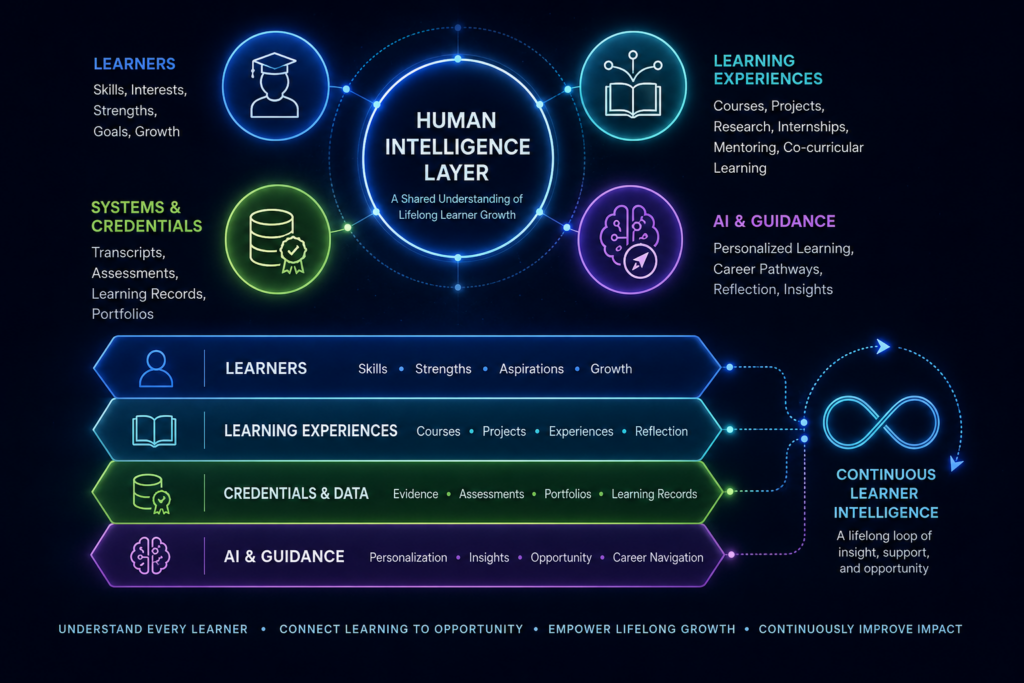
Courses, assessments, credentials, participation, and program requirements.
Experience, interests, contributions, goals, and the conditions affecting their progress.
Relevant pathways, development needs, support, and opportunities to apply what they are learning.
Gobekli’s Human Intelligence Layer is designed to connect these perspectives while keeping their sources, permissions, and limits visible.
Schools and learning organizations should be able to understand learners better while helping them carry their own growth forward.
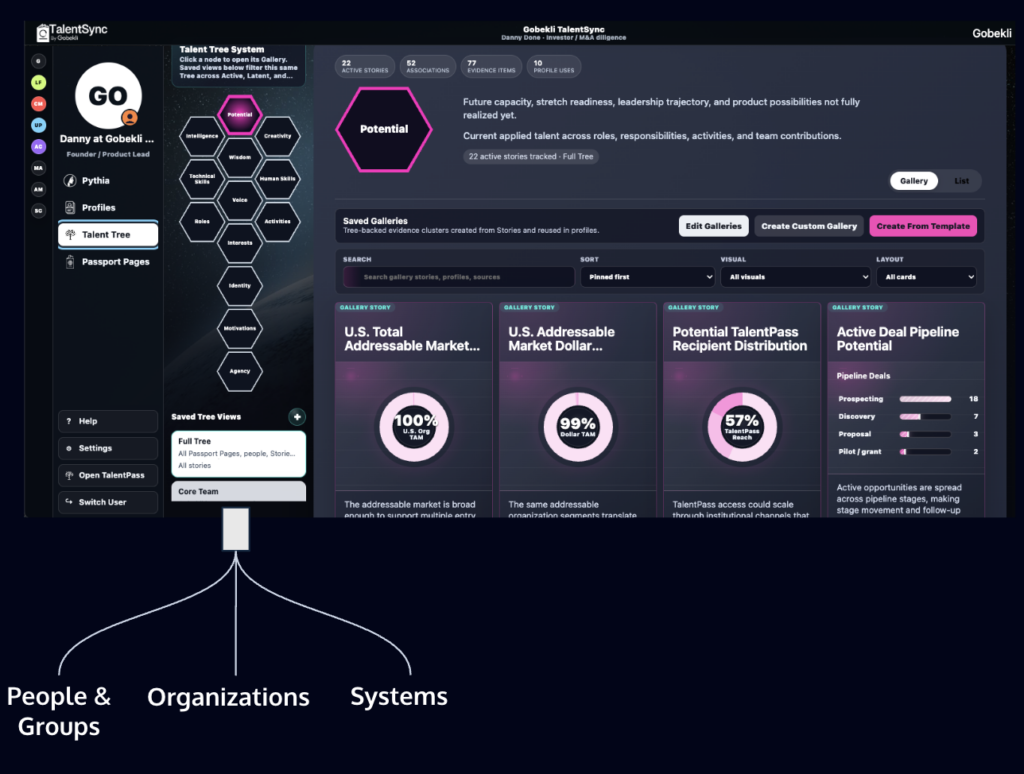
Gobekli is building a two-sided Human Intelligence Layer: useful context for the institution, connected to a portable account the learner controls.
Help learners collect, understand, and communicate their learning, experience, evidence, and goals—across education, work, and life.
Their learning. Their growth. Their choices about sharing.
Connect relevant context about learners, programs, evidence, and opportunities to support guidance and institutional decisions.
Keep sources, uncertainty, and human review visible as you explore what needs attention.
Passport Pages are designed to support purposeful exchange between institutions and learners.
Institutions could provide relevant records, resources, and opportunities. Learners could contribute selected experience, goals, and evidence for a defined purpose.
Learners carry the value of their education forward.
Educators gain relevant context for guidance and support.
Institutions can examine what is working and what needs attention.
Continued participation should have a reason. Institutional records and person-controlled TalentPass information remain distinct; a connection does not grant unrestricted access.
What changes when an advisor can understand experience beyond a course history? How could a learner connect community contributions with a development goal? What might help someone explain the relationship between work and study?
Explore illustrative stories about advising, reflection, continuing education, and transitions into work.
These examples describe proposed applications. They should not be read as evidence of completed institutional deployments or measured learner outcomes.

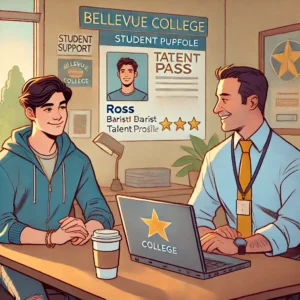
Explore Ross’s illustrative journey connecting work experience with education and a possible next step.
Explore the story →

Explore a proposed scenario about reflecting on contributions and identifying learning beyond the classroom.
Explore the story →

Explore an illustrative student story about making experience visible in a development conversation.
Explore the story →

Explore a proposed scenario connecting a learner’s interests and experience with guidance.
Explore the story →
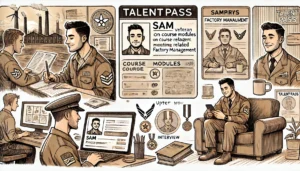
Explore an illustrative veteran learner story about bringing education and experience into a career conversation.
Explore the story →
Explore an illustrative adult learner story about explaining progress and relevant experience.
Explore the story →Six illustrative stories. Swipe, scroll, or use the arrows to explore.
Bring the question your institution needs to work through. We’ll help define an engagement around your mission, relevant participants, available evidence, and the decision ahead.
Identify where understanding is missing and what a useful first result would look like.
Bring together the people who understand the learning, requirements, support needs, and opportunities involved.
Agree on priorities, responsibilities, and what needs further investigation. Workshop scope and outputs are established for the engagement.
Workshops and consulting provide a way to work with Gobekli now. TalentPass and TalentSync are developing in stages. Software capabilities, integrations, and institutional implementation requirements must be confirmed for the proposed scope.
The approach can apply to different learning organizations, including schools, training providers, and continuing education programs. The engagement needs to reflect the learners, responsibilities, and institutional setting involved.
Replacement is not the aim. Existing systems can retain their operational roles. Which information could be connected, and how, depends on available capabilities, permissions, technical requirements, and the agreed implementation.
No. A reflection, project artifact, assessment result, and institution-issued credential provide different kinds of evidence. Their sources and limits should remain clear. Recognition and assessment decisions stay with the responsible people and organizations.
Any proposed use needs age-appropriate participation, access, assistance, and institutional review. Suitability and implementation requirements must be established for the specific setting; this page does not imply that a school deployment is ready.
No. Workshops are separately scoped engagements. Institutions can act on the findings independently. Any follow-on software collaboration is discussed separately.
Help learners understand what they bring. Give educators better context to support them. Connect learning with a meaningful next step.