

For Public Services & Workforce Organizations
A new program, advisor, or opportunity should build on the progress someone has already made.
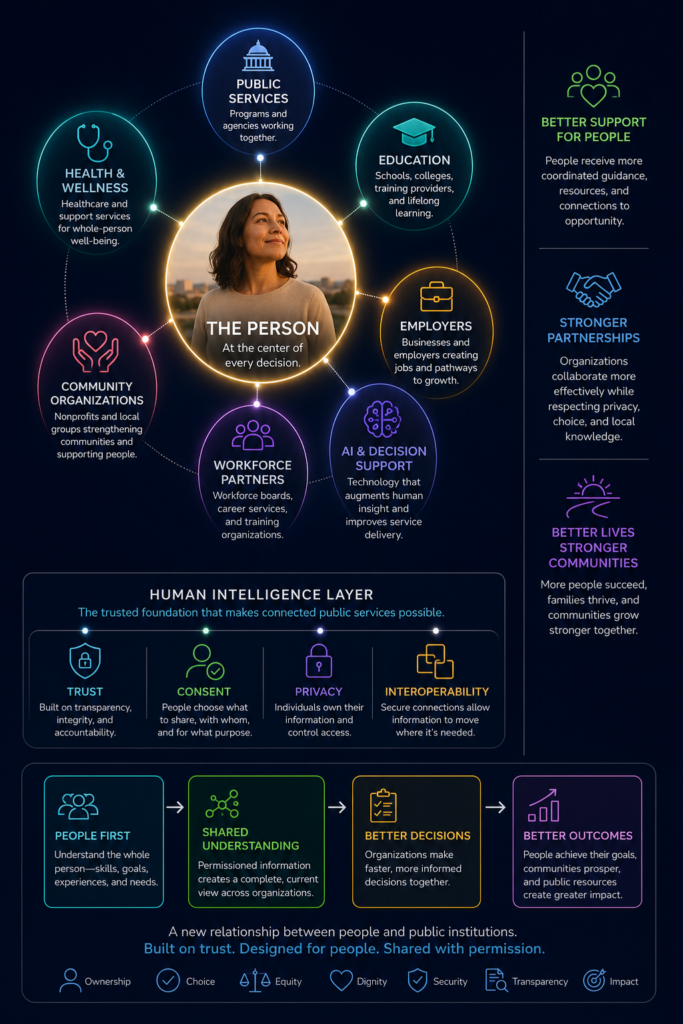
Gobekli helps public-service organizations examine where pathways become disconnected—and how people, partners, and information could work together more effectively.
Start with the challenge affecting the people you serve or the partners working alongside you.
Make the next step easier to understand and follow.
Examine service navigation, repeated intake, referrals, practical support, and transitions between learning and work.
Bring workforce partners around a clearer shared question.
Examine how employer needs, learning opportunities, workforce programs, and regional priorities connect—and where coordination needs attention.
Make records useful across organizational boundaries.
Examine what people and receiving organizations need to exchange, interpret, and use selected learning and employment records responsibly.
Did the person reach the next service? Were the requirements clear? Could they use the experience and records they already had? Who could help when the route stopped working?
A connected pathway needs more than a transfer of information.
Bring relevant goals, experience, progress, and support needs into the conversation.
Identify what each program contributes, what it needs to know, and who follows through.
Examine missing information, practical barriers, unclear requirements, and decisions that need attention.
Gobekli’s Human Intelligence Layer is designed to connect this context while keeping sources, access boundaries, and responsible human review visible.
People should be able to build on their experience while organizations receive the information appropriate to their role.
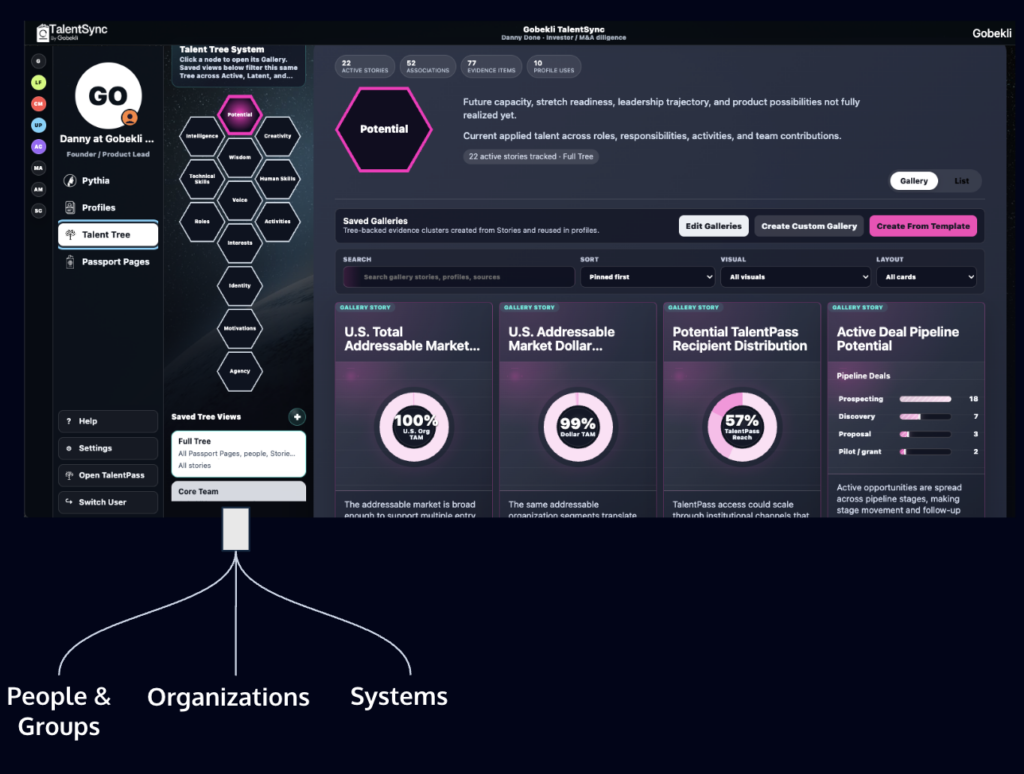
Gobekli is developing two connected products to support that relationship.
Help individuals collect, understand, and communicate their learning, work, experience, evidence, and goals.
The intended value is continuity: a person can prepare relevant information for a new conversation without rebuilding their entire story each time.
Their experience travels with them. Sharing has a defined purpose.
Connect appropriate context about programs, pathways, resources, responsibilities, and workforce needs.
The intended purpose is to help teams examine where support becomes disconnected, what requires coordination, and which changes deserve closer review.
Passport Pages are designed to support limited, purposeful exchange between people and organizations.
An organization could provide relevant records, resources, guidance, or opportunities. An individual could contribute selected information needed for that relationship.
Access, information requirements, and responsibilities must be established for the specific service and implementation.
People can carry relevant progress into their next step. Organizations can work with clearer context and more explicit responsibilities.
Person-controlled TalentPass information and organizational records remain distinct. The aim is useful coordination without assembling an unrestricted account of someone’s life.
Explore illustrative scenarios about public employees, service coordination, veterans, reentry, regional workforce needs, and apprenticeships.
These stories describe intended applications. They are not reports of completed government deployments or measured employment, service, or economic outcomes.

Explore a scenario about connecting public employees’ experience with changing workforce needs.
Explore the scenario →

Explore how selected context could support a resident’s pathway across services.
Explore the scenario →

Explore a scenario about communicating military experience in a civilian employment context.
Explore the scenario →

Explore how learning and accomplishments could remain useful through a return to the community.
Explore the scenario →

Explore a scenario about connecting workforce perspectives with regional planning questions.
Explore the scenario →

Explore how someone could bring learning from different organizations into a fuller account of experience.
Explore the scenario →Six illustrative scenarios. Swipe, scroll, or use the arrows to explore.
Bring a question about a participant journey, a partner relationship, or an information exchange.
We’ll help define a focused engagement around the people involved, the available evidence, and the decisions within your organization’s responsibility.
Identify the population, pathway, or exchange you want to examine and what a useful first result would look like.
Include people who understand the services, requirements, participant experience, and partner responsibilities involved.
Clarify priorities, owners, dependencies, and what needs further review. Workshop outputs are agreed for the engagement.
Workshops and consulting provide a way to work with Gobekli now. TalentPass and TalentSync are developing in stages. Software capabilities, integrations, and any agency deployment must be confirmed for the proposed scope.
Yes. An engagement can start with the part of a pathway your organization operates. Actions requiring another organization’s participation or approval should be identified as dependencies rather than assumed commitments.
Replacement is not the aim. Existing systems can retain their operational roles. Any proposed connection depends on available capabilities, appropriate access, technical requirements, and the agreed implementation.
No. The proposed role is to help organize and communicate relevant context. Eligibility, enrollment, benefits, and other consequential determinations remain with authorized processes and responsible decision-makers.
No. Each proposed exchange needs a defined purpose, appropriate information, and established access arrangements. Connecting services should not imply that every organization can see a person’s complete record.
Assistance, accessibility, language needs, and alternatives to self-service should be considered when defining the pathway. A proposed digital exchange needs to account for how people can actually participate.
No. Workshops are separately scoped engagements. Your organization can act on the findings independently. Any follow-on software collaboration is discussed separately.
Recognize the progress people bring. Clarify who can help. Connect support around a path they can use.