The Human Intelligence Layer

Organizations must continuously adapt to survive.

AI is accelerating change faster than most organizations can understand how their work, roles, decisions, and capabilities are evolving.

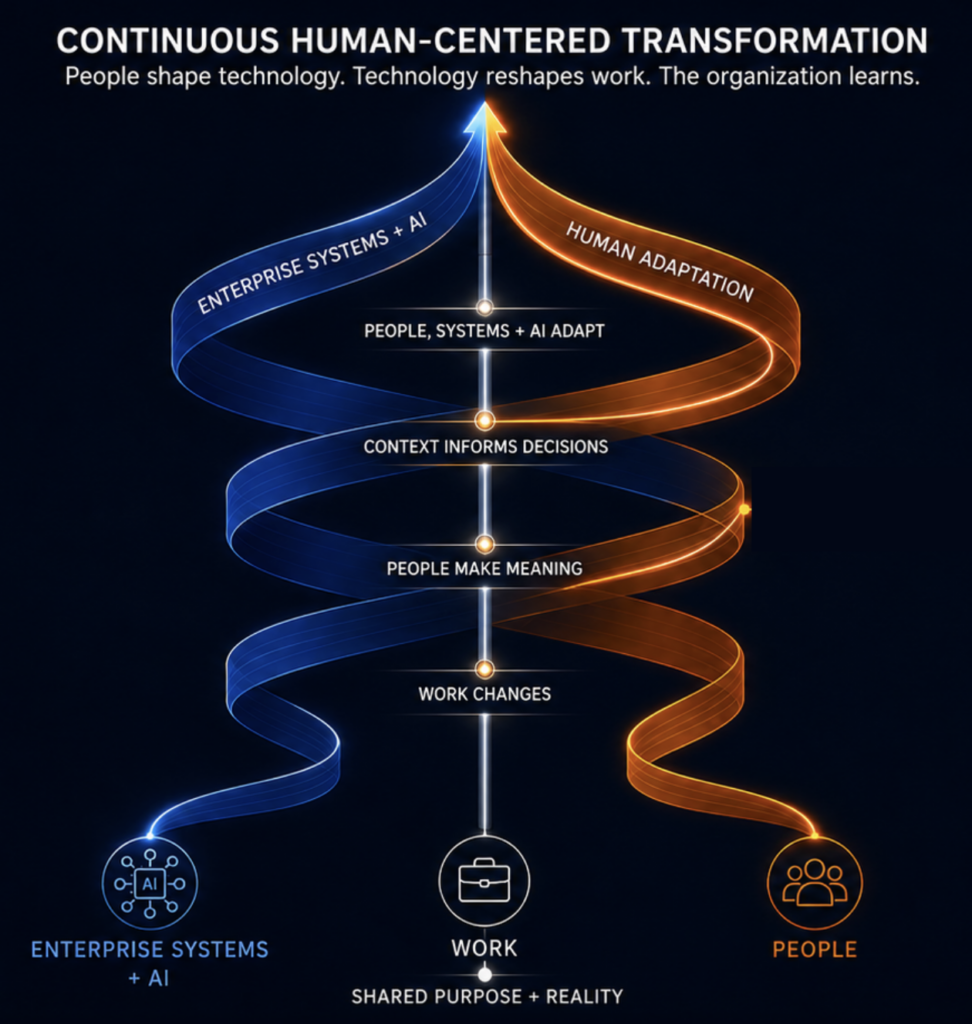
Surviving this shift requires more than adopting new technology. It requires a living feedback loop that helps people and organizations see what is changing, learn from it, and continuously adapt together.

Transformation is not an event. It is a continuous feedback loop.

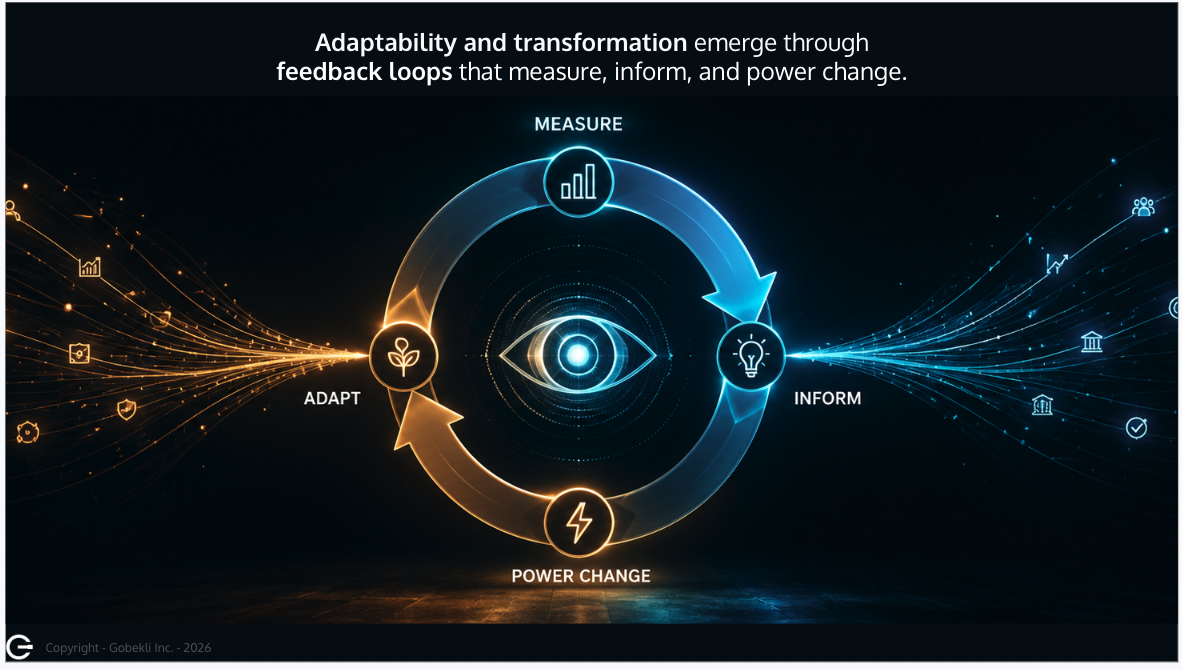
Organizations adapt by measuring what is happening, understanding what it means, turning that understanding into action, and learning from what happens next.

Each cycle should make the organization more aware, more capable, and better prepared for the next change.

But most organizations can see what is happening in their systems without fully understanding what is happening among the people who make transformation possible.

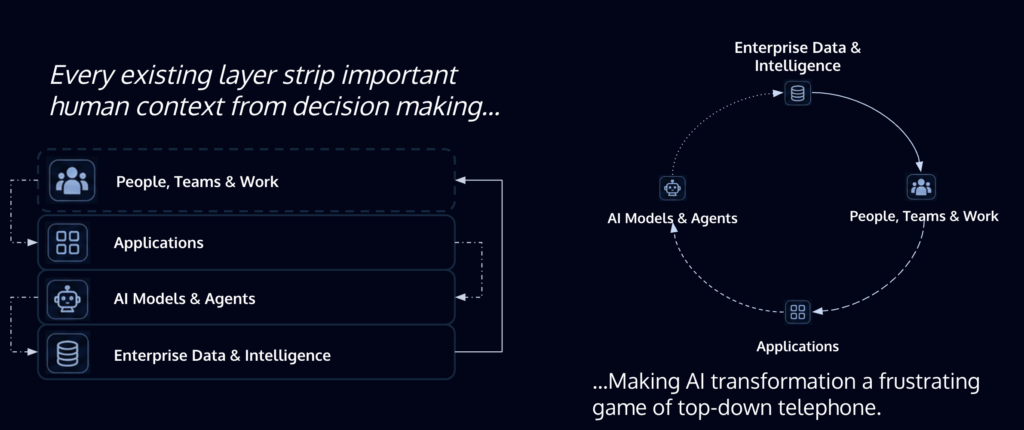
Circular feedback loop showing how organizations measure, inform, power change, and adapt.

To understand how an organization adapts, we first have to understand what an organization actually is.

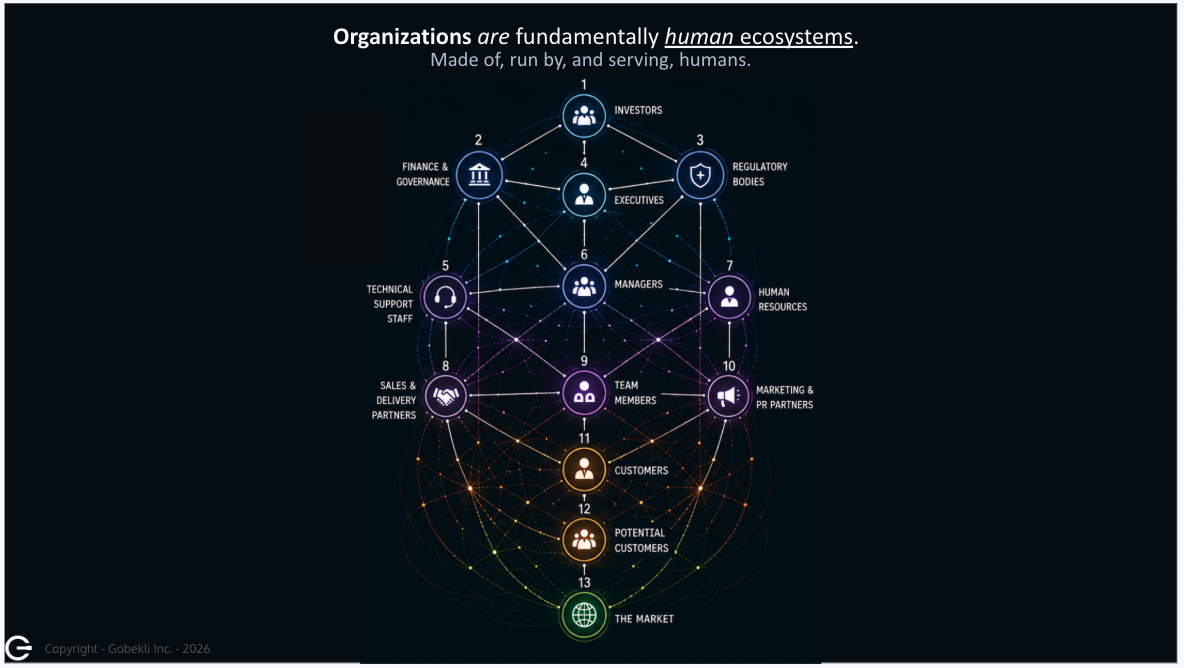
Organizations are fundamentally human ecosystems.

They are made of, run by, and built to serve people.

Employees, leaders, customers, partners, investors, regulators, and communities each hold different knowledge, needs, relationships, and perspectives. Their decisions continuously shape one another—and ultimately determine how the organization performs, learns, and evolves.

Technology may connect the systems around this ecosystem. But people create the judgment, trust, creativity, collaboration, and meaning that bring it to life.

Network connecting employees, leaders, customers, partners, regulators, investors, and the market as a human ecosystem.

Yet most of the human intelligence moving through this ecosystem remains invisible.

The intelligence that actually drives the organization remains mostly invisible.

Organizations record transactions, tasks, credentials, messages, outputs, and system activity. But those records capture only a fraction of what makes people—and organizations—capable.

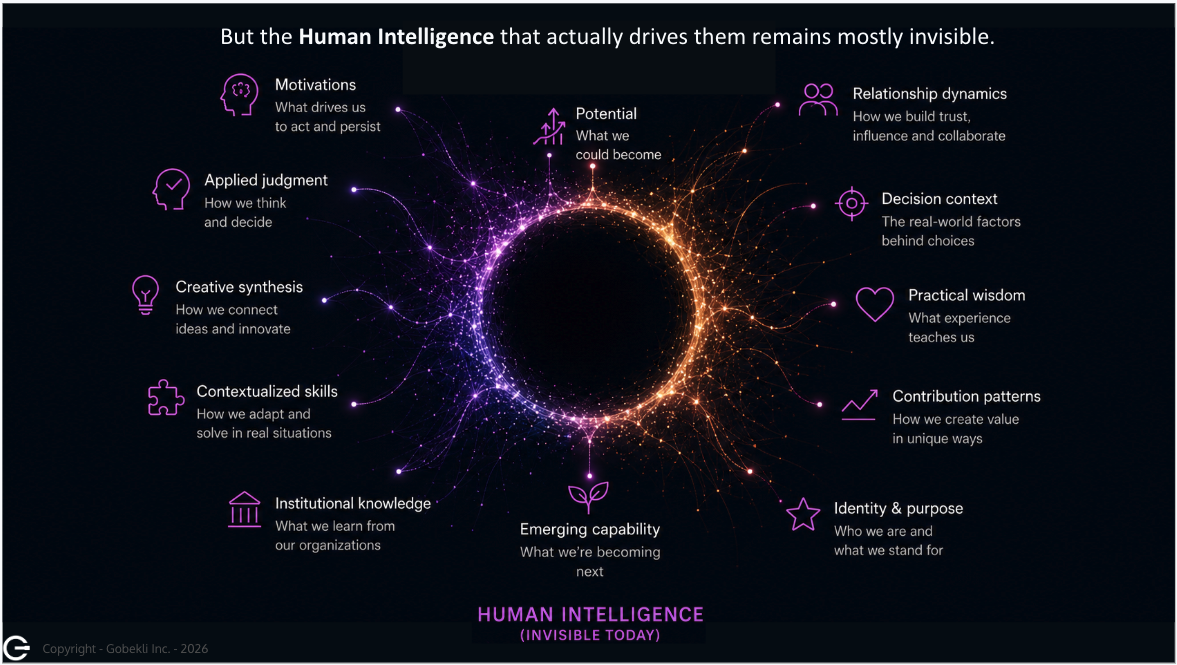
Human intelligence lives in the context behind the activity: why people act, how they make decisions, what experience has taught them, how relationships shape outcomes, where new capabilities are emerging, and what people and teams could become next.

It includes motivation, judgment, creativity, practical wisdom, institutional knowledge, identity, relationships, contribution, and potential.

This intelligence exists throughout every organization. It simply has no shared layer through which it can be understood, connected, and used.

Human intelligence dimensions surrounding a glowing ring, including judgment, motivation, relationships, wisdom, capability, and potential.

When this intelligence remains invisible, organizations are forced to make their most important decisions with only part of the picture.

What an organization cannot see still shapes everything it does.

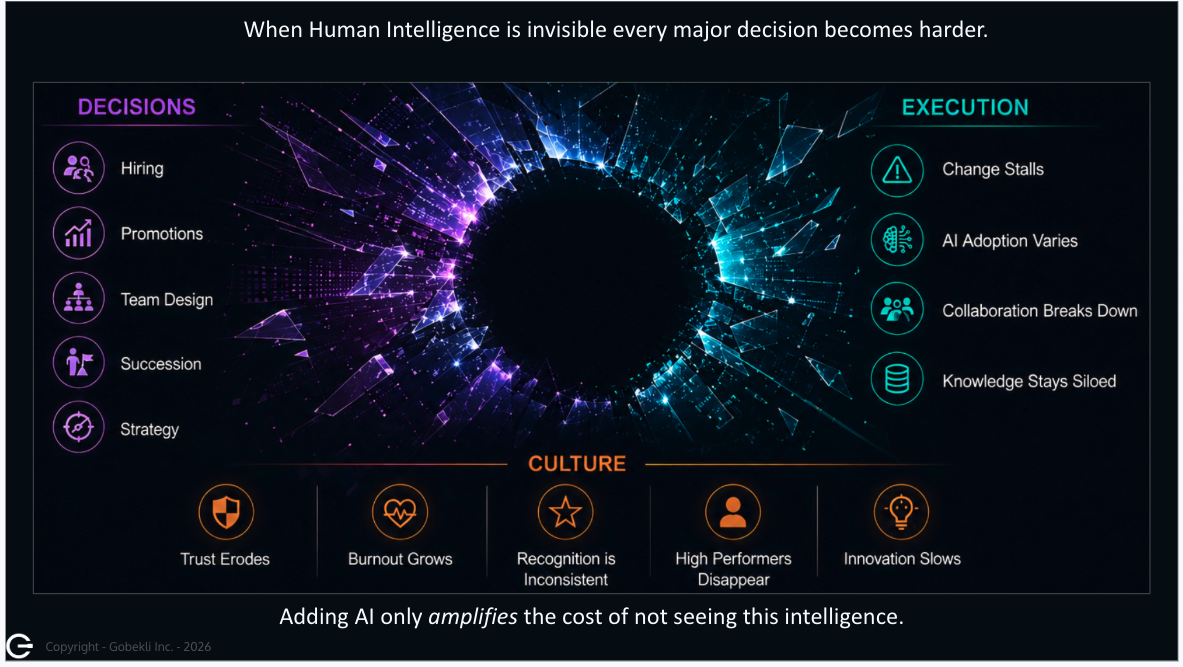
Invisible human intelligence does not remain safely outside the system. Its absence appears in the decisions organizations struggle to make, the transformations they cannot sustain, and the cultures they unintentionally create.

Leaders hire, promote, organize teams, plan succession, and set strategy without enough context.

Change stalls. AI adoption becomes uneven. Collaboration breaks down. Knowledge remains trapped within teams and individuals.

Trust erodes. Burnout grows. Contributions go unrecognized. Capable people leave. Innovation slows.

The organization experiences the consequences—even when it cannot see their source.

Diagram showing how invisible human intelligence weakens organizational decisions, execution, and culture.

Adding AI does not close this gap. It amplifies the cost of failing to understand the human intelligence on which every system, decision, and transformation depends.

The Human Intelligence Layer makes the invisible visible.

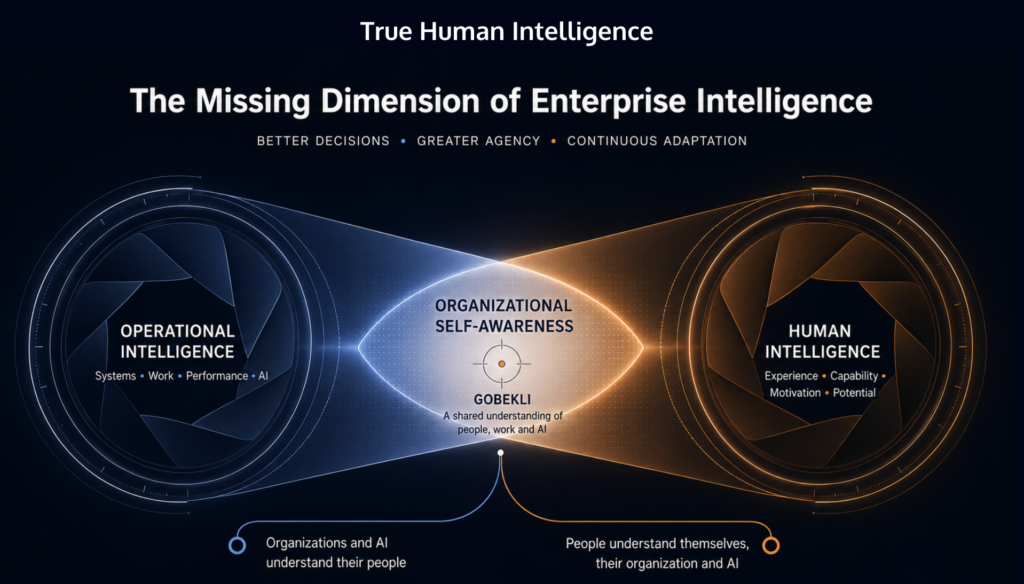
A Human Intelligence Layer connects what organizations already know through their systems with the context only people can provide.

It transforms lived experience into useful intelligence—and returns that intelligence to the people and systems capable of using it to make better decisions, develop stronger capabilities, improve AI, and adapt continuously.

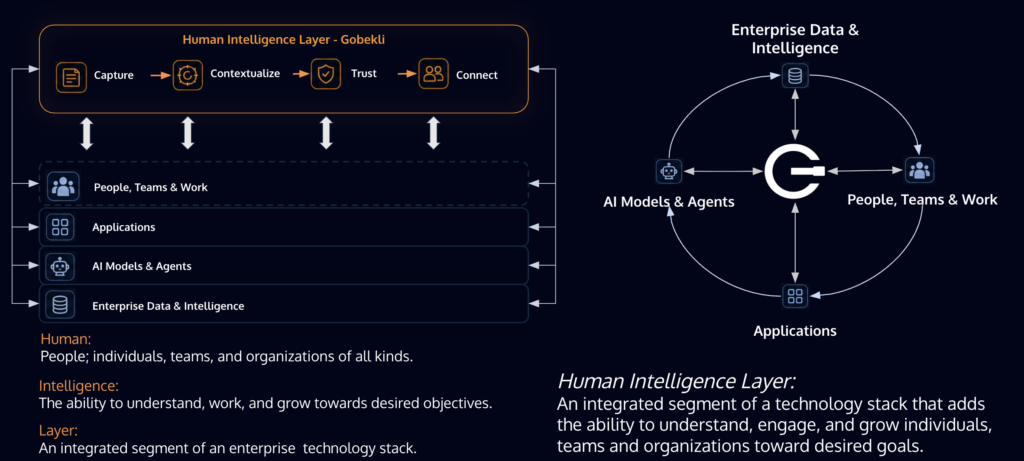
A Human Intelligence Layer is a sociotechnical architecture that enables people, organizations, and intelligent systems to continuously develop a shared, trusted understanding of human experience, capability, judgment, relationships, goals, evidence, and change.

Its purpose is to transform lived experience into useful understanding—and useful understanding into better decisions, stronger capabilities, improved AI context, and continuous adaptation.

Information becomes intelligence when it helps someone understand what is happening, why it matters, and what to do next.

A Human Intelligence Layer is not simply another database, dashboard, chatbot, or AI model. It is a persistent architectural responsibility that connects people, systems, processes, and contexts.

It sits across existing technology rather than replacing it—preserving and developing the human context those systems cannot create on their own.

Lorem ipsum dolor sit amet, consectetur adipiscing elit. Ut elit tellus, luctus nec ullamcorper mattis, pulvinar dapibus leo.

How do you build a Human Intelligence Layer?

You do not build one by extracting more data about people.

A Human Intelligence Layer emerges through a continuous feedback loop of trust, participation, context, and returned value.

People contribute experience, reflection, evidence, judgment, and feedback because doing so helps them accomplish something meaningful. That human context is then verified, connected, and transformed into useful understanding.

The understanding is returned through better decisions, recognition, development, opportunity, coordination, and support. As more people participate and benefit, the intelligence becomes richer, more trusted, and more useful to everyone.

Seven-stage feedback loop for building a Human Intelligence Layer through trust, participation, context, verification, returned value, and action.

Participation is the source of intelligence. Trust makes it possible.

Organizations cannot understand themselves without the participation of the people who create their work, knowledge, culture, and outcomes.

Technology can record activity. It cannot independently explain why a decision succeeded, where judgment mattered, what tradeoffs were considered, how relationships shaped an outcome, what someone learned, or what should change next.

Those insights remain embedded in lived human experience.

But participation must never be purely extractive. If people are asked to contribute reflection, context, evidence, or feedback, the system must return meaningful value to them.

That value may include greater self-understanding, recognition, stronger records, learning, coaching, career support, improved workflows, evidence of contribution, portable achievements, and better opportunities.

A Human Intelligence Layer should become more valuable to the individual as it becomes more valuable to the organization.

Because human context is deeply personal, trust must be architectural—not aspirational.

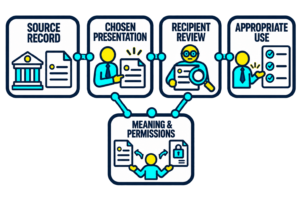
People must be able to understand what is being captured, what supports it, who can access it, how it may be used, and whether it can be corrected, withdrawn, or shared for another purpose.

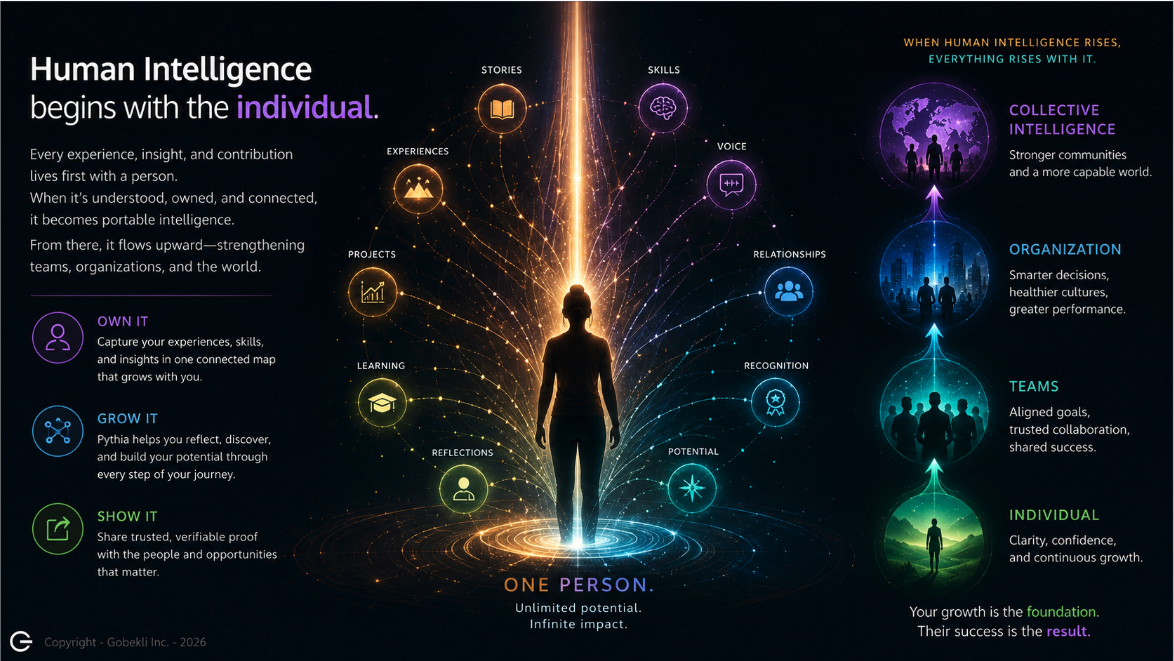
Human intelligence begins with the individual.

Every experience, insight, relationship, capability, and contribution lives first with a person.

When people are supported in understanding their experiences, connecting what they have learned, and preserving evidence of what they can do, that experience becomes portable intelligence they can own, develop, and selectively share.

This is how human intelligence grows without separating people from the value they create.

It begins with helping every person:

Own it. Capture their experiences, capabilities, insights, and evidence in a connected understanding that grows with them.

Grow it. Reflect, discover patterns, develop potential, and identify meaningful next steps.

Show it. Share trusted, relevant context with the people, organizations, and opportunities that matter.

Individual surrounded by connected experiences, skills, stories, relationships, learning, recognition, and potential flowing into collective intelligence.

The individual is a primary beneficiary—not merely a source of data.

For an individual, the Human Intelligence Layer supports a continuously evolving understanding of identity, experience, capability, motivation, evidence, relationships, goals, growth, and potential.

It helps a person answer:

  • What have I actually learned?

  • What am I capable of?

  • What evidence supports that?

  • What patterns exist across my experience?

  • What environments help me thrive?

  • What am I ready to do next?

  • What should I share, with whom, and why?

As individuals understand themselves more clearly, they gain greater agency, confidence, recognition, and opportunity. Their growth then strengthens the teams, organizations, and communities around them.

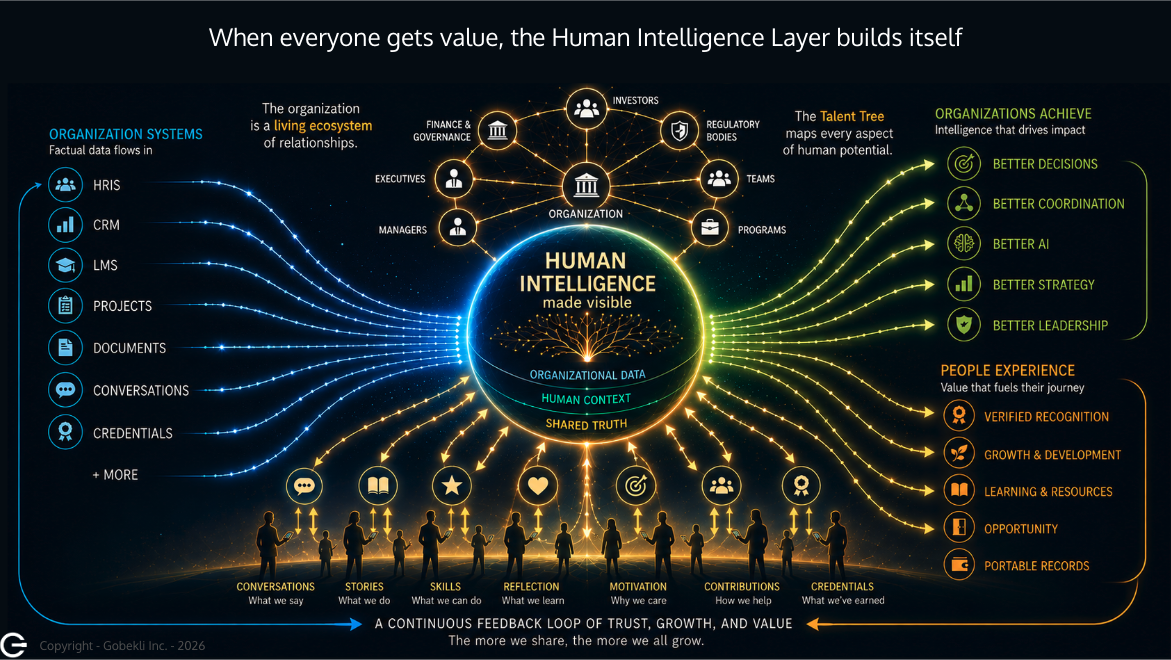
When everyone receives value, the Human Intelligence Layer builds itself.

A Human Intelligence Layer does not depend on a single system or source.

Organizational systems contribute factual records about work, learning, projects, credentials, customers, and outcomes. People contribute the experience, reflection, judgment, relationships, motivations, and context those records cannot provide on their own.

The layer connects these signals into a shared and trusted understanding—then returns useful intelligence to the people and organizations that helped create it.

Every valuable interaction creates new experience. New experience generates richer context. Richer context improves future understanding.

The result is not a one-way pipeline of data extraction. It is a continuous feedback loop of trust, growth, and shared value.

Organizational systems and human contributions combining into shared intelligence that returns value to people and organizations.

One shared foundation. Many forms of value.

As individuals understand themselves more clearly, organizations gain better context.

As organizations learn, people receive better support, recognition, development, and opportunity.

As both improve, AI systems receive more relevant and trustworthy context.

As AI systems improve, people and organizations discover better ways of working.

This creates a reinforcing cycle:

Better people context → better organizational understanding → better AI context → better decisions and experiences → better people context

Every person can see what they need to succeed.

A Human Intelligence Layer does not give everyone the same dashboard or reduce people to a single profile.

It creates relevant perspectives over a shared foundation of understanding—giving each person, team, system, or AI assistant the context needed for the decision in front of them.

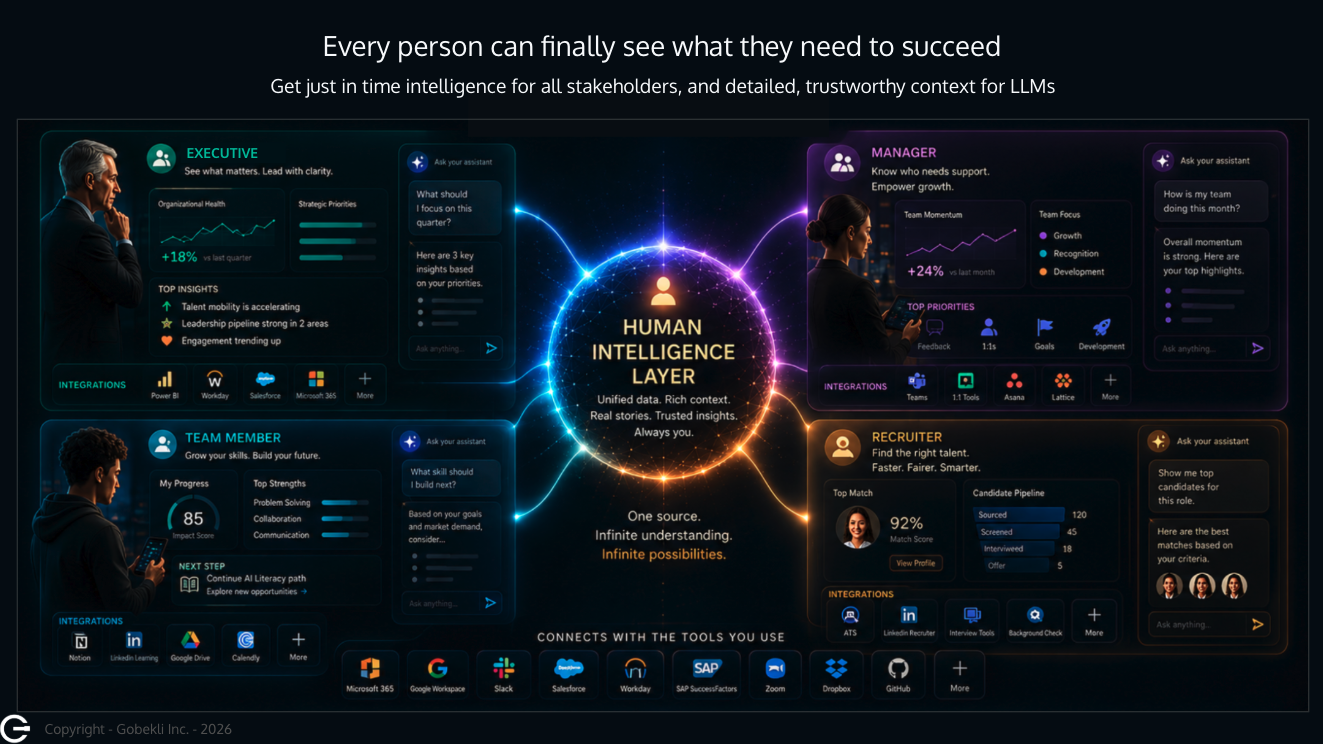
An executive can see where the organization is gaining or losing momentum.

A manager can understand where a team needs support, recognition, or development.

An individual can identify strengths, growth, and meaningful next steps.

A recruiter can understand candidates through evidence and context rather than keywords alone.

An AI system can act with a more complete understanding of people, goals, responsibilities, relationships, permissions, and prior decisions.

Connected interfaces providing relevant human intelligence to executives, managers, team members, recruiters, and AI assistants.

The perspective changes. The underlying intelligence remains connected.

Human context becomes useful when it is organized around a meaningful objective.

The same experience might contribute to a career profile, hiring profile, team profile, workflow profile, learning profile, leadership profile, or AI-transformation profile.

The underlying experience remains consistent. The perspective changes according to purpose.

For AI systems, this shared foundation provides richer context about purpose, people, responsibilities, authority, goals, permissions, evidence, relationships, prior decisions, feedback, and outcomes.

The objective is not to make AI more independent from people. It is to make human–AI coordination more informed, accountable, and useful.

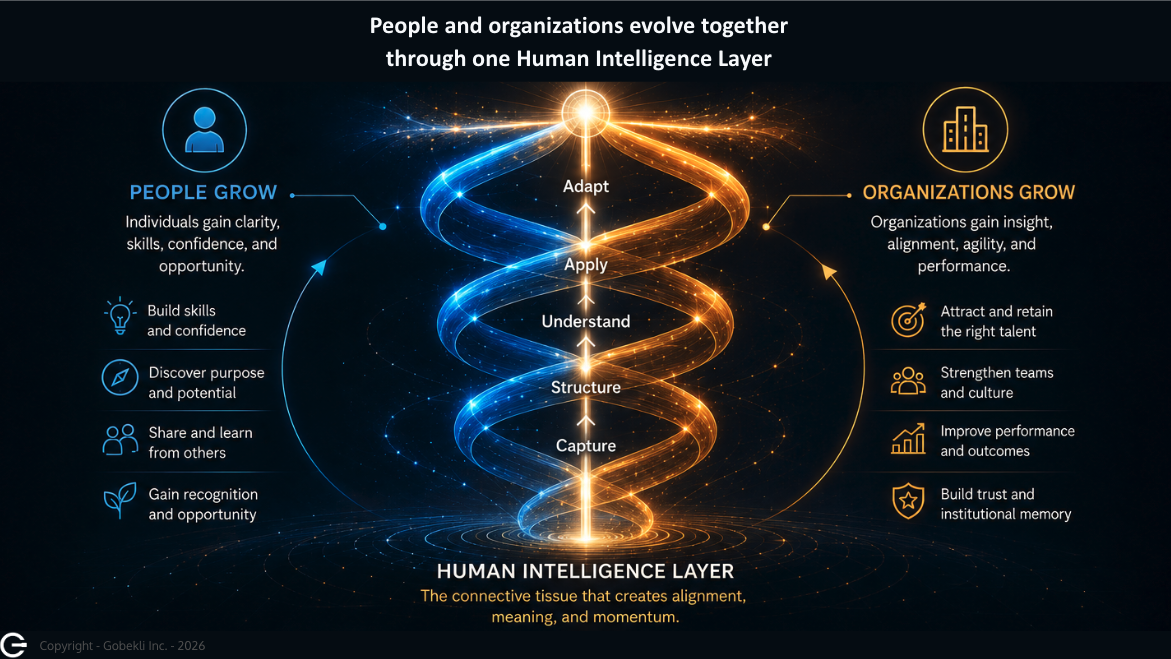
People and organizations evolve together.

Individual growth and organizational adaptability are not separate outcomes. They are two sides of the same feedback loop.

When people can understand their experience, develop their capabilities, receive recognition, and find meaningful opportunities, they become more confident, connected, and prepared to contribute.

When organizations can understand how people, work, relationships, and capabilities are changing, they become better able to strengthen teams, improve performance, preserve institutional knowledge, and respond to change.

Each strengthens the other.

People create the intelligence organizations need to adapt. Organizations create the environments, resources, recognition, and opportunities that help people grow.

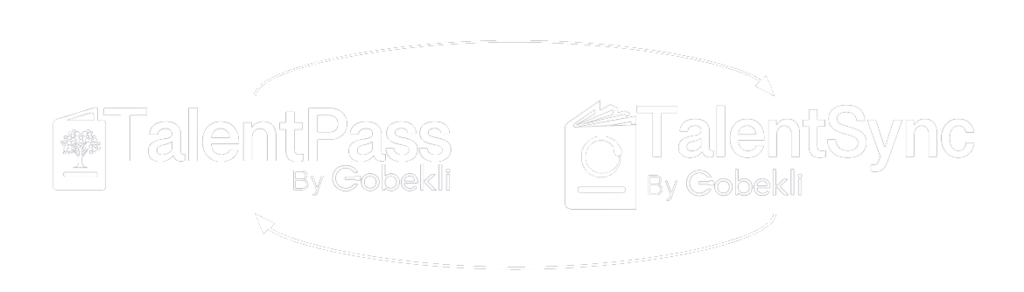
Intertwined blue and gold feedback loops showing people and organizations growing together through capture, understanding, application, and adaptation.

Organizational self-awareness in practice

For an organization, the Human Intelligence Layer supports a continuously evolving understanding of people, teams, work, workflows, decisions, capabilities, culture, risk, learning, and AI transformation.

It helps leaders ask:

  • How is work changing?

  • Where is human judgment becoming more important?

  • Which teams are adapting successfully?

  • Where is AI creating value or increasing risk?

  • What new capabilities and practices are emerging?

  • Which contributions are going unrecognized?

  • What should the organization change next?

This is how human intelligence becomes organizational adaptability—and how transformation becomes a continuous capability rather than a one-time initiative.

A Human Intelligence Layer is a new architectural responsibility.

It is not a single application or isolated source of data. It is a persistent layer that connects people, systems, processes, and contexts across the organization.

Different platforms may implement it in different ways, but a legitimate Human Intelligence Layer must perform six foundational responsibilities.

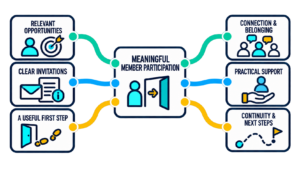
1. Meaningful participation

People need meaningful ways to contribute experience, reflection, evidence, judgment, and feedback.

Participation cannot be treated merely as a source of organizational data. It must help people accomplish something important and return value through understanding, recognition, learning, support, or opportunity.

2. Guided dialogue and reflection

Human understanding does not emerge from forms and system activity alone.

People often make sense of their experience through conversation, storytelling, questioning, reflection, and interpretation. Guided dialogue helps them clarify what happened, why it mattered, what they learned, and what they wish to preserve or share.

3. Purpose-driven perspectives

Human context becomes useful when it is organized around a meaningful objective.

The layer must generate different perspectives for different purposes—such as hiring, learning, team development, recognition, workflow improvement, leadership, and AI transformation—without fragmenting the underlying intelligence.

4. Shared semantic context

Human experience is distributed across skills, roles, credentials, projects, relationships, evidence, conversations, and systems.

A shared semantic foundation connects these fragments while preserving their original context. The goal is not to force everyone into one vocabulary, but to preserve meaning while enabling people and systems to understand one another.

5. Trust, provenance, and governance

Human context is deeply sensitive. Trust must therefore be built into the architecture.

The layer must preserve who created a claim, where evidence came from, what has been verified, who can access it, why they can see it, how it may be used, and whether it can be corrected, withdrawn, or revoked.

6. Continuous feedback and adaptation

A system is not intelligent merely because it collects more information.

Understanding must be returned to the people and systems capable of using it. Decisions and actions then create new experiences, evidence, and outcomes that improve future understanding.

This turns human context from a static record into a living cycle of learning and adaptation.

The operating lifecycle

Participate → Capture → Contextualize → Trust → Understand → Act → Learn → Adapt

People participate because the interaction helps them accomplish something meaningful.

Their experience, reflection, evidence, goals, and feedback are captured and connected to relevant people, roles, activities, relationships, systems, and outcomes.

Provenance, permission, evidence, and governance establish trust. That trusted context produces useful understanding, which people and systems use to make decisions, improve work, support growth, and guide AI.

The results return to the layer—allowing people, organizations, workflows, strategies, and intelligent systems to continuously learn and adapt.

Gobekli makes the Human Intelligence Layer practical.

Gobekli gives people and organizations connected ways to capture, understand, develop, verify, and use human intelligence.

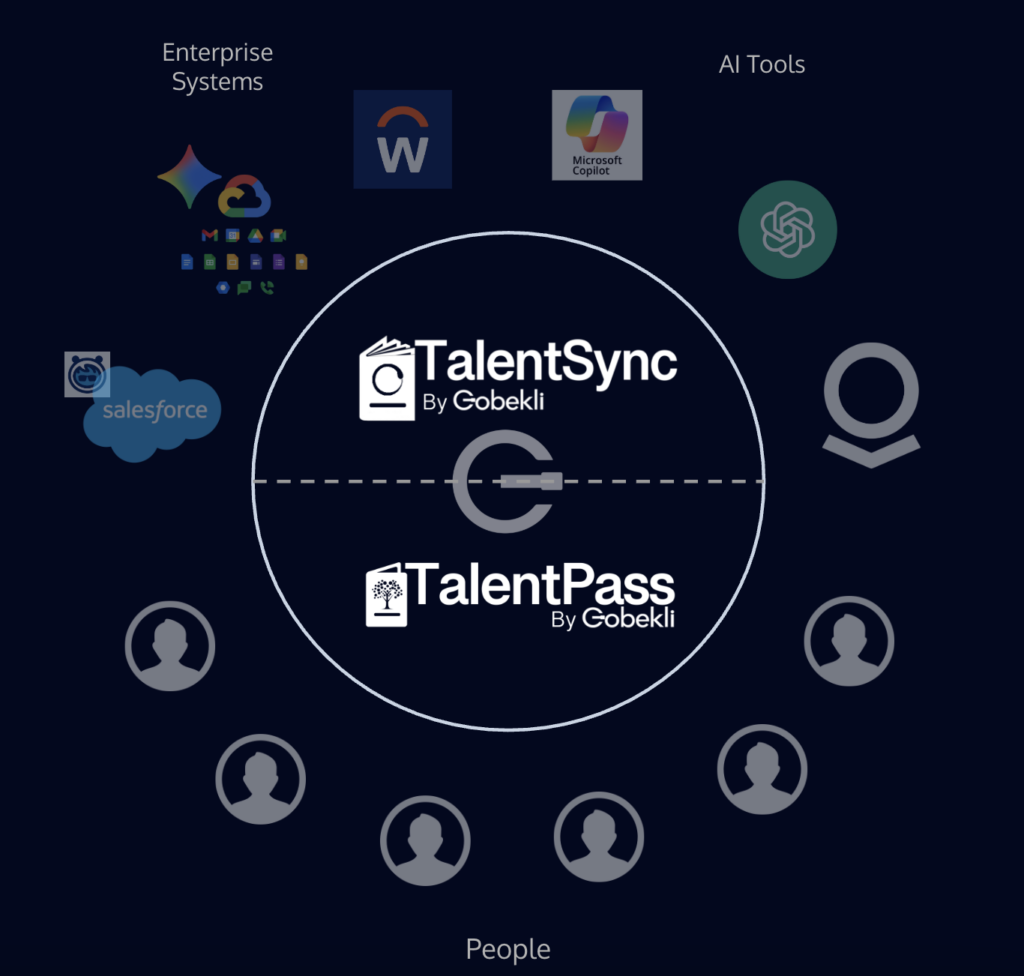
TalentPass helps individuals build a living understanding of who they are, what they can do, how they are growing, and what they are ready to do next.

TalentSync helps organizations turn that shared intelligence into better hiring, stronger teams, more informed leadership, and continuous adaptation.

Together, they create a Human Intelligence Layer in which individual growth and organizational intelligence reinforce one another.

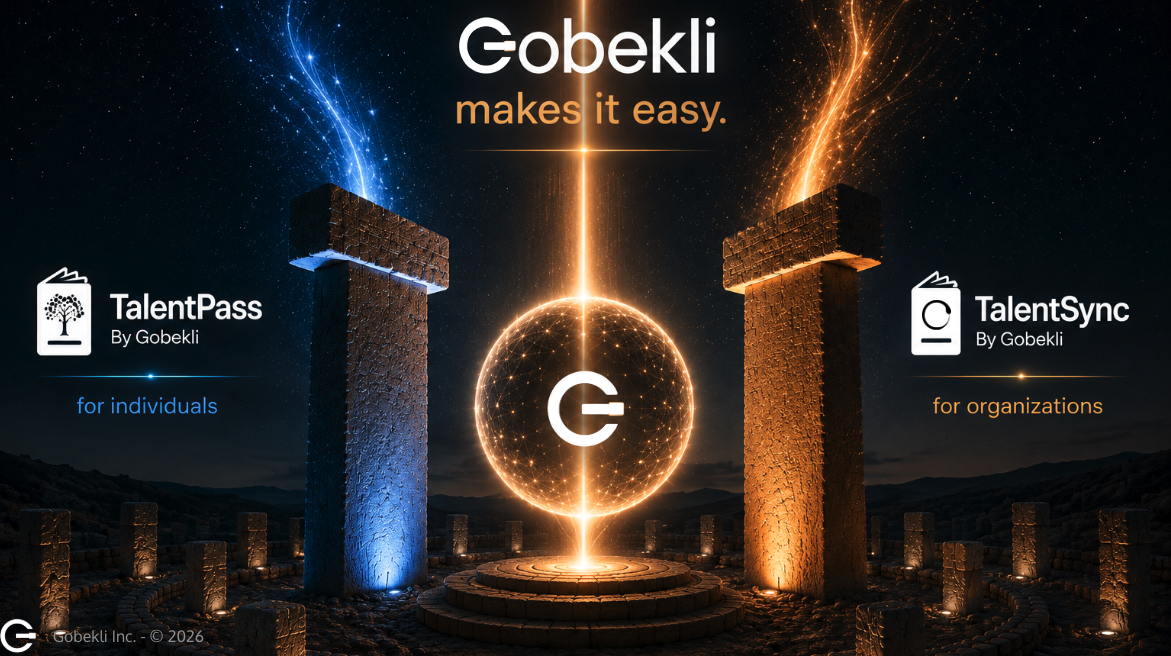
Gobekli connecting TalentPass for individuals and TalentSync for organizations through one Human Intelligence Layer.

TalentSync

Human intelligence for organizations

Understand your people, teams, work, and transformation with richer human context.

TalentSync helps organizations make better talent decisions, recognize emerging capabilities, strengthen teams, preserve institutional knowledge, and understand how people and AI are changing work together.

Explore TalentSync

TalentSync

Human intelligence for organizations

Understand your people, teams, work, and transformation with richer human context.

TalentSync helps organizations make better talent decisions, recognize emerging capabilities, strengthen teams, preserve institutional knowledge, and understand how people and AI are changing work together.

Explore TalentSync

A shared foundation for people, organizations, and AI

Gobekli’s Pythia architecture uses guided dialogue to help people reflect, clarify, connect, and decide what they wish to preserve or share. Understanding is developed with people rather than extracted from them.

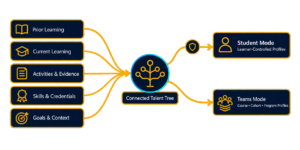
The Talent Tree provides a shared semantic foundation for connecting human experience across broad dimensions of talent and representing it through trusted details, evidence, and data.

Profiles organize that intelligence around a specific purpose. Passport Pages connect it with the organizations, systems, services, and opportunities where it can create value.

Together, these capabilities transform fragmented human experience into useful, portable, and continuously evolving intelligence.

The Human Intelligence Layer

Organizations must continuously adapt to survive.

Go deeper into the Human Intelligence Layer

The story above explains why organizations need a Human Intelligence Layer and what it makes possible.

The sections below explore the category in greater depth: what each part of the term means, what distinguishes the layer from existing technologies, which architectural capabilities it requires, how it operates, and how it serves individuals, organizations, and AI systems through one shared foundation.

The Human Intelligence Layer is both a human-centered philosophy and a technical responsibility. It connects human participation, trusted context, organizational systems, and intelligent technologies so that people and organizations can continuously understand, learn, and adapt together.

Define the Term
Human + Intelligence + Layer

Set the Boundaries
What the layer is—and is not

Explore the Architecture
Six required capabilities

Follow the Lifecycle
From participation to adaptation

See the Perspectives
Individual, organization, and AI

Build on Trust
Governance, interoperability, and agency

Defining the term: Human + Intelligence + Layer

Each word defines an essential part of the category.

Human establishes whose experience and agency must remain central. Intelligence distinguishes useful understanding from stored information. Layer describes an architectural responsibility that connects people and technology across otherwise separate systems.

Human

Human means more than employee data.

The Talent Tree creates a shared structure for understanding 13 dimensions of a person:

Motivations, Abilities and Agency, Interests, Passions, Voice, Domain, Potential, Leadership, Stewardship, Reputation, Journey, Technical Skills, and Human Skills.

These dimensions become more meaningful when connected to experiences, evidence, relationships, decisions, roles, and outcomes over time.

Together, they can reveal deeper forms of human intelligence—including applied judgment, practical wisdom, contextualized capability, emerging potential, relationship dynamics, contribution patterns, and identity and purpose.

Across teams and workflows, they also help reveal how people collaborate, where knowledge lives, how capabilities combine, and what conditions enable people and organizations to succeed.

Intelligence

Intelligence means more than information, analytics, or cognitive ability.

Within this architecture, intelligence is the capacity to interpret experience, understand relationships, recognize meaningful patterns, learn from outcomes, make better decisions, and adapt toward a desired objective.

A record of an event is information. Understanding how that event changed a person, workflow, or decision is intelligence.

A list of skills is information. Understanding how those skills were developed, demonstrated, connected, and applied is intelligence.

A dashboard of AI usage is information. Understanding where AI is improving work, creating risk, changing judgment, or reshaping roles is intelligence.

Layer

Layer means more than another application.

It is a persistent architectural responsibility that connects people, systems, processes, and contexts across an organization or ecosystem.

A Human Intelligence Layer can connect with:

  • Enterprise applications
  • Data systems
  • AI models and agents
  • Identity infrastructure
  • Credentials
  • Workflow tools
  • Learning systems
  • Human participation

It sits across existing technology rather than replacing it. Its responsibility is to preserve, connect, and develop the human context those systems cannot create on their own.

Information becomes intelligence when it helps someone understand what is happening, why it matters, and what to do next.

The Human Intelligence Layer ensures that this understanding can move between people, organizations, and intelligent systems without losing its human context.

What a Human Intelligence Layer is—and is not

A category becomes useful only when its boundaries are clear.

Many existing technologies can contribute to a Human Intelligence Layer. But no single application, data source, or AI capability performs the complete responsibility on its own.

A Human Intelligence Layer is

A participation architecture
It gives people meaningful ways to contribute experience, reflection, evidence, judgment, and feedback.

A context architecture
It connects information to people, roles, activities, relationships, goals, sources, and outcomes.

A semantic architecture
It provides shared structures through which people and machines can understand human experience.

A trust architecture
It preserves provenance, evidence, identity, consent, permission, and governance.

A feedback architecture
It returns useful understanding to individuals, teams, leaders, applications, and AI systems.

A reciprocal-value architecture
It creates value for the people contributing human context—not only for the organizations using it.

It is not simply

  • A chatbot
  • An HRIS
  • A skills database
  • A knowledge graph
  • An employee survey
  • A performance dashboard
  • A credential wallet
  • A talent marketplace
  • A knowledge-management system
  • A people-analytics platform
  • A human-in-the-loop workflow
  • An AI-governance framework
  • An employee-monitoring system

Each may address part of the need. None alone connects participation, context, trust, returned value, and continuous learning across people, organizations, and AI.

A chatbot can guide dialogue. A knowledge graph can connect information. A wallet can preserve trusted records. Analytics can reveal patterns. AI governance can establish controls.

A Human Intelligence Layer connects these responsibilities around a shared and continuously evolving understanding of people, work, and change.

Without participation and returned value, it becomes extractive. Without shared context, it remains fragmented. Without trust and governance, it risks becoming surveillance.


The six required capabilities

Different organizations and platforms may implement a Human Intelligence Layer in different ways. But the architectural responsibilities remain consistent.

A legitimate Human Intelligence Layer should provide six foundational capabilities.


Organizations cannot understand themselves without the participation of the people who create their work, knowledge, culture, and outcomes.

People need meaningful ways to contribute experience, reflection, evidence, judgment, and feedback. Participation must help them accomplish something important and return value through greater understanding, recognition, learning, support, or opportunity.

Participation is not merely an engagement feature. It is a primary source of human intelligence.

Human understanding does not emerge from forms and system activity alone.

People often make sense of their experience through conversation, storytelling, questioning, reflection, clarification, and interpretation.

Guided dialogue helps people understand what happened, why it mattered, what they learned, and what they wish to preserve or share. Its purpose is not to define people or make decisions for them, but to help them develop and express their own understanding.

People do not participate because they want to populate an abstract data architecture. They participate because they are trying to accomplish something meaningful.

A Human Intelligence Layer must organize shared intelligence around specific purposes—such as preparing for an opportunity, improving a workflow, developing a capability, understanding a team, recognizing a contribution, or managing AI transformation.

The underlying intelligence remains connected. The perspective changes according to purpose.

Human experience is fragmented across skills, credentials, roles, projects, relationships, evidence, systems, and private memory.

A Human Intelligence Layer requires shared structures capable of connecting these fragments while preserving their original context.

The objective is not to force everyone into one vocabulary. It is to preserve meaning while allowing individuals, organizations, systems, and AI to understand and use relevant human context together.

Human context is deeply sensitive. A system that understands people can create significant value—but also significant risk.

Trust must therefore be architectural rather than aspirational.

The layer should preserve who created a claim, where evidence came from, what has been verified, who can access it, why they can see it, how it may be used, and whether it can be corrected, withdrawn, revoked, or shared for another purpose.

A system is not intelligent merely because it collects more information.

Understanding must be returned to the people and systems capable of using it to make decisions, improve work, support growth, reduce risk, recognize contribution, and guide AI.

Every action creates new experience, evidence, and outcomes. That new context improves future understanding—turning human intelligence into a continuous cycle of learning and adaptation.

The operating lifecycle

The Human Intelligence Layer operates as a continuous cycle.

People contribute human context, the layer transforms it into useful understanding, and that understanding guides action. Every action then creates new experience, evidence, and feedback that strengthens the next cycle.

Participate

People engage because the interaction helps them accomplish something meaningful.

Capture

Experiences, reflections, evidence, goals, feedback, and relevant work context are preserved.

Contextualize

Those signals are connected to people, roles, activities, relationships, capabilities, systems, decisions, and outcomes.

Trust

Provenance, evidence, validation, consent, permission, and governance establish confidence in what is known.

Understand

Connected context becomes useful perspectives for individuals, teams, leaders, organizations, applications, and AI.

Act

People and systems use that understanding to make decisions, improve work, support growth, coordinate action, and guide AI behavior.

Learn

Results, reflections, and new evidence return to the layer, revealing what worked, what changed, and what still needs attention.

Adapt

People, profiles, workflows, roles, strategies, systems, and AI models evolve in response to what has been learned.

Participate → Capture → Contextualize → Trust → Understand → Act → Learn → Adapt

This is how human context moves from fragmented experience to shared intelligence—and how shared intelligence becomes continuous adaptability.

One layer, three perspectives

A Human Intelligence Layer serves three interdependent participants: individuals, organizations, and intelligent systems.

These are not three separate intelligence systems. They are different perspectives over one shared and continuously evolving foundation of understanding.

The organization

For organizations, the layer develops a living understanding of people, teams, work, workflows, decisions, capabilities, culture, risk, learning, and AI transformation.

It helps leaders ask:

  • How is work changing?
  • Which teams are adapting successfully?
  • Where is human judgment becoming more important?
  • Where is AI creating value or risk?
  • What capabilities are emerging?
  • What should the organization change next?

This is organizational self-awareness in practice.

The individual

For individuals, the layer supports a continuously evolving understanding of identity, experience, capability, motivation, evidence, relationships, goals, growth, and potential.

It helps a person ask:

  • What have I learned?
  • What am I capable of?
  • What evidence supports that?
  • Where do I thrive?
  • What am I ready to do next?
  • What should I share, with whom, and why?

The individual is not merely a source of organizational data. They are a primary beneficiary of the system.

AI systems

For AI systems, the layer provides richer context about the environment and people they are serving.

That context may include:

  • Purpose and goals
  • People and responsibilities
  • Authority and permissions
  • Evidence and sources
  • Relationships and prior decisions
  • Feedback and outcomes
  • Human boundaries

The objective is not to make AI more independent from people. It is to make human–AI coordination more informed, accountable, and useful.

As individuals understand themselves more clearly, organizations gain better context.

As organizations learn, people receive better support, recognition, and opportunity.

As both improve, AI receives more relevant and trustworthy context.

Better people context → better organizational understanding → better AI context → better decisions and experiences → better people context

Built on trust, interoperability, and human agency

A Human Intelligence Layer can create significant value because it develops a richer understanding of people and organizations.

That same understanding creates risk if it is disconnected from consent, governance, transparency, portability, and human control.

These safeguards are not secondary features. They are foundational requirements of the category.

Trust and governance

People should be able to understand:

  • What information exists about them
  • Who created or contributed it
  • What evidence supports it
  • What has been verified
  • Who can access it
  • Why they can see it
  • How it may be used
  • Whether it can be corrected, withdrawn, or revoked

Trust must be embedded in how human intelligence is captured, connected, shared, and used—not added later as a policy statement.

Interoperability

Human intelligence is distributed across people, organizations, credentials, applications, workflows, and institutions.

The layer must connect with existing HR, learning, project, customer, identity, credential, collaboration, and AI systems without requiring them all to use the same language or structure.

The objective is not to impose one universal vocabulary. It is to preserve meaning while allowing trusted context to move between systems and purposes.

Human agency

People must remain active participants in developing and using human intelligence.

They should be supported in reflecting on their experience, deciding what matters, correcting inaccurate information, controlling what they share, and benefiting from the value their participation creates.

AI may help people recognize patterns, connect evidence, and explore possibilities. It should not silently define who they are or determine what they are capable of becoming.

Without these safeguards, a Human Intelligence Layer risks becoming surveillance infrastructure.

The category depends on a different relationship between people and technology: one built on participation rather than observation, shared value rather than extraction, and greater human agency rather than greater institutional control.

The Human Intelligence Layer

Organizations must continuously adapt to survive.