Every organization is now trying to figure out how AI will transform its work. But most are attempting that transformation without one critical piece of infrastructure: a reliable understanding of their people.
Transformation fails when organizations and AI systems do not understand the people doing the work—and when people lack the context they need to understand their roles, organizations, and AI tools.
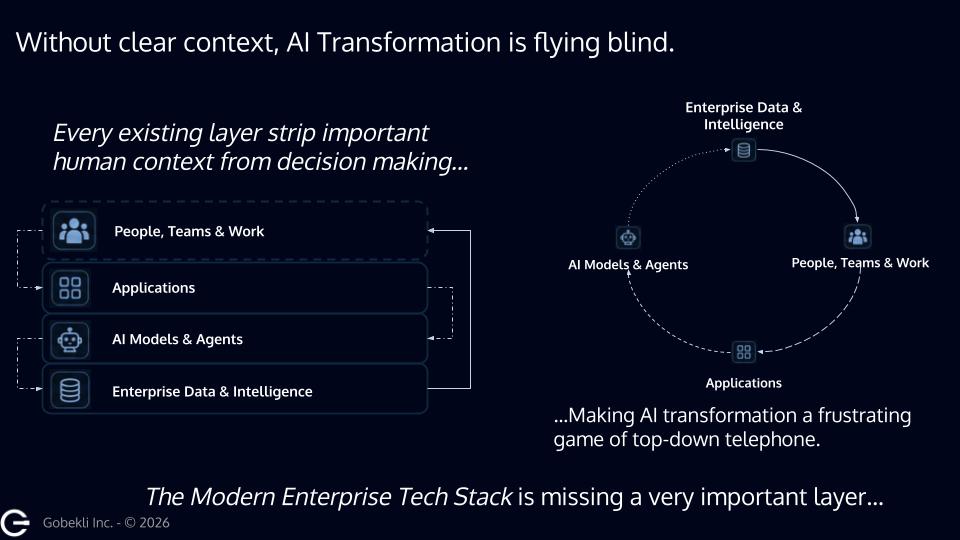
The modern enterprise stack contains applications, data, models, and agents. But as information moves upward through these layers, important human context gets stripped away. Transformation becomes a top-down game of telephone.
The missing layer sits between people and the rest of the technology stack. It connects what the organization’s systems know with what its people are learning through the work itself—and keeps that understanding current and trustworthy.
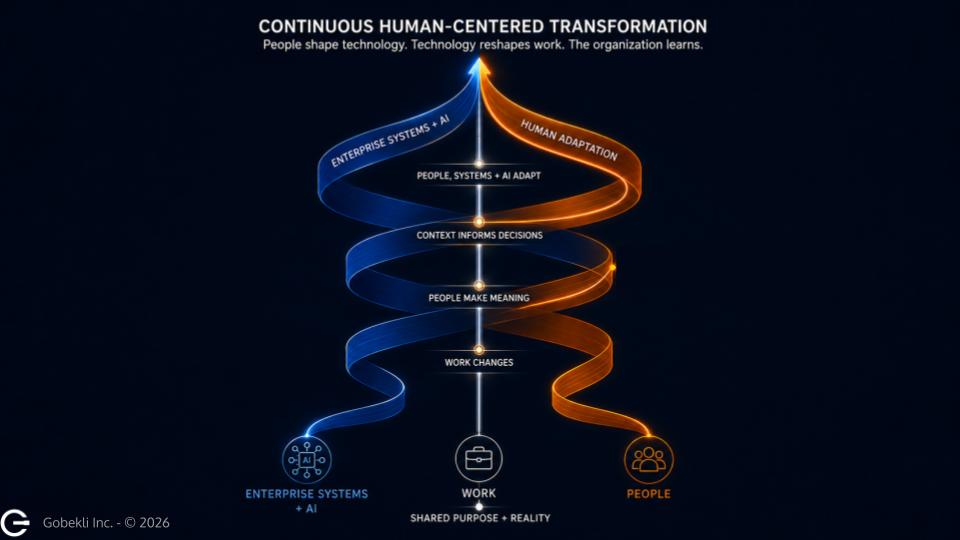
Operational intelligence tells us what is happening. Human intelligence helps us understand what it means. Organizational self-awareness is what happens when an institution has both, enabling it to learn and adapt in real time.
Real work creates better context. Better context improves decisions and AI. And every new decision gives people and the organization something else to learn from.
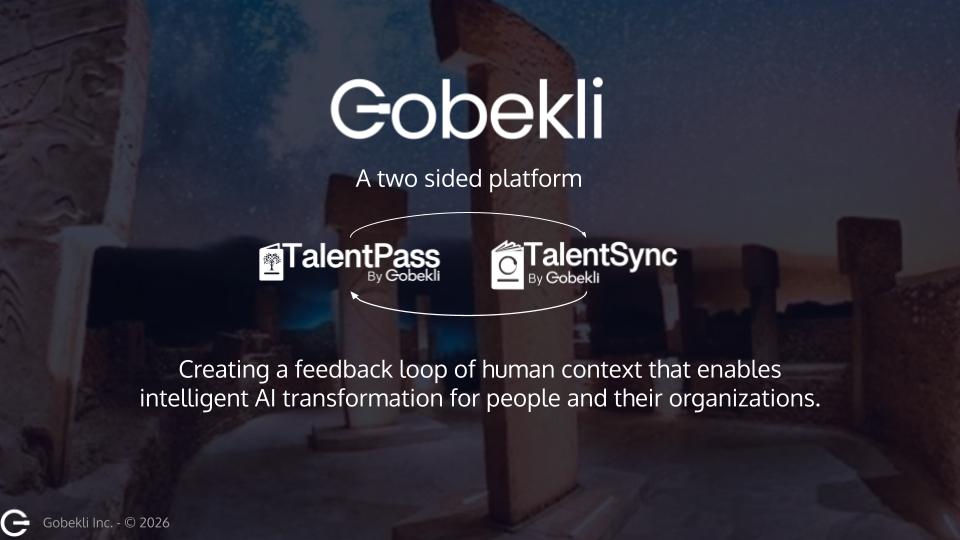
Gobekli turns that feedback loop into infrastructure—a living, trustworthy understanding of how people and work are changing as AI becomes part of the organization.
Gobekli is intentionally two-sided.
Organizations need better human context, but participation will only work if the people contributing that context receive meaningful value in return.
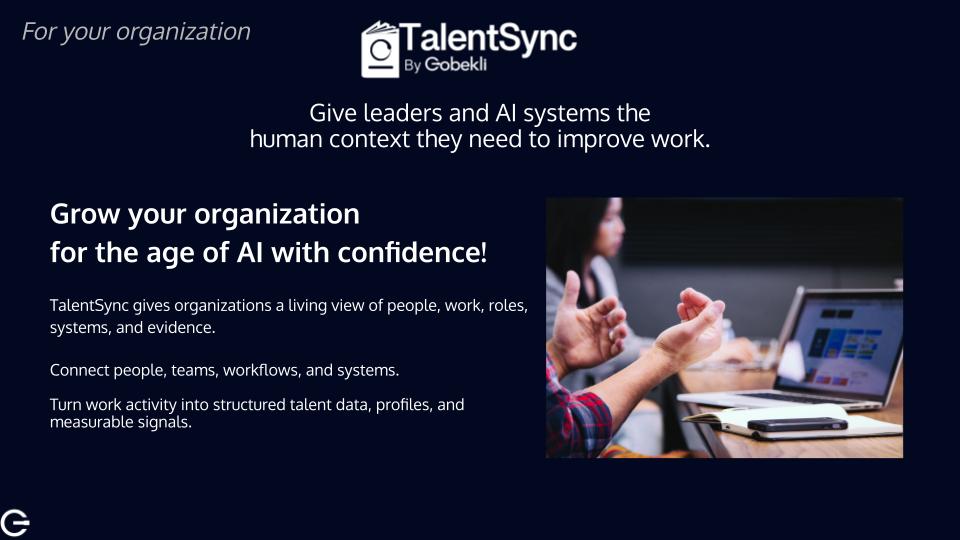
TalentSync gives the organization a living view of how work actually happens—and how people, roles, and workflows are changing as AI enters the picture.
TalentPass gives individuals their own private, portable perspective. Reviewed work can become recognition, evidence, development support, and proof they can carry forward.
Together, they reveal where AI improves work, where human judgment still matters, and how better human context can increase revenue, reduce waste and risk, and strengthen teams.
So that is the architecture. Now let me make it concrete through a fictional financial-services organization called Horizon.