
For recruiters, staffing firms & hiring teams
See the experience
behind the application.
Connect what a role really requires with what a candidate has actually done.
Gobekli is developing a recruiting workflow that helps you clarify requirements, ask for relevant experience, and review the evidence with candidates and hiring managers.
TalentPass is in public beta. TalentSync Recruiter is in development, with access and supported workflows agreed for each engagement. Review availability.
A polished application still leaves important questions.
What does the role need?
A job description can list requirements without explaining the decisions, responsibilities, and conditions behind them.
What has this person done?
A résumé can summarize a career while leaving out the relevant work, individual contribution, and supporting evidence.
What should we ask next?
Recruiters and hiring managers need a shared basis for follow-up, with uncertainty visible and human judgment in charge.
The workflow we’re building
From the role brief to a better-informed conversation.
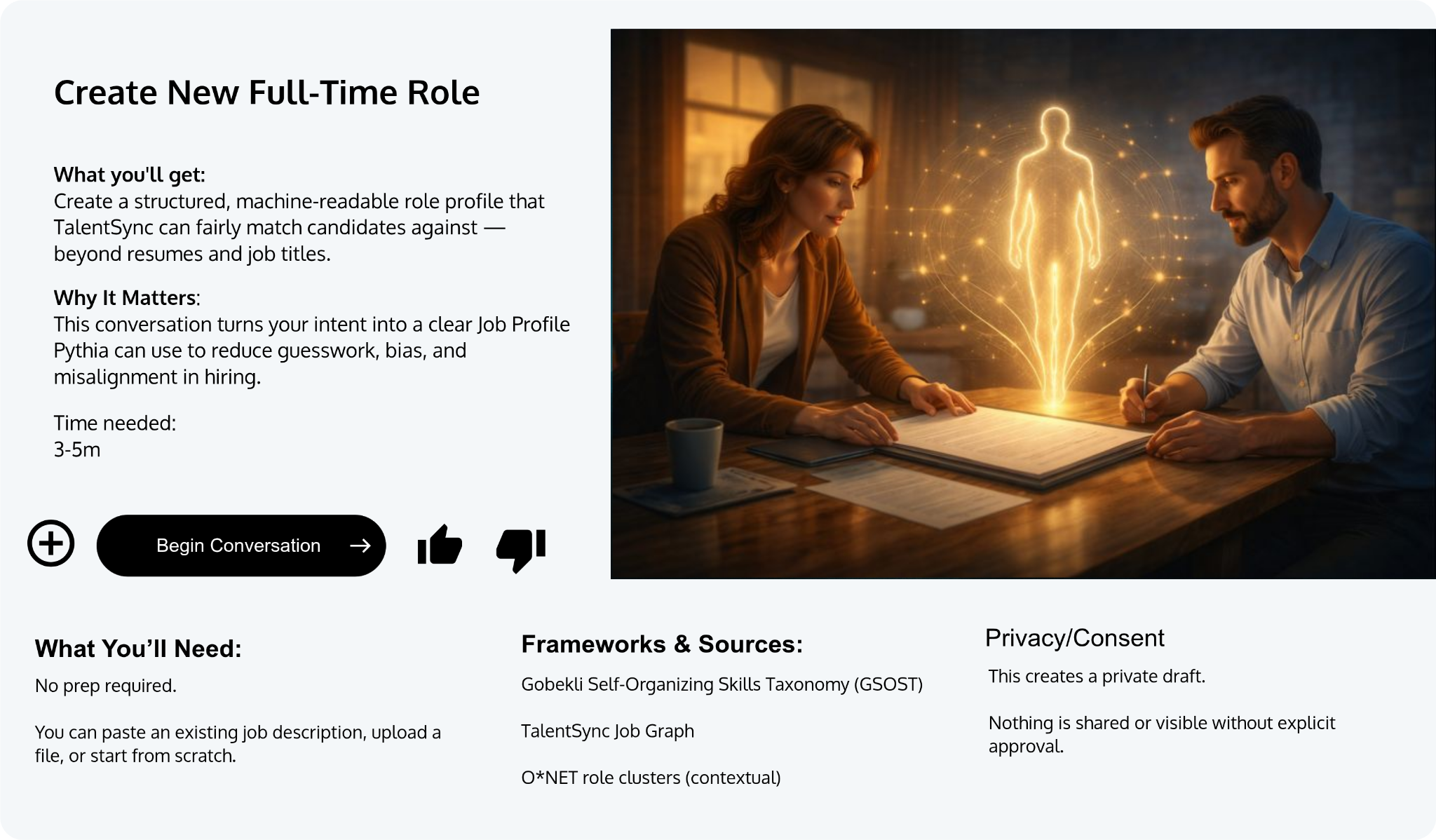
Clarify the role
Start with the job description. Use Pythia to explore the actual work, then have the hiring team confirm the requirements.
Invite relevant experience
Ask candidates for a profile focused on the opportunity. TalentPass guides them to explain experience and review what they share.
Examine the evidence
Connect relevant examples, records, and credentials with the role. Identify what is supported and what needs a follow-up question.
Continue your hiring process
Use an agreed profile-link handoff or supported export. Keep decisions with your hiring team and confirm any ATS integration separately.
One connected purpose: a clearer account of the work, a more useful account of the person, and an informed conversation about the relationship between them.
TalentSync for the recruiting team
Agree on what you’re looking for.
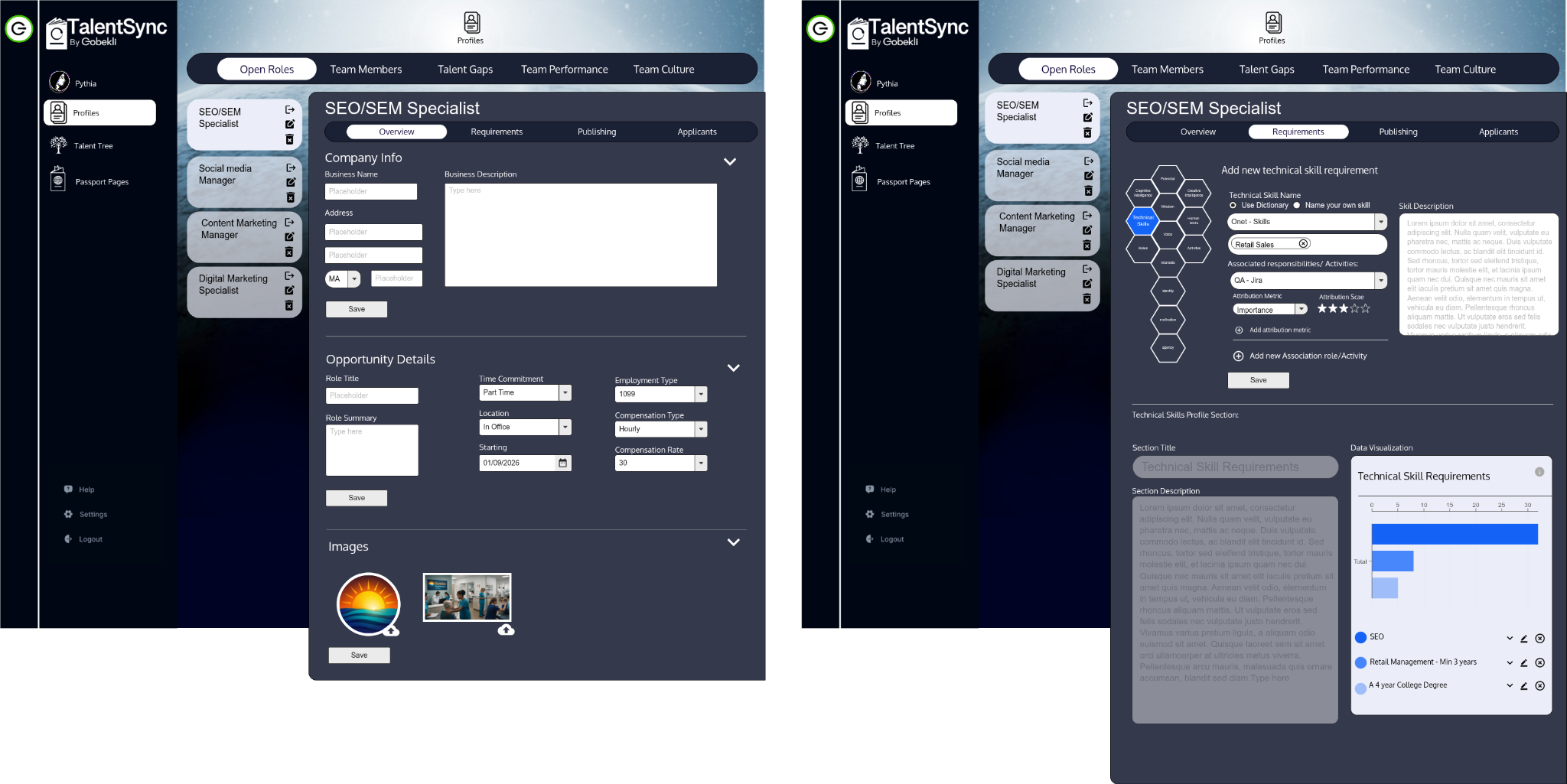
Translate a broad brief into responsibilities and evidence questions your hiring team can use. Distinguish essential capabilities from preferences and things someone could learn with support.
For agencies, that creates a clearer basis for the client conversation. For internal teams, it helps recruiters and hiring managers examine the same requirements.
TalentPass for the candidate
Give experience the context it deserves.
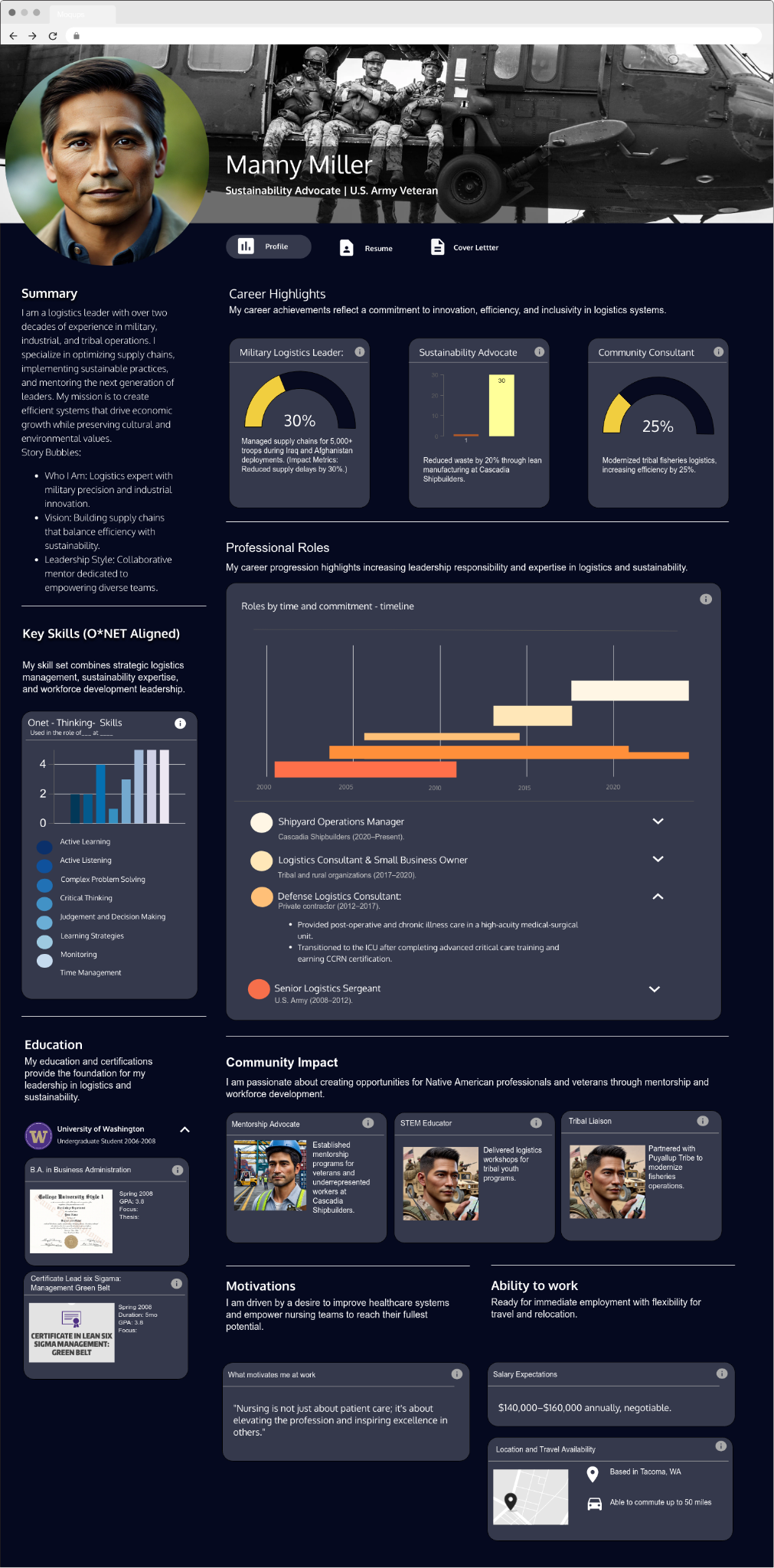
A person’s contribution can span jobs, projects, learning, and life. A relevant profile brings forward the examples that help explain what they could contribute to this opportunity.
Review the work they describe, their individual responsibility, and the evidence they can appropriately share. Use that context to prepare better questions.
The candidate helps shape the account. They review how their experience is described and choose what to share. Their effort contributes to a profile they can keep developing beyond this application.
More useful evidence. Clearer human judgment.
Keep sources visible
Distinguish the candidate’s account from a work sample, endorsement, or credential. Examine what each source establishes.
Turn gaps into questions
An unanswered requirement is something to investigate. Ask for a relevant example or proportionate follow-up.
Let people clarify
Give candidates a route to correct material misunderstandings. Keep the hiring team responsible for the decision.
The current approach focuses on context and evidence for human review.
A handoff into your hiring process
Bring better context to the tools you already use.
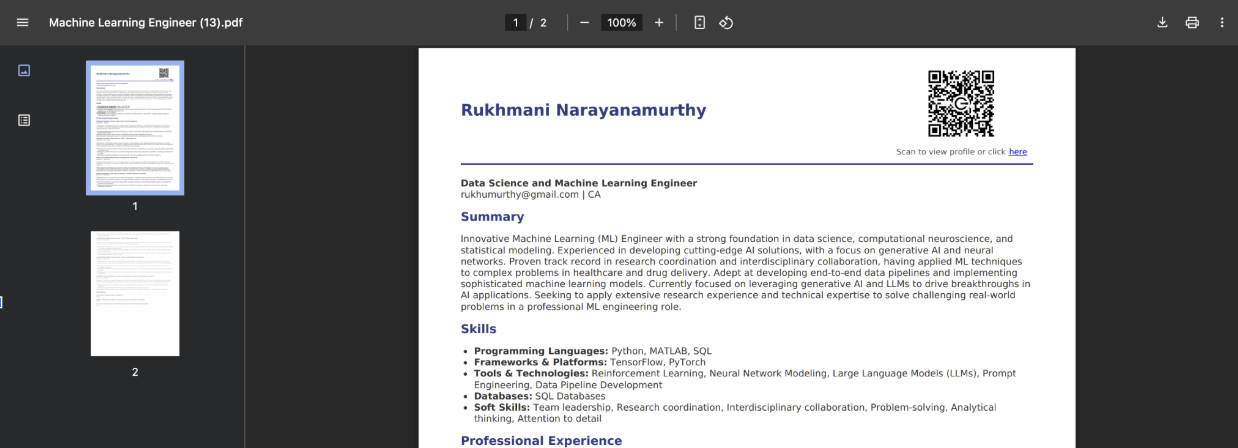
Start with how your recruiters and hiring managers receive applications today. We can assess an appropriate profile-link or supported export workflow before scoping a deeper connection.
Confirm who needs access, what they need to see, and how updates or corrections should reach them. A direct ATS integration requires its own agreed scope.
Built around the people making hiring work.
Independent recruiters & agencies
Clarify a client brief, explain why a candidate’s experience is relevant, and make feedback useful for the next submission.
Staffing firms
Explore a repeatable way to connect assignment requirements with candidate experience while respecting each sharing relationship.
Internal talent acquisition & hiring teams
Create a shared basis for candidate review, focused interviews, and an agreed handoff into onboarding.
Part of the Human Intelligence Layer
Hiring can begin a relationship that keeps learning.
The organization learns what people can contribute. People gain recognition, clearer opportunities, and an account of their experience they can carry forward.
TalentPass and TalentSync are independent products. Passport Pages are being developed to support purposeful exchange between people, organizations, and relevant systems. With appropriate permissions, the context created during hiring can inform onboarding and future development.
Make your next recruiting conversation more useful.
Explore practical guides for the role brief, candidate experience, and the decisions that follow.
Before you screen candidates, agree on the work.
A clearer role brief gives recruiters and hiring managers a shared basis for reviewing experience.
Read the guide →When a résumé leaves the relevant experience out.
Find the useful questions behind an unfamiliar title or an unconventional career path.
Read the guide →Ask for a useful candidate profile without creating another obstacle.
Make each request relevant to the role and worth the candidate’s effort.
Read the guide →What does the evidence actually support?
Keep the source and limits of each claim visible during candidate review.
Read the guide →Use the profile to prepare a better interview.
Spend the conversation exploring what matters rather than repeating the résumé.
Read the guide →Keep the context when the candidate enters your ATS.
A useful handoff needs accessible evidence and clear ownership, as well as a record in the system.
Read the guide →Give recruiters and clients the same understanding of the role.
Reduce ambiguity in the brief and make client feedback useful for the next conversation.
Read the guide →Test one recruiting workflow before expanding it.
Measure the usefulness of the workflow instead of assuming that more profile data means better hiring.
Read the guide →Questions before you begin.
Can we use this now?
TalentPass is in public beta. TalentSync Recruiter is an active development focus. We’ll confirm available access and supported workflows for your proposed engagement before you commit.
Do candidates need to start their profiles from scratch?
The intent is to help people build on their existing experience and records, then focus a profile on the opportunity. Confirm the supported import, profile-building, and sharing options for your workflow.
Does Gobekli replace our ATS?
The starting point can be a profile-link handoff or supported export into your existing process. We assess direct integration needs separately.
Is every statement in a profile verified?
No. Candidate accounts, examples, endorsements, and credentials have different sources and limits. Review what the evidence supports and identify anything that needs further examination.
Does AI make the hiring decision?
Recruiters and hiring teams remain responsible for decisions. Gobekli’s approach uses guided context and evidence to support their review.
What does it cost?
Scope, preparation, software access, and any configuration or development determine the proposal. Fees and responsibilities are agreed before work begins.
Can staffing agencies or independent recruiters work with Gobekli?
Yes. Bring one role, assignment, or client workflow. We can discuss the intended review process and the access and sharing arrangements it would require.
Start with one role
Bring us the hiring conversation you want to improve.
A real role, your current process, and the point where you need better information are enough to begin.
Your starting point
Bring the job description and explain how candidates reach your hiring team.
The useful first scope
Identify the questions, participants, and handoff worth testing.
A clear next step
Confirm current capabilities, any development needed, and how you will judge the result.
No software purchase is assumed. We agree on scope, access, fees, and responsibilities before beginning.