Your contribution can disappear inside a shared result.
A paper, research project, or course may involve many people. Its title rarely explains the questions you shaped, methods you developed, or problems you helped solve.
Important work doesn’t always become a publication.
Mentoring, teaching, coordination, service, and unfinished investigations can develop valuable expertise. Those contributions deserve context alongside your formal outputs.
A new audience may not speak your field’s language.
When working across disciplines or exploring roles outside academia, you may need to explain your experience in terms someone unfamiliar with your research can understand.
Connect your outputs with the work behind them.
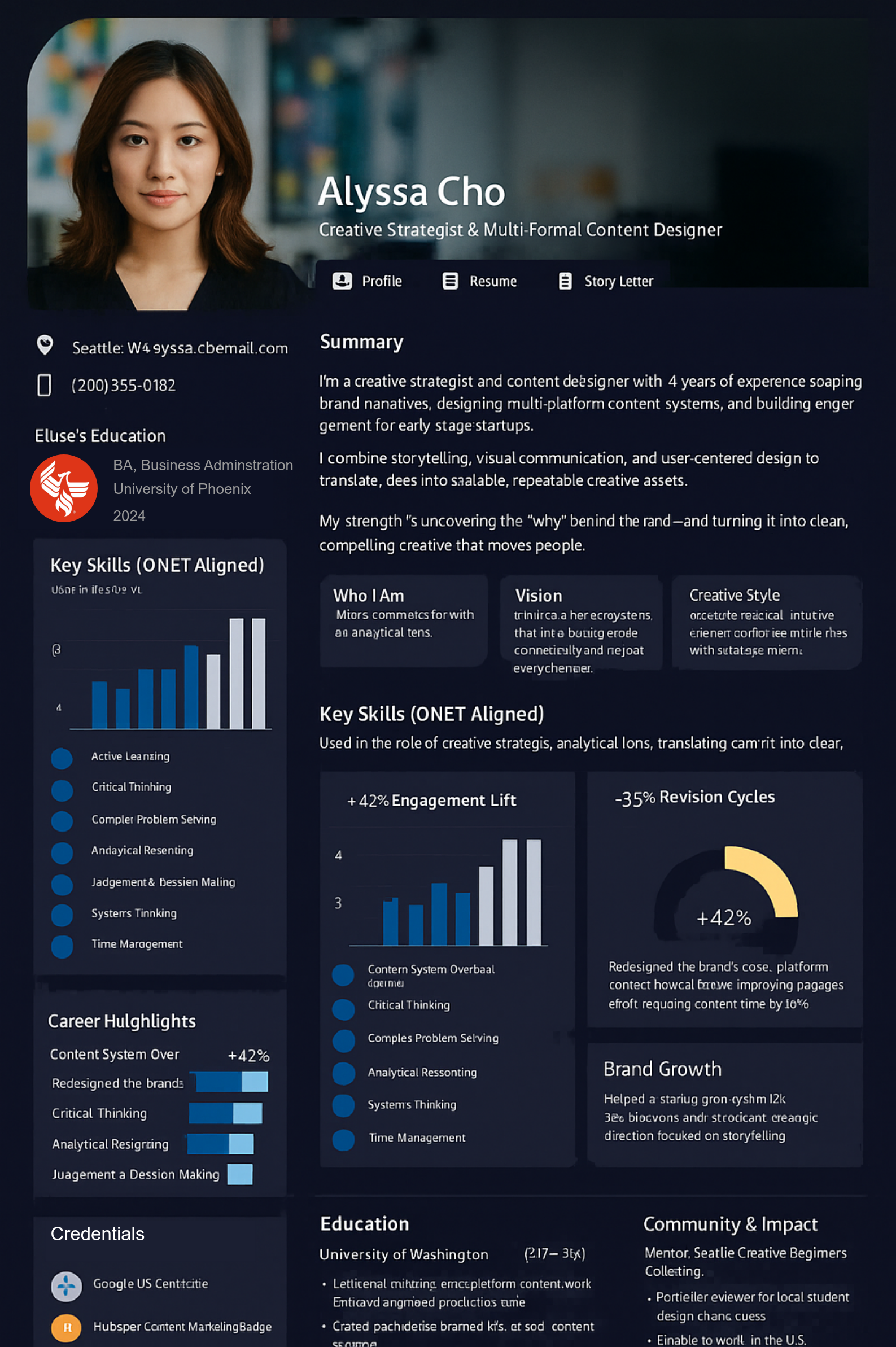
Create a professional profile that brings your academic and practical experience together around the contributions you want others to understand.
Include relevant examples of:
Research questions, methods, and investigations.
Publications, presentations, and creative scholarship.
Teaching, curriculum development, and mentoring.
Collaboration, project coordination, and academic service.
Professional practice and experience outside your institution.
Make your individual contribution visible.
Explain your role in shared work, the decisions you made, and the expertise you applied while giving collaborators appropriate credit.
Help different audiences understand your experience.
Connect specialized work with clear examples of analysis, communication, leadership, technical practice, or other relevant abilities.
Build a clearer account of your expertise.
1. Start with your academic and professional background.
Bring together your CV and the projects, teaching roles, or other experiences you want to explore. Include work in progress with its status clearly identified.
2. Talk through your contribution with Pythia.
Your AI guide helps you describe what you did, how you approached the work, and what you learned. Review its suggestions for accuracy and appropriate disciplinary language.
3. Connect your descriptions with relevant work.
Reference publications, presentations, teaching materials, or other examples where appropriate. Explain what each demonstrates and use material you’re permitted to share.
4. Shape your profile for the audience.
Select the experience relevant to a professional introduction or application. Adjust the level of detail so someone can understand your contribution within or beyond your field.
Carry your expertise into new settings.
Introducing yourself to potential collaborators
Explain the questions, methods, and experience you bring so people can see where your work might connect.
Preparing for academic opportunities
Organize examples of research, teaching, mentoring, and service as you prepare the materials a position or program requests.
Exploring work beyond academia
Translate your experience into concrete examples of solving problems, managing projects, evaluating evidence, and communicating complex ideas.
Recognizing contributions across your career
Connect work across institutions, appointments, and professional settings so your story reflects how your expertise has developed.
Explore ways to present your academic contributions.
Find examples of explaining research and thesis work, presenting publications, documenting teaching and conference contributions, and building professional connections.
Title: Streamline Your Research Documentation with Gobekli’s TalentPass As a graduate student, keeping track of your research progress,...
Previous
Next
Questions graduate students and academics may have
Does TalentPass replace my academic CV?
Your CV remains useful for presenting your academic record in an expected format. A TalentPass profile adds context about your experience and contributions for a particular audience.
Can I include research that hasn’t been published?
You can describe appropriate aspects of work in progress, clearly identifying its status. Choose information you’re permitted to share and respect any restrictions on unpublished or collaborative work.
How should I describe coauthored research?
Identify the shared project and explain your own role, such as developing a method, gathering evidence, conducting analysis, or writing particular sections. Give collaborators appropriate credit.
Is this useful outside laboratory or technical research?
Yes. Scholarship in the humanities, social sciences, arts, and professional disciplines also involves methods, judgment, collaboration, and contributions worth explaining through specific examples.
Can this help me explain my PhD experience to employers?
It can help you organize and describe relevant experience in language suited to the role. Focus on what you did and how it relates to the employer’s needs, alongside your subject expertise.
What can I use today?
Start with the profile-building features currently available in TalentPass. Broader capabilities for connected academic records, portfolios, and ongoing development are developing in stages. See Product Availability for the current breakdown.