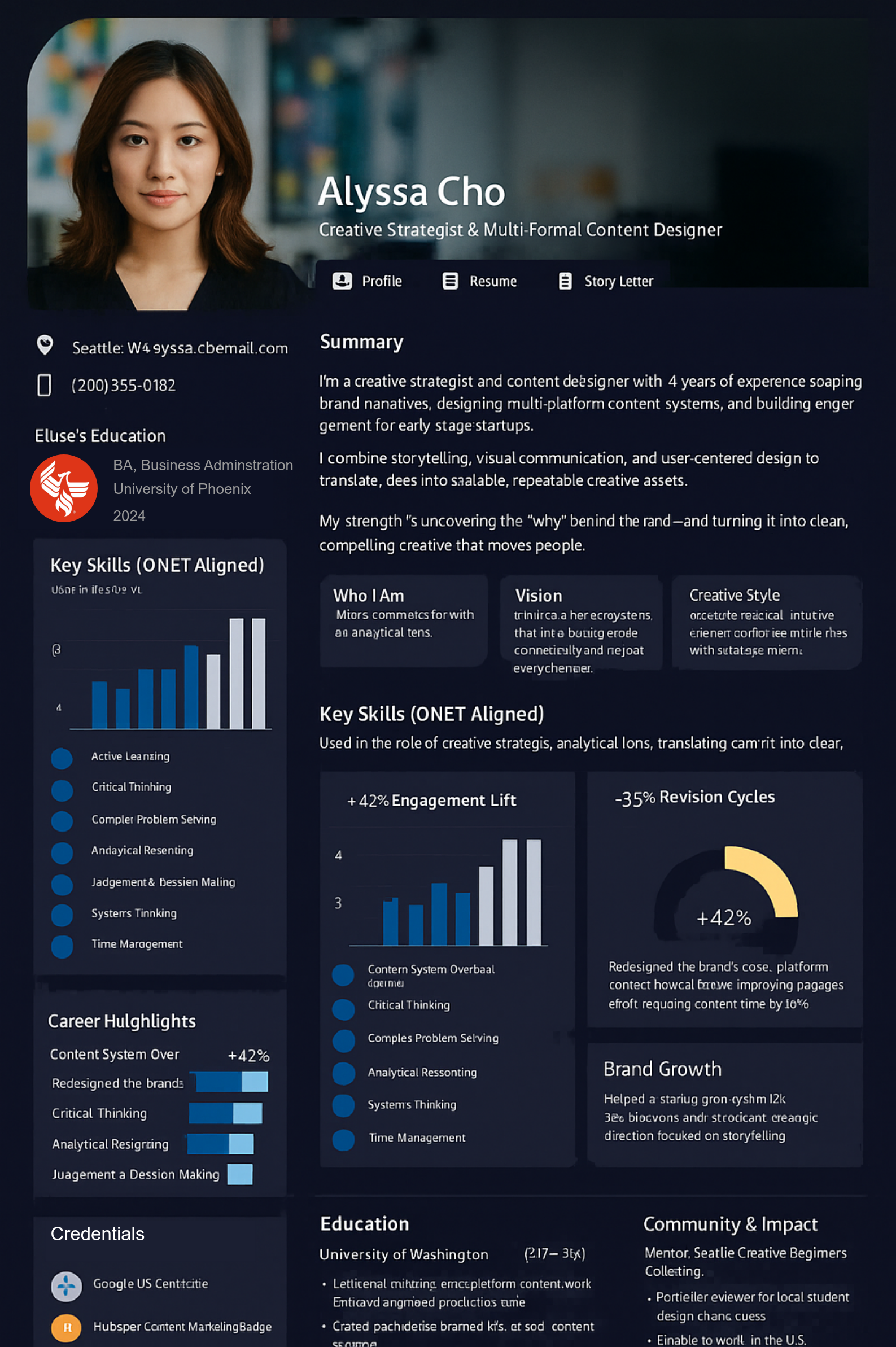
A report card tells only part of a student’s story. Projects, hobbies, teamwork, and everyday responsibilities can reveal interests and abilities that grades don’t capture.
Explore how TalentPass can help make that learning easier to recognize, explain, and build on.
This page describes intended uses across school and family learning. See current product availability for supported features and participation requirements.
Their growth doesn’t all show up on a report card.
A student may organize a club event, learn a difficult piece of music, help a teammate, or keep working through a challenging project.
Those experiences matter. But the details can fade, sit in different places, or be difficult to explain when someone asks, “What are you good at?”
Bringing selected examples together gives students and the people supporting them something concrete to reflect on.
A fuller picture of what they’re learning.
A useful learning portfolio connects an experience with what the student actually did, what changed, and what they learned.
It might include a project, a reflection, a certificate, or feedback that helps explain their progress.
See growth through real examples
Look beyond a finished assignment or award to recognize the effort, decisions, and developing abilities behind it.
Find something to build on
Use those examples to start conversations about interests, goals, and experiences the student might want to try next.
How that story comes together
1. Start with an experience that matters.
Choose a class project, activity, personal interest, volunteer experience, or responsibility. It doesn’t have to come with an award to be worth discussing.
2. Describe what the student contributed.
What did they do? What was difficult? What did they figure out? Specific examples make growth easier to understand.
3. Add something that helps tell the story.
A piece of work, a photo of a project, a certificate, or relevant feedback can give the experience context.
4. Reflect and choose what comes next.
Return to the story as interests and abilities develop. When sharing is appropriate, select the examples relevant to that audience and purpose.
Where this can make a difference
Recognizing learning beyond school
Make room for the abilities developed through music, sports, hobbies, community activities, and everyday life.
Preparing for a new opportunity
Identify relevant examples for a club, program, scholarship, or other application without trying to include everything.
Having more useful guidance conversations
Give students, families, and educators concrete experiences to discuss when exploring interests and next steps.
Seeing progress over time
Revisit earlier work and reflections to notice changes that may be hard to recognize day to day.
Explore school and family learning stories
Explore examples of recognizing growth beyond the classroom, preserving meaningful milestones, and keeping learning experiences connected over time.
Your child’s most meaningful milestones may never appear on a report card or certificate. Preserving selected stories, reflections, and experiences ...
Previous
Next
Questions students and families may have
Is this only for high-achieving students?
No. Meaningful learning also happens through practice, setbacks, responsibilities, and helping others. A useful portfolio gives those experiences context.
Does every experience need a certificate?
No. A project or reflection can help explain learning without being a formal credential. Keep clear who created each record and what it demonstrates.
Is this a replacement for school records?
Official transcripts, assessments, and school records retain their own role. A learning portfolio adds context about experiences and contributions that those records may not describe.
Should a student share everything in their portfolio?
No. Choose material for a specific purpose and audience, respecting the privacy of the student and anyone else involved.
Can younger students and families use these features today?
These examples describe the intended scope of TalentPass. Check current product availability and participation requirements before setting up an account or adding a student’s information.