
Recruiting guide
Give recruiters and clients the same understanding of the role.
Reduce ambiguity in the brief and make client feedback useful for the next conversation.
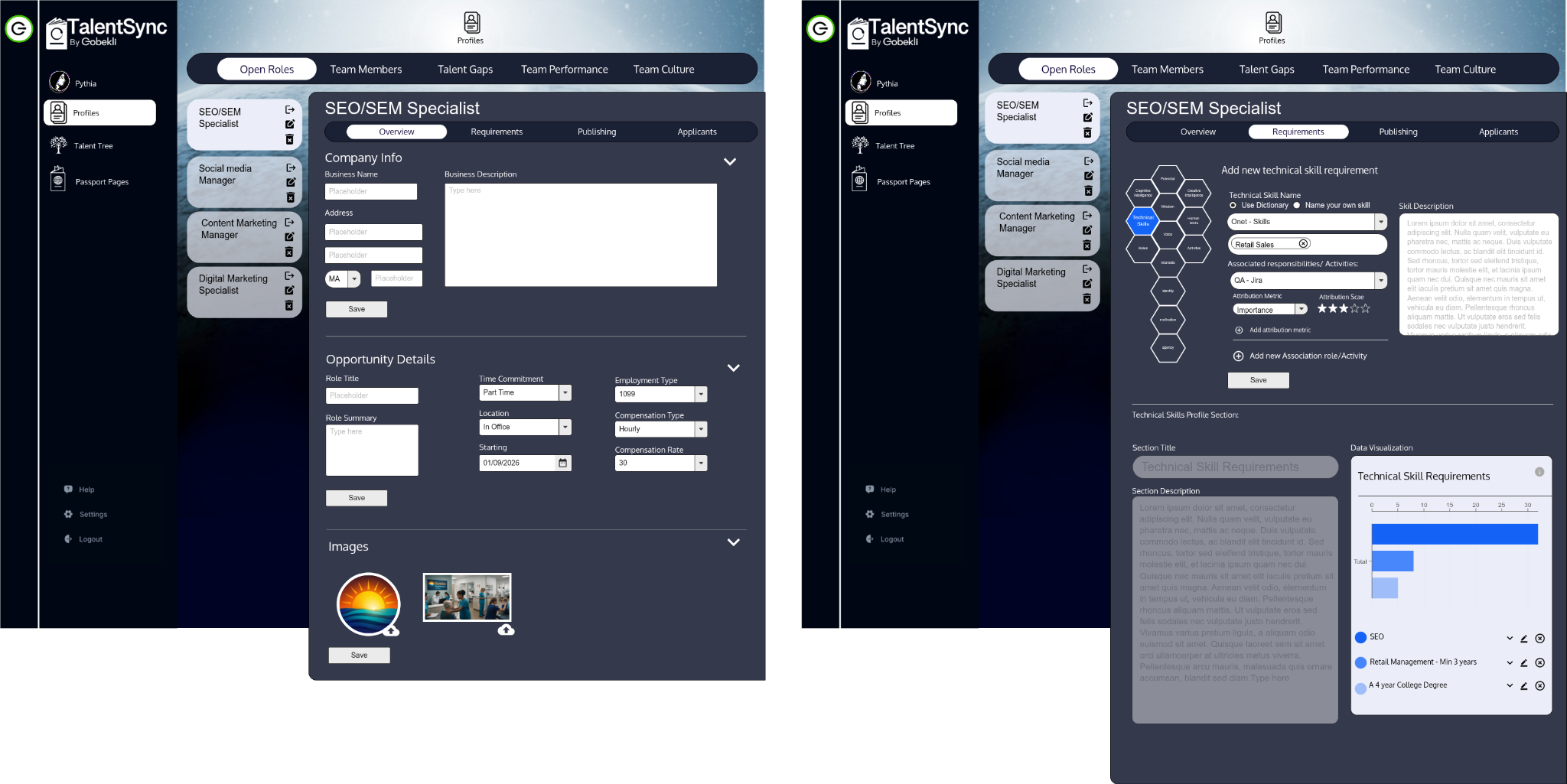
An agency receives a brief, presents candidates, and hears that none are “quite right.” The next round improves only if the client explains what was missing. A shared account of the work gives both sides a more useful language than broad impressions of fit.
Agree on the difficult parts of the work.
Ask the hiring manager which situations the new hire must handle and what makes them difficult. Identify the decisions they can make independently, the support available, and the capabilities the current team needs to add.
For a field service lead, the challenge may be prioritizing urgent jobs while coaching newer technicians. That is more informative than requesting a candidate who is both “technical” and “a people person.”
Make a candidate submission explainable.
Organize the submission around the agreed requirements. Link each important claim to relevant experience or evidence the candidate approved for sharing. State the open questions alongside the positive case.
Example submission note: The candidate describes coordinating three field teams during seasonal peaks and provides a relevant project account. We still need to examine their approach to coaching early-career technicians. They have agreed to share this profile for the current role.
Turn feedback into an update.
If the client rejects the example as too different from their environment, ask which difference matters. Is it team size, technical complexity, decision authority, or something else? Update the brief when the underlying requirement changes, and make that change visible to everyone using it.
Avoid quietly substituting a new preference after candidates have invested effort. A documented conversation helps the agency explain what is changing and decide whether already-reviewed candidates need another look.
Define relationship boundaries.
Agree who can view candidate information, how it may be shared with the client, and who handles questions or corrections. Do not assume that a candidate’s contribution to one search is permission to distribute it across every client relationship.
TalentSync Recruiter is being developed to connect organizational requirements with candidate-controlled context. For an agency, a useful first engagement can focus on one client, one role, and the handoff between recruiter judgment and hiring-manager review. Access, configuration, and commercial terms are agreed for that scope.
Bring one recruiting question.
Explore the recruiting workflow and discuss what a useful first engagement could include.
TalentPass is in public beta. TalentSync Recruiter is in development. Review current availability.