
Recruiting guide
Use the profile to prepare a better interview.
Spend the conversation exploring what matters rather than repeating the résumé.
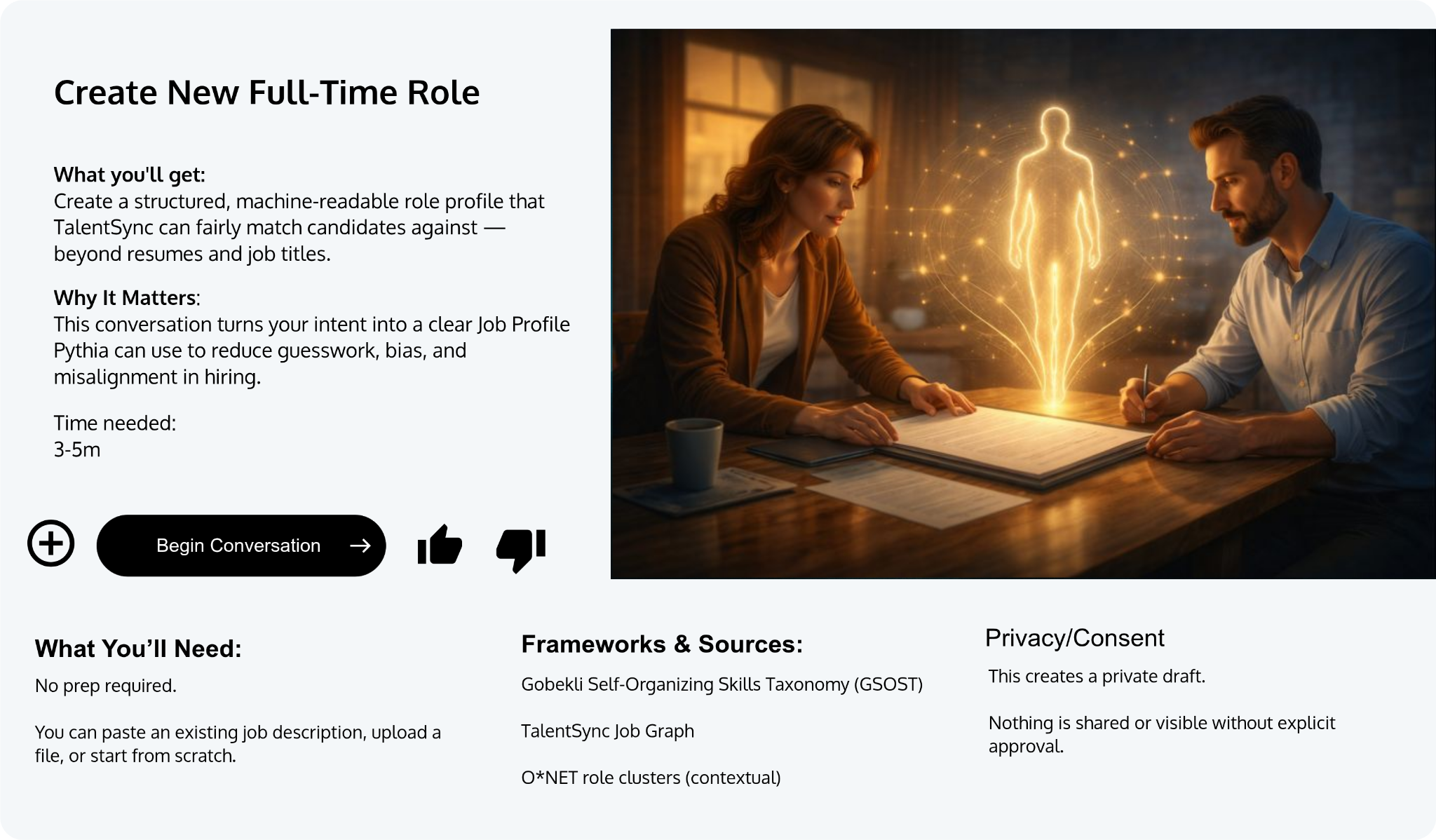
A useful candidate profile should change the interview. It gives the interviewer a starting account of relevant experience, so the conversation can examine decisions, trade-offs, and unanswered questions.
Prepare around the role and the person.
Keep a common set of role requirements for everyone. Within that structure, choose follow-up questions that respond to the examples each candidate supplied. Consistency in what you assess does not require ignoring the different evidence in front of you.
For a project lead, the shared question might concern handling a missed dependency. One candidate described a product launch; another described a facility move. Both examples can support inquiry into ownership, coordination, and judgment, while the interviewer examines the differences in setting.
Use a simple preparation sheet.
- Requirement: Which part of the work are we examining?
- Existing evidence: What has the candidate already shared?
- Open question: What remains uncertain?
- Follow-up: What question or proportionate demonstration could clarify it?
- Reviewer: Who will examine the answer?
Ask about decisions, not just the ending.
“What did you do when the plan stopped working?” often reveals more than another request to summarize the result. Explore which options the person considered, what constraints mattered, where they sought help, and what they would change.
Avoid assuming that an impressive outcome proves individual capability. Equally, an unsuccessful project can contain evidence of sound judgment under difficult conditions. Establish what the example supports rather than rewarding the story’s polish.
Capture a useful conclusion.
Write notes against the relevant requirement. Distinguish observations from interpretation. If reviewers disagree, identify the evidence behind each view and decide whether another question is needed. Invite correction of material factual misunderstandings through the appropriate process.
Carry the learning forward.
For a successful candidate, agreed development needs and relevant experience can inform onboarding, subject to sharing arrangements. For other candidates, the profile remains their account to update and use for future opportunities.
TalentSync Recruiter is being developed to connect role requirements, candidate profiles, and human review. A useful first test is whether the additional context produces better questions and less repeated explanation in one hiring workflow.
Bring one recruiting question.
Explore the recruiting workflow and discuss what a useful first engagement could include.
TalentPass is in public beta. TalentSync Recruiter is in development. Review current availability.