
LER & TRUSTED WORKFORCE INFRASTRUCTURE WORKSHOP MODULE
Credential Issuance, Verification & Status
Clarify who issues the credential, how it is checked, and what happens when it changes—so recipients understand what verification establishes and which decisions remain theirs.
Does this sound familiar?
Issuance begins before responsibilities are settled
Partners know which credential they want to create but have not clarified who approves it, confirms the underlying requirements, or handles errors.
“Verified” carries too many meanings
A successful technical check is interpreted as proof that the credential is relevant, sufficient, or accepted for the receiving decision.
Status information is difficult to interpret
Recipients see a result such as expired, revoked, or unavailable without understanding what it means or what they should do next.
Corrections have no defined route
A name, date, result, or other detail needs correction, but partners have not agreed how the issued credential and any replacement should relate.
Old credentials remain in circulation
People retain earlier copies while issuers or recipients have unclear arrangements for checking whether those credentials remain usable.
The receiving decision is hidden behind a checkmark
A workflow treats successful verification as the final decision without examining issuer acceptance, relevant requirements, or the credential’s actual claim.
What are credential issuance, verification, and status?
Credential issuance is the process through which an organization creates and provides a credential under its defined authority and responsibilities.
Verification examines particular properties of the presented credential through the checks supported by the selected arrangement. Partners need to specify which checks occur and how their results are communicated.
Status concerns changes or conditions affecting the credential’s use, such as expiry, revocation, or replacement arrangements.
These questions do not settle every receiving judgment. A recipient still needs to determine whether the issuer, claim, timing, and supporting context satisfy the requirements of its own process.
This module examines the credential lifecycle for a selected exchange, from issuance through checking, change, and appropriate receiving use.
A successful check needs an understandable meaning.
A recipient may see a credential marked “verified.”
That label is useful only when the recipient understands which checks it represents.
It should not conceal questions about what the credential claims, whether the issuer is accepted for the purpose, or whether additional requirements remain.
An unsuccessful or unavailable check also needs explanation.
The workshop separates the checks performed from the judgments that follow.
That gives partners a clearer basis for designing issuance, status handling, support, and receiving workflows.
Where credential responsibilities can become unclear
Issuance
Issuing organization
Authority and approval
Requirements confirmed
Credential content
Delivery responsibility
Verification
Checks performed
Information required
Supported methods
Result presentation
Limits of the checks
Status and timing
Relevant dates
Expiry conditions
Revocation meaning
Status availability
Time of checking
Corrections and changes
Issue reporting
Investigation responsibility
Correction or replacement
Earlier credential handling
Holder communication
Receiving use
Accepted issuers
Relevant credential claims
Additional requirements
Unresolved checks
Decision responsibility
The review focuses on the credential and receiving use selected for the workshop. It does not require partners to redesign every credential program.
How this module helps
Clarify issuance responsibilities
Identify who confirms the underlying requirements, authorizes issuance, and responds when the credential contains an error.
Define verification results
Specify what the selected checks establish, what they do not establish, and how recipients should understand the outcome.
Examine lifecycle changes
Trace expiry, revocation, correction, and replacement scenarios with clear responsibilities and practical support.
Preserve receiving judgment
Identify the decisions that remain with the receiving organization after the relevant checks have been completed.
The credential can pass its checks while leaving the receiving question open.
A person may present a credential that passes the supported verification checks.
The receiving organization may still need to establish whether its issuer is accepted for the purpose or whether the credential covers the required preparation.
The workshop examines how those questions remain visible in the workflow.
Example: “The credential verifies, but does it satisfy our requirement?”
A participant presents a credential for completing a training program.
The receiving workflow successfully performs its configured checks.
An employer still needs to review whether that program covers the preparation required for the selected role.
Partners distinguish the verification result from the employer’s acceptance decision and identify the information needed for each.
Questions to review together
Who issues the credential, who approves it, and what must be confirmed before issuance?
What does the credential establish, for whom, and under which conditions?
Which checks are performed, what inputs do they require, and what does each result mean?
What happens when the credential expires, is revoked, contains an error, or needs replacement?
How are unavailable checks, unresolved questions, and holder concerns handled?
What must the recipient still determine after the checks are complete?
What needs to connect?
The issuing responsibility
The organization and authorized process responsible for creating the credential.
The underlying claim
The achievement, qualification, condition, or other statement the credential represents.
The verification process
The defined checks and the information required to perform them.
The lifecycle state
The relevant dates, status conditions, and changes affecting the credential.
The holder’s support route
How the person receives explanations, reports errors, and obtains an appropriate response.
The receiving judgment
The recipient’s determination about relevance, issuer acceptance, sufficiency, and any remaining requirements.
When a checkmark substitutes for a decision
Partners may treat verification as a broader conclusion than the configured checks support.
- Issuance authority is left implicit.
- “Verified” does not identify the checks performed.
- Credential authenticity is confused with suitability.
- Unavailable status information becomes a definitive rejection.
- Corrections leave earlier versions unexplained.
- Recipients cannot identify the judgments still required.
The exchange may appear settled while important questions remain unresolved.
When checks and judgments are explicit
Partners can understand how the credential moves from issuance to receiving use.
- Issuance has defined authority and approval.
- Verification results describe the checks performed.
- Claim interpretation remains distinguishable from technical checks.
- Unavailable or inconclusive results have a response route.
- Changes have responsible owners and holder communication.
- Receiving decisions have accountable reviewers.
The resulting workflow makes both successful checks and unresolved questions easier to handle.
A practical example
A training provider wants to issue completion credentials that participants can present to employers.
The workshop identifies the provider role responsible for confirming completion and approving issuance.
Partners define the credential’s claim, relevant dates, and information needed to understand the completed preparation.
They then examine the checks the selected receiving arrangement would perform.
The group distinguishes those results from the employer’s decision about whether the preparation satisfies its requirements.
Next, partners consider a credential issued with an incorrect completion date.
They identify who investigates the error and determines the appropriate correction or replacement process.
They also examine how the participant learns what changed and how an earlier credential should be handled if presented later.
An unavailable status service becomes a separate test case, with a defined route for retry, support, or further review.
The resulting brief connects issuance, checking, change, and receiving responsibility without assuming that one verification result answers every question.
Expiry and revocation need context.
Different credential programs use dates and status changes for different purposes.
An expired credential may still describe a historical achievement while no longer satisfying a requirement for current recognition.
A revocation result needs to be interpreted within the issuer’s defined process and the recipient’s use.
The workshop asks what each condition means for the selected credential.
It also identifies what explanation a holder or recipient needs and who is responsible for providing it.
The goal is to avoid turning a status label into an unsupported conclusion about the person.
An unavailable check is an unresolved condition.
A receiving system may be unable to complete a check because required information or a supporting service is unavailable.
That differs from a completed check that establishes a particular problem.
The workflow needs a clear way to represent the distinction.
Partners can define when to retry, seek assistance, request another supported presentation, or refer the matter for review.
The appropriate response depends on the receiving use and the conditions partners have agreed to support.
The workshop makes that response an explicit part of the exchange.
WORKSHOP MODULE 6
Credential Issuance, Verification & Status
This module is a focused minicourse and working session within the LER & Trusted Workforce Infrastructure Workshop.
Your team learns to distinguish issuance, verification, status, and receiving acceptance, then applies those distinctions to a selected credential.
The work produces a reviewed starting point for lifecycle responsibilities, exception handling, and a supporting product configuration.
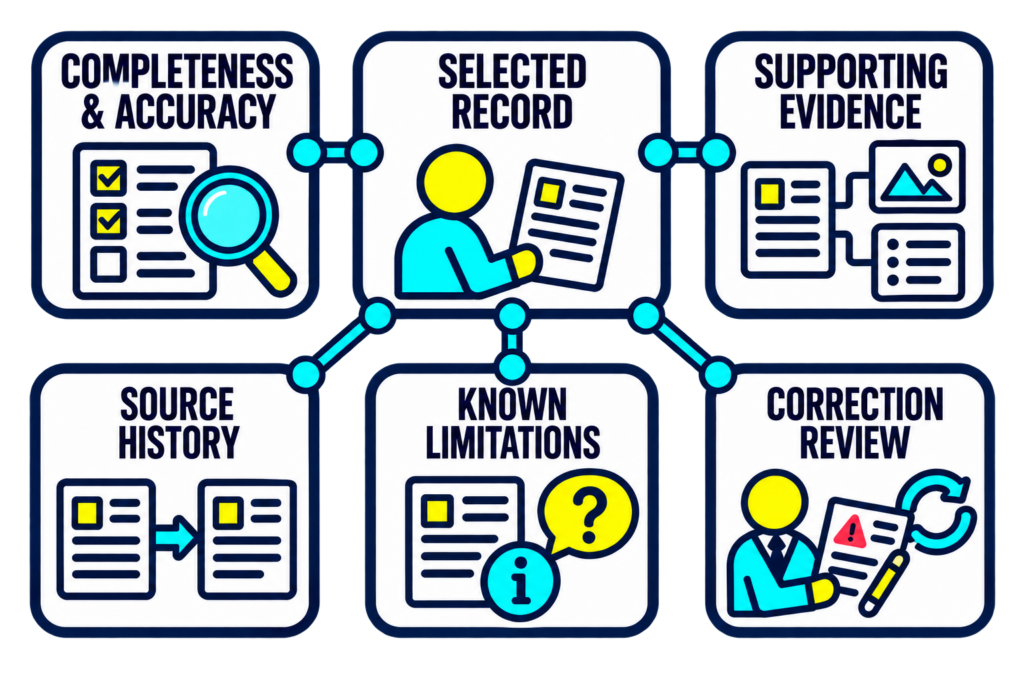
What this module can address
The selected scope may include:
The workshop selects the lifecycle questions that materially affect the defined exchange.
- Issuing organizations and their responsibilities.
- Approval before credential issuance.
- The claim and requirements represented.
- Credential delivery and holder communication.
- The checks included in a verification process.
- The meaning and limits of verification results.
- Relevant dates and expiry conditions.
- Revocation and other supported status changes.
- Errors, corrections, and replacement arrangements.
- Unavailable or inconclusive checks.
- Holder support and recipient escalation.
- Receiving acceptance and remaining judgments.
What kinds of responses might emerge?
The response depends on the gaps uncovered in the selected example.
A clearer issuance process
Define who confirms requirements, approves issuance, and responds to errors.
An explicit verification description
Document which checks occur and what each result establishes.
An understandable status explanation
Clarify the meaning of relevant dates and status conditions for the selected credential.
A correction and replacement route
Identify how errors are investigated and how earlier and later credentials should be handled.
An exception-handling process
Define support and review when a check is unavailable, inconclusive, or raises a concern.
A focused configuration brief
Describe the lifecycle states, responsibilities, result presentation, and receiving requirements a subsequent implementation would need.
Some responses may involve clearer instructions or decision ownership. Others may require issuer policy changes, technical work, or additional specialist review.
What we review together
The selected credential
Its claim, intended subject, issuer, and receiving use.
Issuance responsibilities
Who confirms requirements, approves the credential, and handles delivery or errors.
Verification arrangements
The supported checks, required information, results, and limitations.
Lifecycle conditions
Dates, expiry, revocation, corrections, and replacement scenarios.
Exceptions and communication
Holder support, unavailable checks, explanations, and escalation.
Receiving requirements
Accepted issuers, relevant preparation, additional evidence, and the person responsible for the final decision.
The working exercise
Trace one credential through issuance, checking, and change.
Choose a representative credential that needs to be issued or presented within the selected exchange.
STEP 1
Define the credential and use
State what it claims, who issues it, and what the recipient needs to determine.
STEP 2
Assign issuance responsibilities
Identify who confirms requirements, approves issuance, and provides the credential to its holder.
STEP 3
Specify the checks
List what the receiving arrangement checks and what each result means.
STEP 4
Test lifecycle changes
Consider an error, expiry, revocation, or replacement and identify the responsibilities involved.
STEP 5
Test an unresolved result
Examine an unavailable or inconclusive check and define the support or review route.
STEP 6
Record the receiving judgment
Identify what remains for the recipient to decide and capture the configuration and validation requirements.
The exercise produces a reviewed credential lifecycle and verification brief for the selected example.
CONNECTING THE WORKSHOP TO A POSSIBLE GOBEKLI SETUP
Make credential checks and lifecycle responsibilities understandable.
The workshop can help define how a subsequent Gobekli implementation would support the selected credential exchange across TalentPass, TalentSync, Passport Pages, and participating issuer or verification systems.
Depending on confirmed scope and product availability, the configuration brief may describe:
- Selected credential types and claims.
- Issuing organizations and approval responsibilities.
- Relevant underlying requirement references.
- Delivery and presentation arrangements.
- Verification checks and result descriptions.
- Relevant dates and status meanings.
- Correction and replacement relationships.
- Unavailable or inconclusive result handling.
- Holder support and escalation responsibilities.
- Receiving requirements and remaining decisions.
The workshop clarifies the behavior and responsibilities required before implementation is proposed.
Specific issuance functions, credential formats, verification methods, status mechanisms, wallet interactions, and integrations must be confirmed separately against current product availability and partner requirements.
SCOPE AND BOUNDARIES
A focused review of the selected credential lifecycle.
The module begins with the exchange defined through Workforce Infrastructure Direction.
It examines the responsibilities and interpretation needed as a selected credential is issued, checked, changed, and received.
It does not automatically establish or deliver:
- Authority for an organization to issue a credential.
- Verification of every underlying factual claim.
- Acceptance by every employer or institution.
- Equivalence to another credential or qualification.
- A complete credential program redesign.
- A security or standards-conformance assessment.
- Live issuance, revocation, or replacement.
- Production integration with every receiving system.
Appropriate issuer, technical, and receiving representatives may need to confirm the proposed arrangements.
Questions about record quality, identity, permissions, accessibility, and operational sustainability connect to their respective modules when they affect the selected use case.
What should you bring?
One credential example and its intended receiving use are enough to establish a practical starting point.
Use fictionalized or appropriately redacted materials where practical.
Helpful starting materials
- A description of the selected exchange.
- A representative credential.
- The claim or achievement it represents.
- Issuer responsibilities and approval steps.
- Relevant requirements or criteria.
- Current delivery and presentation instructions.
- Available verification descriptions.
- Relevant dates and status definitions.
- Correction or replacement procedures.
- Examples of unavailable or confusing results.
- Holder support and escalation instructions.
- Receiving acceptance requirements.
Unknown steps can become assigned confirmation tasks. The workshop does not require access to live issuing accounts or private signing material.
What can you leave with?
A credential lifecycle map
The selected credential’s issuance, presentation, checking, change, and support responsibilities.
A verification and interpretation brief
The checks performed, their meanings and limits, and the judgments that remain with recipients.
A status and exception outline
Proposed handling for expiry, revocation, corrections, replacements, and unavailable or inconclusive checks.
A configuration and validation brief
Required behaviors, responsible owners, dependencies, and scenarios for a subsequent implementation.
These outputs begin with the example reviewed during the module. Final scope depends on the modules selected, available inputs, and the exchange established through Workforce Infrastructure Direction.
Where might the work lead next?
Employer & Institutional Acceptance
Validate how recipients request, interpret, and use the credential within real workflows.
Wallet Portability, Accessibility & Assisted Use
Examine how people receive, find, present, move, and recover their records, including usable support.
Shared Governance, Funding & Operational Sustainability
Establish the continuing ownership, resources, service support, and change responsibilities needed to keep the credential exchange working.
These modules extend different parts of the work. Selection depends on the problem and decision established through Workforce Infrastructure Direction.
Frequently asked questions
Questions organizations ask before beginning.
It addresses unclear responsibilities and interpretations across credential issuance, checking, status changes, and receiving use. The focus is one selected credential exchange.
The foundation establishes the credential’s intended exchange, participating organizations, and receiving decision. Those choices determine which lifecycle questions matter.
It means the particular checks defined for the selected arrangement. The workshop identifies those checks and their results rather than treating “verified” as an explanation by itself.
No. Partners need to distinguish the properties checked from the underlying evidence and the recipient’s interpretation. Record Quality, Evidence & Provenance examines the support for selected claims.
No. A recipient may complete its checks and still need to determine whether the issuer and credential satisfy its requirements.
The selected issuer needs an accountable approval process appropriate to the credential. The workshop identifies the responsible roles and any questions that require confirmation.
It examines the process and responsibility for that determination. It does not conduct a new assessment or award decision during the workshop.
The module can define the investigation, correction, or replacement route and how the holder is informed. The appropriate mechanism depends on the issuing arrangement.
The module does not assume that it does. Partners examine whether expiry is relevant to the credential’s meaning and intended use.
An expiry condition may affect current use without changing the fact that an achievement occurred. The workshop clarifies the distinction for the selected credential and receiving requirement.
Its meaning and consequences need to be understood within the issuer’s defined arrangement. The module examines the explanation, responsibilities, and appropriate receiving response.
The workflow should distinguish an unavailable or inconclusive check from a confirmed result. Partners define the appropriate retry, support, or review route.
Yes, the workshop should account for retained or previously presented copies. It examines how recipients check and interpret them without assuming every copy can be remotely removed.
It can identify requirements and questions relevant to that choice. Detailed format, method, vendor, and integration decisions require separate confirmation.
Yes. The module can clarify how existing issuance and checking arrangements fit the selected exchange, including responsibilities that cross organizational or platform boundaries.
The outputs can inform credential presentation, verification-result interpretation, lifecycle context, and support requirements in a subsequent Gobekli configuration. Specific capabilities and integrations must be confirmed separately.
Partners can confirm issuer and recipient responsibilities, test lifecycle scenarios, improve instructions, and scope implementation. Related modules can address acceptance, wallet use, or continuing operation.
BUILD A MORE DEPENDABLE CREDENTIAL EXCHANGE
Make clear what was issued, what was checked, and what remains to decide.
Credential Issuance, Verification & Status helps your team connect credential lifecycle responsibilities to understandable checks and accountable receiving judgments.
Begin with Workforce Infrastructure Direction, then combine the modules that address the questions your participating organizations need to resolve.