
AN AI TRANSFORMATION WORKSHOP MODULE
Escaping AI Pilot Purgatory:
How to Move AI Pilots Into Real Operations
Organizations are launching AI pilots faster than they can integrate, scale, redesign, or stop them.
The problem is not simply that pilots fail. Many produce promising results. The problem is that leaders cannot determine what it would take to turn a controlled experiment into a sustainable organizational capability.
Does this sound familiar?
Pilots show promise but never progress
Teams demonstrate that an AI capability can work, but the initiative remains trapped between experimentation and implementation.
Temporary support hides operating requirements
Experts, vendors, project teams, or unusually motivated employees perform work during the pilot that the permanent organization is not prepared to absorb.
The pilot sits outside the real workflow
The technology succeeds in a controlled process but is not integrated into the systems, handoffs, decisions, and responsibilities surrounding the work.
Data and integration problems appear late
The pilot relies on manually prepared information, limited datasets, temporary access, or connections that cannot support sustained use.
Ownership becomes unclear after launch
The pilot has a sponsor and project team, but no one owns the long-term workflow, operating performance, exceptions, support, or consequences.
Leaders keep extending instead of deciding
The organization approves another test, phase, or evaluation because it lacks enough evidence or alignment to scale, redesign, or stop.
What is AI pilot purgatory?
AI pilot purgatory is the condition in which an AI initiative continues beyond its initial experiment but does not become an integrated, sustainable organizational capability—or receive a clear decision to stop.
The pilot may have demonstrated technical feasibility, generated positive feedback, or improved a selected task. However, the organization has not established the workflow, data, ownership, integration, support, controls, evidence, and operating conditions required for sustained use.
Some pilots remain isolated from real operations. Others depend on temporary experts, manually prepared data, special permissions, vendor assistance, or unusually close oversight. These conditions can help an organization learn, but they can also make a pilot appear more scalable than it is.
Pilot purgatory is therefore not defined by a specific duration or number of experiments. It describes a decision failure: the initiative has produced enough promise to continue but not enough organizational readiness or evidence to progress responsibly.
The problem is not the pilot.
It is the missing path into operations.
A pilot is designed to answer a bounded question under controlled conditions. It may test whether a capability works, whether users find it useful, or whether an opportunity deserves further investment.
Operational use creates a different set of questions.
To understand whether a pilot can progress, leaders need to connect it to:
- The organizational outcome it is intended to influence
- The real workflow that must change
- The people who will use, review, support, and manage it
- The data and organizational context it requires
- The systems and integrations it depends on
- The quality and performance conditions it must meet
- The exceptions, risks, and consequences it may create
- The evidence supporting continued investment
- The ownership and resources required for sustained operation
- The decision the organization is prepared to make
Without these connections, technical success can be mistaken for operational readiness. A pilot may save time for one participant while creating review work elsewhere. It may perform well with curated data but deteriorate when exposed to normal variation. Employees may embrace the experiment while resisting the permanent workflow. A vendor-supported demonstration may require capabilities the organization does not possess.
Moving beyond the pilot requires an operating path—not simply a larger test.
How AI pilots become trapped
The organization tests a promising capability
A team identifies an opportunity and launches a bounded experiment to determine whether an AI tool, model, agent, or feature can help.
The pilot succeeds under special conditions
The initiative benefits from focused attention, curated data, temporary expertise, manual support, limited scope, or unusually engaged participants.
Operational requirements remain unresolved
Integration, ownership, workflow redesign, support, quality, adoption, controls, and downstream consequences receive less attention than the technical result.
The organization extends instead of deciding
Leaders authorize another phase because the pilot appears too promising to stop but remains too disconnected or uncertain to scale responsibly.
Why a successful AI pilot may not be ready to scale
A pilot is an important learning mechanism. It can demonstrate technical feasibility, reveal user needs, test assumptions, and generate practical evidence.
But a pilot answers only one question:
Can this work under the conditions we created?
A responsible scale decision must answer several more.
Can the capability function within normal tasks, decisions, handoffs, timelines, approvals, exceptions, and operating pressures?
Can the organization provide the necessary information, permissions, context, quality, access, and integrations without constant manual preparation?
Do the people involved understand their responsibilities, possess the necessary skills, trust the process, and have the capacity to perform the required review and exception handling?
Will outputs remain accurate, useful, consistent, and appropriate as usage, variability, users, data, and organizational consequences increase?
Who is responsible for the workflow, technology, data, adoption, support, output quality, exceptions, decisions, and problems that emerge?
What demonstrates that the pilot creates meaningful value after implementation, integration, human effort, support, quality, dependencies, and risk are included?
Without these answers, expanding the pilot may simply expand its unresolved conditions.
What leaders need to see clearly
Which pilot conditions are temporary
Identify the experts, manual processes, curated data, vendor support, special permissions, additional oversight, and controlled circumstances supporting the current result.
What operations would need to absorb
Reveal the permanent roles, responsibilities, systems, integrations, support, review, maintenance, controls, and resources required.
Where scale may change the result
Understand how greater volume, broader use, normal variation, additional users, and downstream effects may alter performance, cost, quality, or risk.
Which decision the evidence supports
Determine whether the initiative is ready to scale, requires strengthening or redesign, should remain bounded, needs further investigation, or should stop.
A successful pilot is not the same as an operational capability.
A pilot intentionally reduces complexity so an organization can learn. It may limit participants, narrow the workflow, prepare the data, increase support, and tolerate manual work that would be impractical at scale.
The goal is not to criticize those conditions. It is to make them visible before the organization assumes the result can be reproduced across normal operations.
Controlled pilot success
A pilot may benefit from:
- A narrow use case and limited scope
- Highly engaged participants
- Temporary project funding
- Direct access to technical experts
- Vendor implementation support
- Manual review and correction
- Close executive attention
- Greater employee capacity
- Flexible timelines and performance expectations
- Limited exceptions and consequences
These conditions can produce valuable learning and credible evidence about technical potential.
Operational readiness
Sustained use may require:
- Integration with the complete workflow
- Reliable data and system access
- Defined roles and decision rights
- Repeatable support and maintenance
- Scalable review and exception handling
- Employee training and adoption
- Appropriate quality standards
- Controls and escalation paths
- Stable funding and resource ownership
- Performance under normal variation
- Evidence of net organizational value
These requirements determine whether the organization can reproduce the result without preserving the pilot as a permanent special project.
The goal is not to scale every promising pilot.
It is to make the transition requirements visible enough to support a deliberate decision.
WORKSHOP MODULE DETAILS
How to Scale and Integrate AI Pilots
This module examines the conditions preventing promising AI pilots from becoming sustainable organizational capabilities.
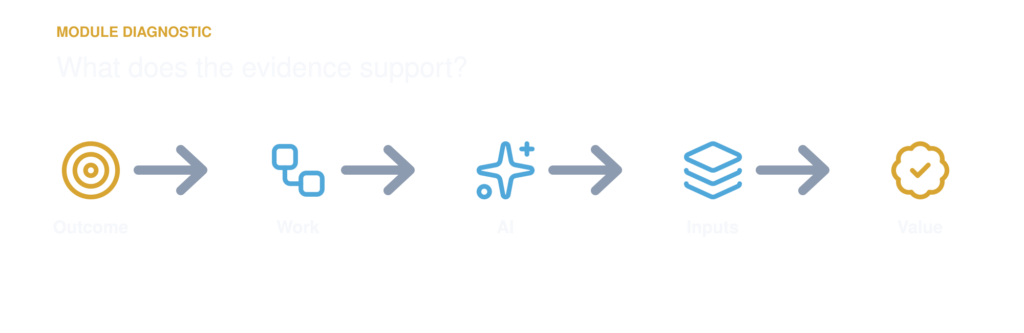
Participants connect a bounded pilot to the real workflow, people, data, systems, ownership, support, quality requirements, and evidence surrounding it. The purpose is not to push every experiment toward expansion. It is to determine what would be required for responsible progression and what the available evidence supports.
- Define the outcome the pilot is intended to influence
- Connect the pilot to the real operating workflow
- Identify temporary pilot conditions and hidden support
- Trace important data and system dependencies
- Clarify long-term ownership and responsibilities
- Examine adoption, quality, review, and exception requirements
- Evaluate evidence supporting continued investment
- Identify questions requiring specialist review
- Develop an evidence-backed pilot progression decision
What should happen to the pilot next?
A promising pilot should not be scaled automatically—or extended indefinitely.
The organization needs to determine what the pilot has established, which operating conditions remain unresolved, and what kind of progression the available evidence supports.
Scale
Ready for broader operational use The pilot demonstrates meaningful value, fits the target workflow, and has sufficient ownership, data, integration, support, quality, adoption, controls, and resources to support responsible expansion.
Integrate
Valuable but disconnected from operations The capability creates credible value but remains isolated from the systems, data, processes, roles, decisions, or support structures required for sustained use.
Strengthen
Promising with addressable readiness gaps The initiative has credible potential, but specific conditions involving data, quality, adoption, ownership, support, controls, or evidence must be improved before expansion.
Redesign
The operating model does not support the current approach The underlying opportunity remains meaningful, but the workflow, technology, scope, roles, integration, or implementation approach must change substantially.
Investigate or Stop
Evidence is insufficient or the case no longer holds The organization either needs bounded investigation to resolve a consequential uncertainty or should stop when value is limited, requirements are disproportionate, risks remain unacceptable, or a stronger alternative exists.
These categories are not automatic recommendations based on pilot enthusiasm, technical performance, or sunk investment. They structure the evidence and tradeoffs leadership must consider before committing additional resources.
What should an AI scale-readiness review examine?
Expected human involvement and actual human effort are not always the same.
A Handoff Load Map helps the team examine where employees are absorbing more work than the workflow design anticipated.
The outcome
What meaningful organizational result is the pilot intended to influence, and what evidence shows that the result changed?
The workflow
What tasks, decisions, handoffs, roles, approvals, exceptions, and downstream activities must change for the capability to operate?
The operating conditions
What data, systems, integrations, infrastructure, people, expertise, support, review, controls, permissions, and resources does sustained use require?
The evidence
What demonstrates value, quality, adoption, reliability, affordability, ownership, readiness, and the ability to sustain the result outside pilot conditions?
What to bring into the conversation
You do not need a completed enterprise implementation plan or a perfect technical architecture.
We begin with the pilot materials, observations, metrics, and operating information your organization already has. The workshop then helps distinguish established facts from temporary conditions, assumptions, missing evidence, and questions requiring additional investigation.
Useful inputs may include:
- Known AI pilots, prototypes, models, agents, or features
- The original use case or business case
- Pilot objectives and success criteria
- Available results, metrics, and participant feedback
- Workflow or process documentation
- Data sources and integration diagrams
- Technology, model, infrastructure, or vendor information
- Pilot staffing and support arrangements
- Manual preparation, review, or correction work
- Ownership and approval information
- Quality, error, exception, or reliability observations
- Training and adoption information
- Cost and resource estimates
- Known security, privacy, legal, compliance, or procurement findings
- Assumptions about expansion or implementation
- Open questions delaying a progression decision
The goal is not to develop an enterprise-wide AI scaling plan in one session. The Decision Foundation establishes the consequential outcome, affected workflow, and bounded pilot the module should examine.
What this module can help clarify
What the pilot has actually established
Distinguish demonstrated technical capability, user feedback, workflow change, organizational value, and operational readiness.
Which conditions prevent progression
Reveal unresolved requirements involving data, integration, people, ownership, support, adoption, quality, controls, resources, or evidence.
What sustained use would require
Identify the permanent capabilities, responsibilities, infrastructure, support, and operating changes necessary to move beyond the pilot.
Whether to scale, integrate, strengthen, redesign, investigate, or stop
Organize the available evidence into a practical pilot progression decision.
Final outputs depend on the modules selected and the decision established through the workshop’s required Decision Foundation.
Where might the work lead next?
AI pilot purgatory frequently overlaps with unclear value, weak adoption, and fragmented technology portfolios. A scale-readiness review may reveal that another problem must be addressed before the initiative can progress.
Proving AI Value & ROI
Determine whether the pilot creates defensible organizational value after cost, quality, human effort, dependencies, and risk are included.
AI Adoption & Trust
Understand why employees use, avoid, resist, or work around the capability—and what sustained adoption requires.
AI Tool Sprawl
Connect the pilot to related tools, models, embedded features, data, integrations, ownership, overlap, and portfolio decisions.
Questions leaders ask before booking.
AI pilot purgatory is the condition in which an AI initiative continues beyond its initial experiment but does not become an integrated, sustainable organizational capability—or receive a clear decision to stop.
The pilot may demonstrate technical feasibility or generate positive feedback while still lacking the workflow integration, data, ownership, support, evidence, controls, adoption, or operating conditions required for sustained use.
The result is often a cycle of extensions, additional tests, and temporary phases that preserve activity without resolving the initiative’s future.
AI pilots frequently fail to scale because technical feasibility is only one requirement for operational success.
A pilot may depend on curated data, temporary experts, vendor support, manual preparation, close oversight, limited participants, or a simplified workflow. Scaling introduces greater volume, variation, integration, adoption, support, quality, ownership, and consequence.
If those conditions are not examined during the pilot, the organization may discover that the capability works but the operating system surrounding it is not ready.
No. A successful pilot may demonstrate that a technology performs a task, that users find it useful, or that an opportunity deserves further investigation.
A defensible value case must also show what work changed, which organizational outcome improved, how AI contributed, what the result required, and whether the benefit can be sustained.
Pilot success is evidence. It is not automatically proof of net organizational value.
No. Scaling is one possible response, not the universal goal.
A pilot may reveal that the opportunity is valuable but requires integration, strengthening, redesign, or a narrower scope. It may also show that the capability produces limited value, creates disproportionate burdens, or depends on conditions the organization cannot responsibly maintain.
The purpose of a scale-readiness review is to support the right decision—not to justify expansion.
Productivity gains should be evaluated in the context of what the organization is trying to accomplish.
Completing a task faster may reduce cost, increase capacity, improve responsiveness, raise quality, or create no material organizational change at all. Producing more output can also create additional review, coordination, or downstream work.
The organization should determine how the productivity change affects the bounded workflow and whether it contributes to an outcome leadership values.
An extension continues testing. Scaling expands sustained use within real operations.
An extension may add participants, time, features, or use cases while preserving temporary project conditions. Scaling requires the organization to establish permanent ownership, support, integration, data access, quality expectations, controls, resources, and operating responsibilities.
Repeated extensions can generate useful evidence. They can also postpone a decision when the unresolved requirements remain unchanged.
A pilot may be ready to scale when the organization can demonstrate meaningful value, connect the capability to the real workflow, provide reliable data and integrations, define ownership, support users, maintain quality, manage exceptions, address relevant controls, and resource sustained operation.
Readiness does not require complete certainty. It requires enough evidence and organizational preparation to make the next stage responsible, bounded, and measurable.
Sometimes. The appropriate level of integration depends on the workflow, volume, frequency, consequences, data requirements, and duration of use.
A manual or partially integrated process may be reasonable for a bounded stage. However, the organization should understand the ongoing human effort, quality implications, dependencies, and limitations created by that design.
Temporary workarounds should not be mistaken for a sustainable operating model.
No. The module examines the organizational conditions connecting a pilot to real work, sustained operation, and a bounded progression decision.
It may identify issues requiring review by technology, data, cybersecurity, privacy, legal, compliance, procurement, finance, enterprise architecture, change management, or other qualified specialists. The workshop does not replace those functions or make their professional determinations.
Every engagement begins with the required Decision Foundation, which establishes the consequential outcome, affected workflow, available evidence, and bounded decision the workshop must support.
Scale & Integration can then be selected when the organization needs to determine why a promising pilot has stalled and what would be required for responsible progression.
Depending on what the module reveals, it may be combined with modules addressing value and ROI, adoption, data and systems, governance, workflow redesign, or another connected problem.
Turn promising AI experiments into deliberate organizational decisions.
Connect the pilot to real work, data, systems, people, ownership, support, evidence, and operating conditions—then decide what should happen next.
This module is part of Gobekli’s configurable AI Transformation Workshop. Explore the complete workshop, its 12-module structure, and how we identify the right starting point for your organization.
