How Universal Talent Passports Help Students While They Are Still in University
Students should not have to wait until graduation to understand the value of their education.
Every semester gives them new experiences:
- Courses
- Projects
- Research
- Internships
- Campus employment
- Student organizations
- Volunteer service
- Competitions
- Creative work
- Relationships
- New interests and goals
But most of this growth remains fragmented.
The transcript records courses and grades. A learning platform holds assignments. Career services may see a résumé. Individual departments record participation in programs. Students are left to connect everything for themselves—often just as they begin applying for internships or jobs.
A Universal Talent Passport helps students build those connections while they are still learning.
TalentPass gives each student a private, portable source of truth about their experiences, capabilities, evidence, credentials, relationships, and goals. As new experiences happen, students can preserve what they did, reflect on what they learned, and prepare different profiles for the opportunities they want to pursue.
The passport does not replace courses, advisors, faculty, mentors, or career services.
It helps students participate more actively in all of them.
Product availability note: This article describes both capabilities available in TalentPass today and longer-term applications Gobekli is developing with institutional partners. Visit our Product Availability page to see what is currently available, being tested, in development, or part of our future direction.
University is full of valuable experiences that are easy to lose
Students produce an enormous amount of meaningful work during university.
They research difficult questions, collaborate with people who think differently, present ideas, solve problems, use new tools, lead organizations, complete internships, hold jobs, and take on responsibilities outside school.
Yet much of this work disappears after the course or experience ends.
An assignment remains inside an old learning-management system. The details of a group project become difficult to remember. Feedback gets separated from the final work. A campus job becomes a single résumé line. The student knows that they have grown but struggles to explain how.
TalentPass gives students a place to preserve and connect these experiences before the details disappear.
1. Begin with the experience students already bring
Students do not begin learning when they enter a university.
They may arrive with experience from:
- Previous schools
- Employment
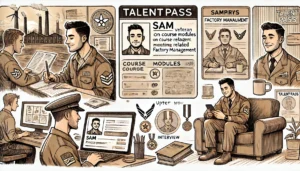
- Military service
- Community participation
- Family responsibilities
- Creative projects
- Athletics
- Volunteering
- Independent learning
- Certifications and training
- Different cultures and life transitions
Some of this experience appears in an application. Much of it does not become part of the student’s ongoing educational journey.
TalentPass can help students document what they already know, have done, and care about.
This gives them a stronger starting point for reflecting on possible programs, preparing for advising, pursuing campus opportunities, or discussing prior learning.
The student decides whether any of this information should be shared with the institution.
2. Capture meaningful course projects while they are still fresh
A course title does not explain what happened inside the course.
A student may have:
- Conducted research
- Built a prototype
- Written a complex analysis
- Designed an experiment
- Produced a creative work
- Presented findings
- Solved a community problem
- Collaborated across disciplines
- Used specialized tools or methods
TalentPass allows students to create a story around the experience.
They can preserve:
- The purpose of the project
- Their individual role
- The activities they performed
- The challenges they encountered
- The outcome
- Feedback received
- Appropriate work samples
- What they learned
- How the experience connects with future interests
When the student later prepares for an internship, interview, graduate-school application, or professional opportunity, they do not have to reconstruct the experience from memory.
3. Show what the student contributed to group work
Group projects can develop some of the most valuable capabilities students carry into work:
- Collaboration
- Communication
- Planning
- Negotiation
- Leadership
- Accountability
- Conflict resolution
- Problem-solving
- Adaptability
But the final project rarely shows what each person contributed.
A student can use TalentPass to reflect on their individual role without diminishing the work of the group.
They might document:
- Which responsibilities they accepted
- How they coordinated with others
- What decisions they influenced
- Where they helped the team adapt
- What they created
- What they would do differently next time
Appropriate endorsements from teammates or instructors may add further context.
This helps the student learn from collaboration and explain their contribution more clearly later.
4. Connect coursework with capabilities
Students often know which courses they completed but struggle to explain what those courses helped them become capable of doing.
The Talent Tree gives them a structure for exploring different dimensions of their experiences, including:
- Technical skills
- Human skills
- Motivations
- Interests
- Passions
- Leadership
- Stewardship
- Relationships
- Reputation
- Personal journey
- Agency
- Potential
This is not an automatic competency assessment or score.
It is a framework for reflection.
A student may recognize that the same capability appeared in a class project, campus job, and volunteer experience. Another may discover that several seemingly unrelated courses share a common interest.
These connections can help students understand why their learning matters and what they may want to explore next.
5. Prepare for more useful advising conversations
Advising becomes difficult when students are still trying to explain their experiences and goals during the appointment itself.
Before a conversation, a student can use TalentPass and Pythia—their private AI guide—to reflect on questions such as:
- Which experiences have interested me most?
- What am I learning about my strengths?
- What capabilities do I want to develop?
- What opportunities am I considering?
- Where do I feel uncertain?
- What barriers or responsibilities affect my choices?
- What questions should I bring to my advisor?
The student can then prepare a relevant profile or select information to discuss.
The advisor does not automatically receive access to the full passport.
TalentPass helps the student arrive better prepared. The advisor provides the human knowledge, institutional context, and relationship needed to interpret the choices.
6. Turn campus employment into visible learning
Many students work while enrolled.
Campus employment and outside jobs can develop capabilities that are just as relevant as classroom learning:
- Communication
- Customer service
- Reliability
- Technical ability
- Teamwork
- Organization
- Leadership
- Problem-solving
- Judgment
- Time management
These experiences are often treated primarily as employment rather than learning.
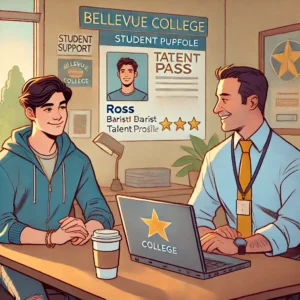
TalentPass can help students document what they actually did, which responsibilities they carried, what evidence they can share, and how the work connects with their education and future goals.
A supervisor may provide an endorsement or institutional recognition when appropriate.
The student carries the value of the experience forward rather than leaving it behind with the job.
7. Make internships and experiential learning more useful
Internships, clinical experiences, apprenticeships, research placements, and community projects can create critical bridges between education and work.
Their value increases when students have a way to reflect on and preserve what happened.
During or after an experience, a student can document:
- Responsibilities
- Activities
- Tools and methods
- Relationships
- Challenges
- Outcomes
- Feedback
- Evidence
- Skills developed
- Questions raised
- Goals for the next experience
This helps the student do more than add the organization’s name to a résumé.
They can understand how the experience contributed to their development and prepare to discuss it with advisors, mentors, faculty, or future employers.
8. Build a portfolio over time
Students often wait until an opportunity appears before trying to create a portfolio.
By then, important evidence may be scattered across old files, devices, course platforms, and email accounts.
TalentPass encourages students to preserve appropriate artifacts as they go:
- Papers
- Designs
- Presentations
- Publications
- Research
- Code
- Project summaries
- Performances
- Awards
- Credentials
- Recommendations
- Publicly shareable work samples
The passport can contain far more than the student would show to one audience.
When they need a portfolio, they can select the pieces relevant to that purpose instead of sharing everything.
9. Make networking conversations more meaningful
Students are often told to network without being taught what they have to contribute to a professional conversation.
They may not know how to introduce themselves beyond their major, graduation year, or desired job title.
A networking profile can help a student communicate:
- What they are exploring
- Which experiences have shaped them
- What they are learning
- Which topics interest them
- What kind of people they hope to meet
- Where they want advice
- What they may be able to contribute
This gives mentors, alumni, peers, and professionals more meaningful ways to respond.
Networking becomes less about presenting a polished finished identity and more about building relationships around genuine interests, questions, and possibilities.
10. Prepare stronger applications for internships and jobs
A résumé usually asks students to compress their experience into job titles, education, and short bullet points.
This can disadvantage students whose most valuable capabilities emerged through projects, coursework, service, campus employment, or other experiences that do not fit conventional categories.
A TalentPass job application profile can help the student connect:
- Relevant experiences
- Activities
- Skills
- Evidence
- Credentials
- Projects
- Goals
- The specific opportunity
The profile does not guarantee an interview or employment.
It gives the student a better foundation for showing what they have done and why it may be relevant.
It can also improve the student’s preparation for interviews because the reflection needed to build the profile helps them recall examples and explain their contributions.
11. Organize credentials without letting them become isolated records
Students may receive:
- Degrees
- Certificates
- Digital badges
- Microcredentials
- Licenses
- Comprehensive Learner Records
- Training records
- Other Learning and Employment Records
TalentPass is designed to help individuals receive and organize trusted records.
But the credential becomes more useful when connected to:
- The experience through which it was earned
- The work in which the learning was applied
- Evidence demonstrating the capability
- The learner’s future goals
The institution confirms what it awarded.
The student connects that recognition to the rest of their journey.
12. Build a record that continues after graduation
The value of TalentPass should not expire when the student completes a program.
After graduation, they can continue adding:
- Employment
- Projects
- Professional learning
- Credentials
- Leadership
- Community involvement
- Career transitions
- Changing interests and goals
The experiences documented during university remain connected to what happens next.
Instead of starting over with each transition, the graduate carries a continuously developing source of truth into the rest of their life.
What can a student do independently?
A student does not need to give their school access to their complete passport in order to benefit from building it.
Independently, a student can use TalentPass to:
- Reflect on experiences
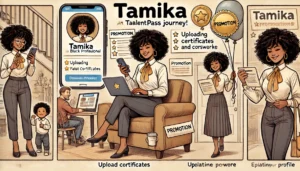
- Preserve evidence
- Organize credentials
- Identify patterns
- Prepare for advising
- Build networking profiles
- Prepare job application profiles
- Explore goals
- Carry their record forward
Deeper institutional connections can create additional value.
Through a permission-based Passport Page, a school could eventually issue trusted records, offer resources, present opportunities, recognize experiences, and receive information the student intentionally shares.
TalentSync can help the institution develop a broader understanding of its programs, people, relationships, and needs.
The individual and institutional sides remain distinct but connected.
Don’t wait until graduation to understand your education
University is not only a sequence of courses leading to a credential.
It is a collection of experiences through which students learn about subjects, other people, the world, and themselves.
A Universal Talent Passport helps preserve and connect that learning while it is happening.
Students can see their growth, build evidence, prepare for conversations, pursue opportunities, and create a foundation that remains useful long after graduation.
The goal is not to turn every moment of university into data.
It is to help students carry more of the meaning and value of their education into whatever comes next.