What will high school look like with integrated LERs?

What will high school look like with integrated LERs?

A high school student may spend four years completing courses, leading clubs, creating projects, volunteering, participating in sports, caring for family members, earning credentials, and gaining work experience.

Yet when the student graduates, most of that development is compressed into a transcript containing course titles, grades, credits, and perhaps a few honors.

The transcript serves an important purpose, but it cannot represent the full range of experiences through which a young person learns, contributes, and grows.

Learning and Employment Records, or LERs, offer the possibility of creating a more complete and portable record. They can connect formal education with projects, work-based learning, credentials, extracurricular activities, community participation, and other meaningful evidence.

But simply collecting more student data would not improve education.

A human-centered LER high school would help students understand their development, explore possible futures, and carry appropriate evidence forward—while maintaining clear boundaries around privacy, institutional authority, and the use of information about minors.

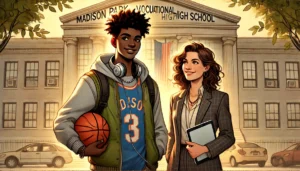
To imagine what that could look like, consider two students: Mia and Lucas.

Two Students With Different Interests—and Unfinished Futures

Mia is interested in environmental science. She enjoys biology and spends weekends helping with a neighborhood conservation project. She thinks she may want to work in sustainability, but she has not yet encountered the full range of educational and career pathways connected with that interest.

Lucas enjoys technology and learns best by building things. He has experimented with coding, repaired computers for family members, and helped with the technical production of school events. His grades do not always reveal the patience, problem-solving, and creativity he demonstrates through hands-on work.

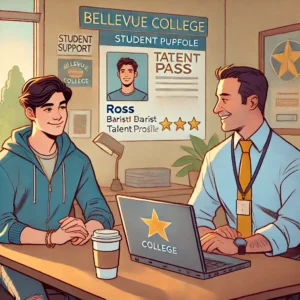
Their advisor, Mr. Daniels, does not expect either student to select a permanent career while still in high school.

His role is to help them explore.

In a school with thoughtfully integrated LER infrastructure, Mia and Lucas could bring together information from their courses and other experiences without being permanently defined by any single assessment, algorithm, or institutional record.

Their records would not predict their futures. They would help the students see more possibilities and make better-informed next decisions.

 

Learning Pathways Become Easier to Explore

Mia’s interest in environmental science might connect her with an advanced biology course, a local conservation project, a geographic information systems workshop, or an internship with a municipal sustainability office.

Lucas’s interest in technology might lead to computer science, robotics, audiovisual production, cybersecurity, digital design, or an apprenticeship involving advanced manufacturing.

An LER-enabled advising system could help students and advisors see these connections across departments and beyond the school.

Instead of generating one supposedly ideal pathway, the system could present several possibilities:

  • Courses that build relevant knowledge
  • Projects through which students can test an interest
  • Career and technical education opportunities
  • Work-based learning and apprenticeships
  • Credentials connected with particular fields
  • Community organizations seeking volunteers
  • College programs and other postsecondary pathways
  • People who can explain what the work is actually like

Artificial intelligence may help organize these possibilities or identify connections a student has not considered. But the recommendations should remain explainable and optional.

A young person’s current interests are a starting point for exploration—not a boundary around what they may become.

Projects Become Lasting Evidence of Learning

Suppose Mia participates in a team project investigating water quality in a nearby river.

The course grade may reflect her overall performance, but the project itself can reveal much more. She helps design the research process, collects samples, analyzes results, communicates with community partners, and presents recommendations to a local organization.

A human-centered LER could connect selected elements of that experience:

  • The project’s purpose
  • Mia’s role and contributions
  • The scientific methods used
  • A final report or presentation
  • Feedback from her teacher
  • Recognition from the community partner
  • Relevant learning outcomes
  • Mia’s reflection on what she learned

Lucas might complete a different project, such as designing a low-cost sensor used during the investigation. His record could include technical documentation, design iterations, images of the prototype, feedback, and an explanation of how he responded when the first version failed.

Neither project should automatically become proof that the student has mastered every related skill.

Instead, the LER should preserve context: what the student did, what evidence exists, what an educator or partner assessed, and which conclusions remain interpretations.

That makes the information more honest and more useful.

Credentials Retain Their Meaning and Provenance

Students may also earn digital credentials through courses, industry programs, dual-enrollment experiences, apprenticeships, or extracurricular activities.

An LER can help preserve important information about each credential:

  • Who issued it
  • What achievement it recognizes
  • Which criteria were used
  • Whether an assessment was involved
  • When it was issued
  • Whether it expires
  • What evidence supports it
  • Whether its authenticity can be checked

This gives students more than a collection of badge images. It helps them and future recipients understand what each credential actually represents.

It also avoids treating every credential as interchangeable proof of a skill. A participation badge, course-completion credential, industry certification, and performance-based assessment can all be valuable, but they establish different kinds of claims.

Advising Becomes a Continuing Dialogue

Several times during the year, Mia and Lucas meet with Mr. Daniels to reflect on their development.

Instead of reviewing only grades and graduation requirements, they can discuss questions such as:

  • Which experiences have been most meaningful?
  • What did you discover about how you learn?
  • Which activities gave you energy?
  • Where did you struggle or change your approach?
  • What evidence best represents your contribution?
  • What would you like to explore next?
  • Which assumptions about your future should we question?
  • Who could help you learn more?

A private AI guide might help each student prepare for the conversation by organizing experiences, recalling goals, or suggesting questions. But it should not replace the advisor or silently convert private reflection into an official school record.

Students need spaces where they can express uncertainty, reconsider an interest, and explore unfinished ideas without every thought being preserved for institutional analysis.

The technology should strengthen the relationship between student and advisor—not automate it away.

Learning Outside School Becomes More Visible

Many young people develop important capabilities beyond the classroom.

They work part-time jobs, care for siblings or relatives, volunteer, lead faith or community activities, participate in arts and sports, create independently, contribute to online communities, or help with family businesses.

These experiences may develop responsibility, creativity, communication, judgment, leadership, technical ability, and resilience. But their meaning is easily lost when students apply for college, training, scholarships, or employment.

A student-controlled record could allow young people to document selected experiences and add artifacts, reflections, or endorsements where appropriate.

The system should distinguish among:

  • Information supplied by the student
  • Evidence attached by the student
  • Recognition from another person
  • Institutionally verified records
  • Formally issued credentials
  • AI-generated interpretations

An experience does not have to be formally credentialed to matter. It simply needs to be represented honestly.

College and Career Readiness Becomes Purpose-Specific

As graduation approaches, Mia and Lucas do not need to expose their entire educational histories to every institution or employer.

Instead, they can create profiles for particular purposes.

Mia might prepare a college application profile highlighting her environmental research, science coursework, conservation work, leadership, and reflection on the questions she wants to pursue.

Lucas might create an apprenticeship application profile featuring his technical projects, troubleshooting experience, industry credential, work samples, and recommendations.

Another profile could support a scholarship application. A different one could help with an informational interview or summer job.

The underlying record can remain broad and continually developing, while each shared profile contains only the information relevant to a specific relationship.

This is more useful—and more respectful—than treating a student’s lifelong record as one permanent file that every recipient can access.


Schools Gain Insight Without Reducing Students to Data

Schools may also learn from appropriately governed and aggregated information.

Educators could examine whether students have equitable access to:

  • Advanced coursework
  • Work-based learning
  • Mentorship
  • Career and technical education
  • Leadership opportunities
  • Meaningful projects
  • Recognized credentials
  • Community partnerships
  • Postsecondary pathways

Schools could identify areas where the curriculum offers little opportunity to practice an important capability or where certain groups of students are being excluded from valuable experiences.

But an LER system should not become a comprehensive surveillance system.

Schools should not collect information merely because technology makes collection possible. Students and families need to understand what information exists, why it is being used, who can access it, and what choices they have.

High-stakes decisions should not be based on opaque profiles, inferred personality traits, or predictions about a young person’s potential.

The purpose is to create more opportunity—not to classify students more efficiently.

Safeguards for Minors Must Be Foundational

Any LER implementation involving minors requires protections beyond those expected in a general adult career platform.

Schools and technology providers must address:

  • Age-appropriate consent and explanation
  • Parent or guardian roles where applicable
  • Student privacy and educational-record requirements
  • Limits on behavioral tracking
  • Clear separation between private reflection and official records
  • Appropriate retention and deletion policies
  • Controls over third-party and employer access
  • Restrictions on advertising or commercial profiling
  • Processes for correcting inaccurate information
  • Transparency around AI-generated recommendations
  • Accessibility for students with different needs
  • Equitable access for students without personal devices or reliable internet

These protections cannot be added after the system has already been designed. They must shape the architecture, governance, and student experience from the beginning.

Graduation Becomes a Transition—Not a Data Reset

Today, graduation frequently marks the moment when students lose convenient access to institutional systems, project files, feedback, and other information generated during school.

In an LER-enabled ecosystem, students could leave with selected records they can continue using.

Mia could carry her credentials, project evidence, reflections, and verified achievements into college or work. Lucas could retain his technical portfolio, work-based learning, and certifications as he enters an apprenticeship.

Over time, they could add new education, employment, projects, community participation, and personal development. Their high school records would remain part of a larger journey without permanently defining them.

The school would continue to serve as an authoritative issuer of the records it created. The individual would carry those records into new relationships and decide how to use them.

A More Connected High School Experience

The real promise of LERs in high school is not comprehensive tracking or algorithmic personalization.

It is connection.

LER infrastructure can help connect:

  • Courses with capabilities
  • Projects with evidence
  • Credentials with their criteria
  • Student interests with opportunities to explore
  • Classroom learning with work and community experience
  • Advising with meaningful reflection
  • High school with college, training, and employment
  • Past development with future possibility

For Mia and Lucas, this creates something more valuable than a longer transcript.

It gives them a clearer understanding of what they have experienced, trustworthy evidence they can carry forward, and greater agency in deciding what comes next.

A human-centered LER high school would not tell young people who they are or what they should become. It would help them recognize their growth, encounter more possibilities, and leave school better prepared to navigate a future that remains their own.


Product availability notice: Gobekli’s products and capabilities evolve over time. This article may discuss current features, emerging capabilities, or the broader vision for the Gobekli ecosystem. Visit our Product Availability page for the latest information.