
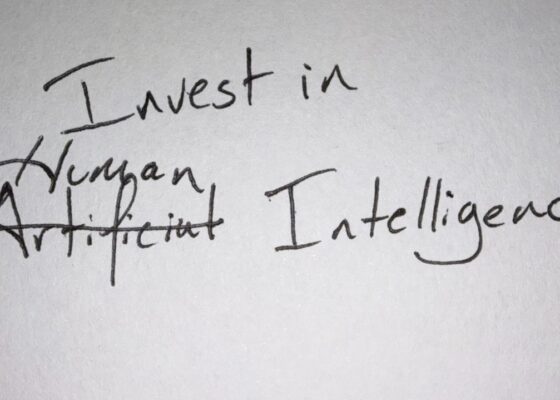
How LER Standards Enable the Human Intelligence Layer
The Learning and Employment Record ecosystem has spent years making learning and workforce data portable, verifiable, and individually owned. This article explores how that infrastructure can now support a Human Intelligence Layer that helps people, organizations, and AI continuously learn together.

It’s Time to Throw Out the Resume
Application volume is rising, hiring cycles are growing longer, and employers still struggle to see real capability. This article explains why the resume has become obsolete—and how Universal Talent Passports can replace noise and proxies with portable, verifiable talent data.

We’re Scaling Artificial Intelligence Faster Than We’re Scaling Human Agency. That’s the Risk.
AI capabilities and the energy systems supporting them are scaling at unprecedented speed, while people remain represented by static resumes, job titles, and outdated credentials. This article explains why human agency must become scalable infrastructure—and why leaders must invest in people and AI with equal seriousness.

PDF Resumes Are Collapsing the Job Market in the Age of AI—Help Create What’s Next
AI has made polished resumes abundant while verification remains manual, weakening trust across the job market. This article explores how Learning and Employment Records and person-owned talent passports can replace static claims with portable evidence—and restore agency to individuals.

When Learning Becomes Visible, the Value School Must Deliver Becomes Clear
As learning becomes portable and learner-owned, schools must provide more than access to information. This article explores how LERs and Universal Talent Passports can transform prior learning, advising, curriculum, and credentialing—and clarify the value educational institutions must deliver.

Employee Engagement & Retention with LERs
Follow an illustrative employee story from overlooked contribution to a realistic growth opportunity—and the manager commitments needed to move forward.

Workforce Equity & Succession Planning with LERs
Explore a succession-planning scenario that looks beyond familiar names, examines access to development, and distinguishes future preparation from immediate coverage.

Internal Mobility & Workforce Planning with LERs
Explore how an organization could evaluate an internal move by connecting future work, employee experience, development needs, and coverage across both teams.

Workplace Learning & Development with LERs
Follow an employee from course completion to a supported work assignment, connecting learning records, practical experience, and feedback to a clearer development plan.

Team Integration & Management with LERs
Follow an incoming teammate from introductions to a clear first assignment, with relevant experience, working relationships, and support connected to the work.