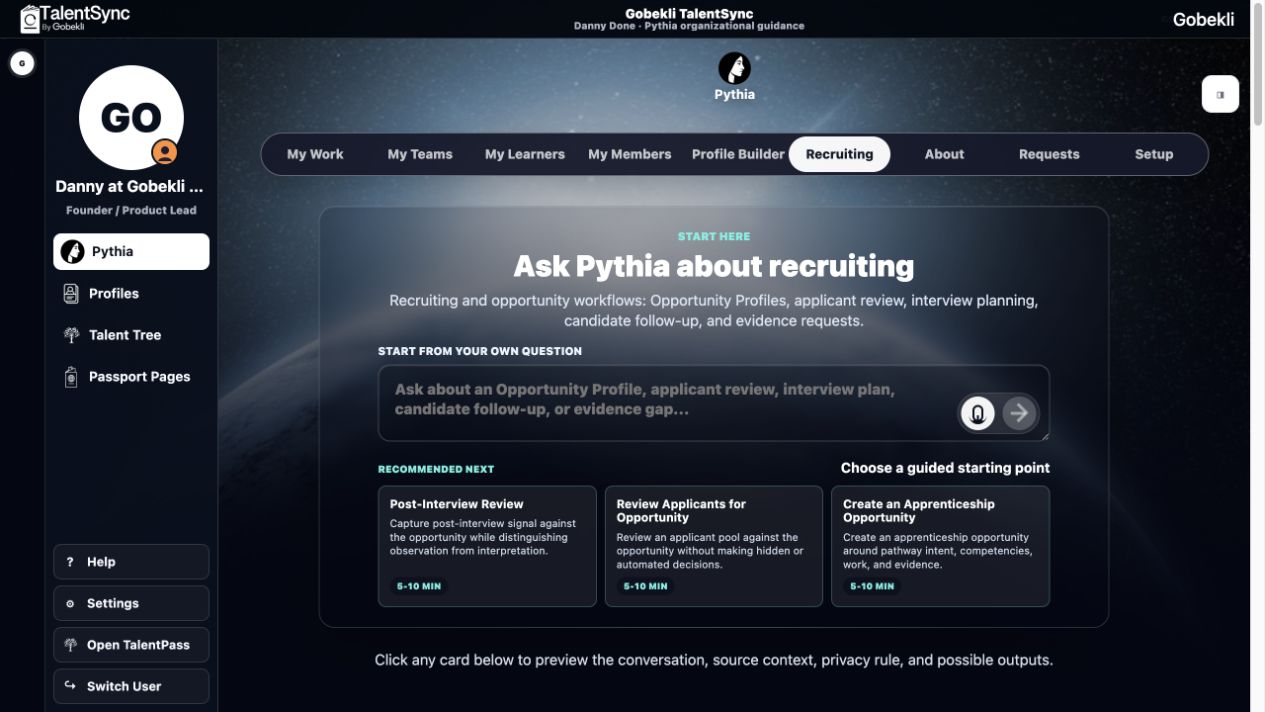
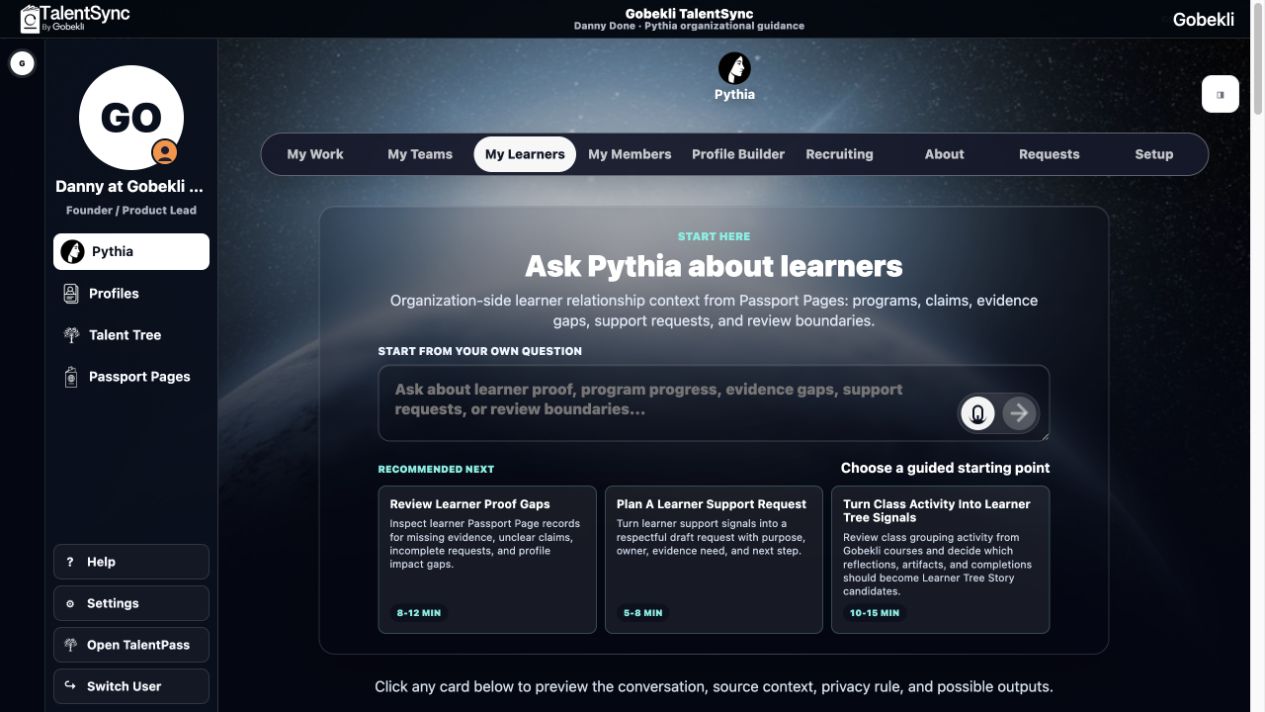
Create a reviewable output.
The result becomes a Story draft, profile section, evidence request, summary, or follow-up.
Pythia helps teams turn Talent Tree data, Profiles, Passport proof, workflow signals, and unanswered questions into guided conversations and reviewable next actions.
The data stays connected. The conversation changes with the question.
Instead of forcing leaders and team members to search through static dashboards, Pythia curates the questions, drafts, reminders, and review items most relevant to the work happening now.
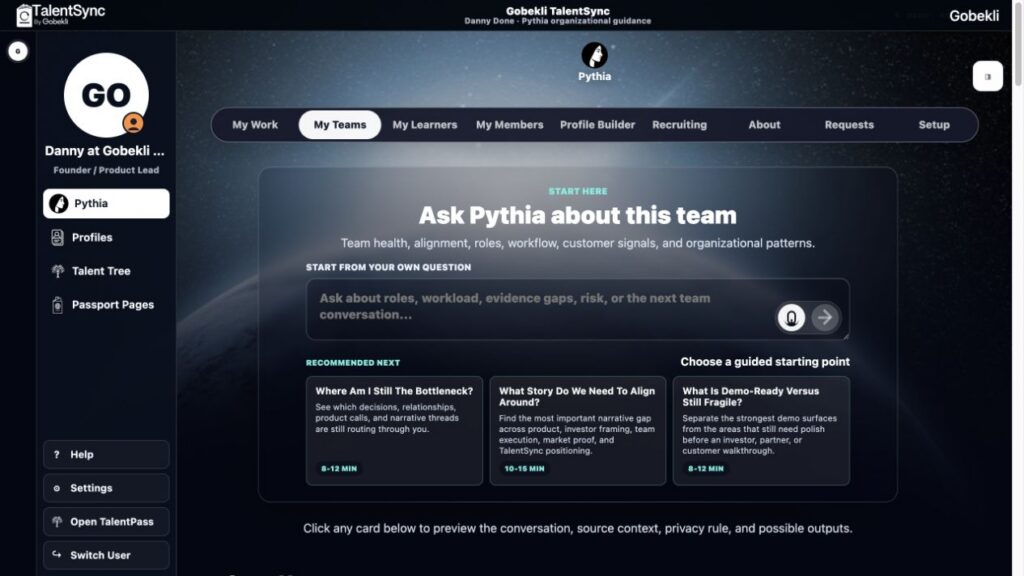
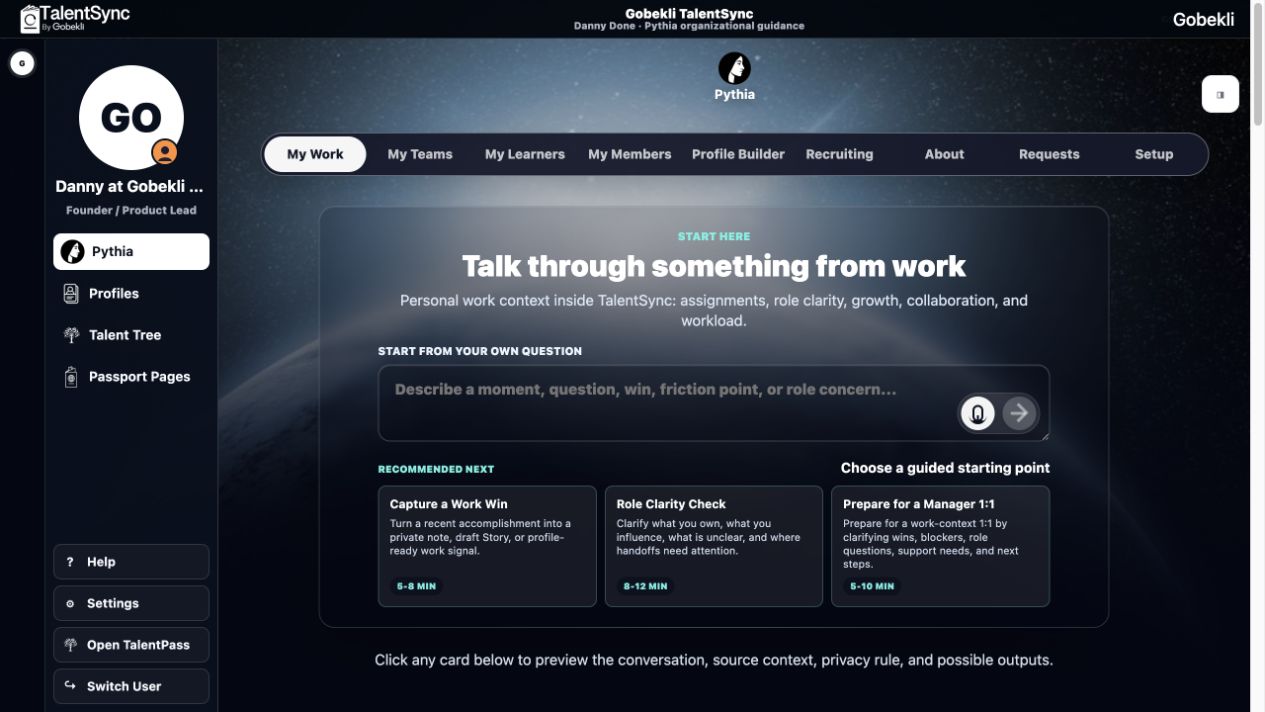
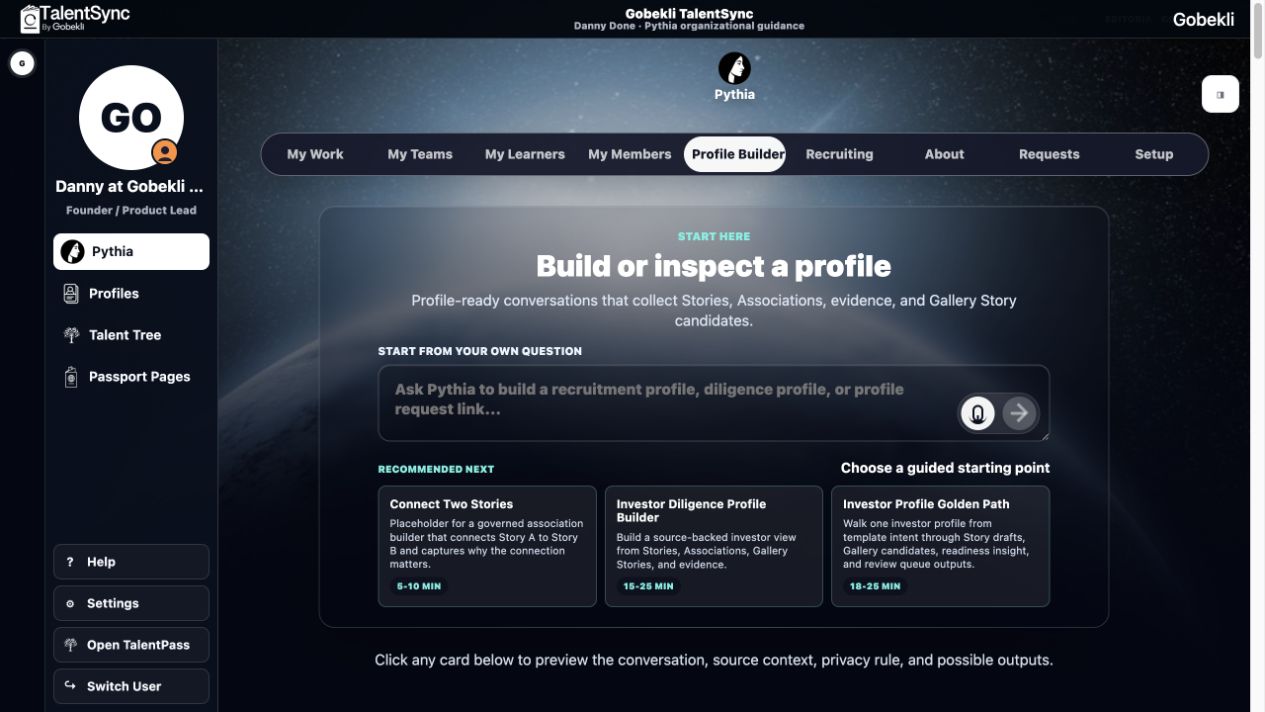
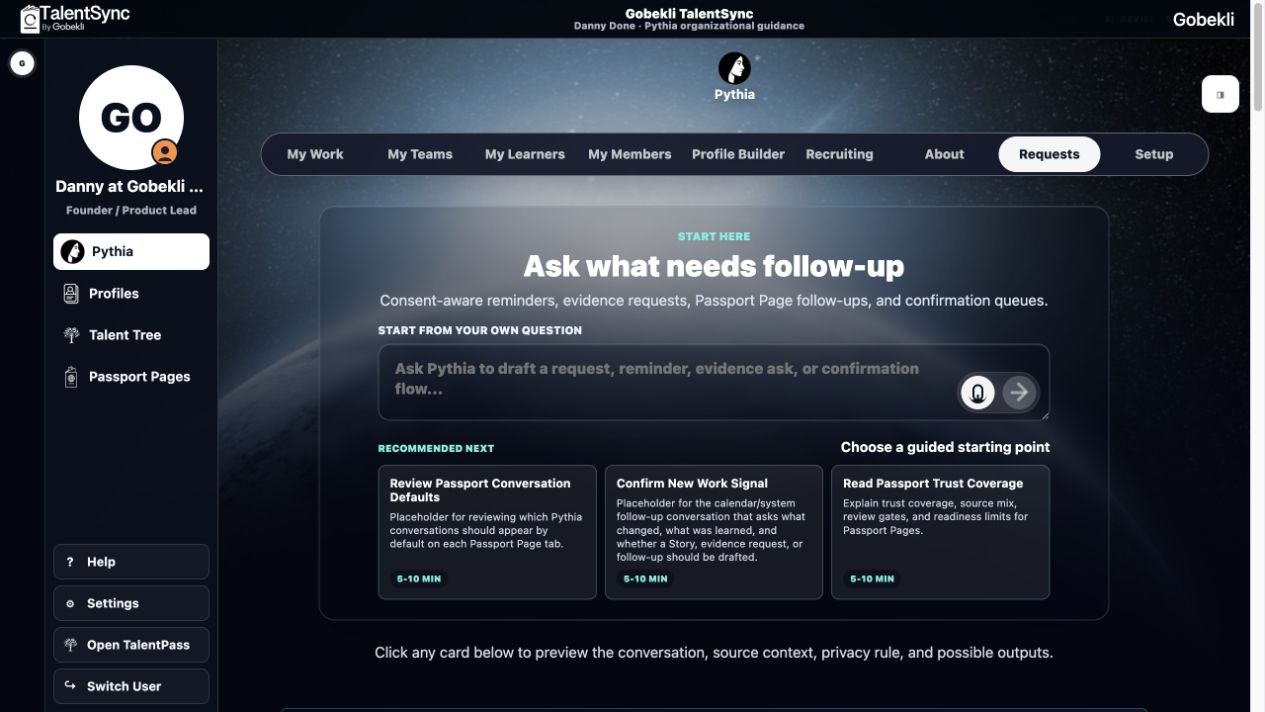
The Pythia home screen works like a curated media feed: each tab organizes guided conversations for a different kind of user, workflow, or decision.
Pythia guides the path from a messy question to a concrete draft, source check, or human-reviewed next step.
Ask about a team, role, applicant, profile, workflow, evidence gap, or setup decision
Pythia reads visible Stories, Tree nodes, Profiles, Passport Pages, and workflow signals.
The result becomes a Story draft, profile section, evidence request, summary, or follow-up.
This should be the main accordion section on the website. Each panel pairs a short explanation with a screenshot from the app.


Pythia is not an open-ended chatbot dropped on top of organizational data. Admins and product teams define the conversation templates, context boundaries, output targets, review rules, and safety rails that determine what each conversation can do.
Conversation templates define the job.
Each template can specify the audience, purpose, allowed context, opening question, suggested prompts, expected outputs, and review state. A recruiting conversation, a profile-builder conversation, and a private work reflection are not using the same rules.

Context stays scoped to the user and purpose.
Pythia reads only the visible TalentSync context for that scenario: Stories, Profiles, Passport Pages, evidence, workflow signals, and settings allowed for the current role. Person-controlled or private context stays out unless consent and visibility rules allow it.
Outputs are staged before they become real.
Pythia can draft, summarize, explain, and recommend. It cannot verify claims, grant access, expose private data, issue credentials, or send requests on its own. Outputs move through review queues and owner confirmation.
Examples: profile builder, evidence request, manager nudge, applicant review, private reflection.
Limit the template to visible Stories, selected Profiles, Passport proof, workflow data, or setup answers.
Specify whether Pythia drafts a Story, request, profile section, summary, review note, or next action.
Send drafts to the right owner before they become shareable, durable, or externally visible.
The page needs this boundary so Pythia feels powerful without sounding like unbounded automation.
It prepares Story drafts, summaries, profile sections, evidence requests, and review notes.
Managers, profile owners, evidence owners, or admins decide what becomes visible or durable.
Pythia does not verify claims, grant access, expose private context, or send requests by itself.
Stories, the Talent Tree, Profiles, Passport Pages, and review queues become more useful when people can talk to the system and understand what should happen next.
People and systems contribute source context.
Stories become organized meaning.
Source-backed views answer specific questions.
Conversation turns context into drafts and next actions.
People confirm what becomes real.
Pythia helps organizations use TalentSync as a living system of questions, evidence, growth, trust, and action.