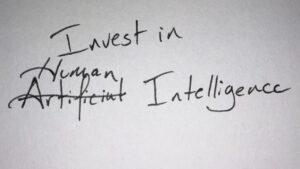
Bringing People to the Table in AI Transformation
When people help build the future of a company, they should be building a future for themselves.
By Danny Done, Founder & CEO, Gobekli
We’re asking people to help build a future they’re afraid they won’t have a place in. Then we wonder why they aren’t excited about AI transformation.
Think about what that request can sound like from the other side of the table. Explain how you do your work. Share the shortcuts you’ve learned, the judgment you’ve developed, the relationships that make things happen. Help us understand which parts a machine could do.
It’s reasonable for someone to ask: What happens to everything I tell you? What happens to me?
A friendly conversational interface doesn’t resolve those questions. Neither does an inspirational presentation about the future. If people cannot influence what happens next, an invitation to participate can still feel like an instruction to cooperate.
At Gobekli, we believe this moment gives us an opportunity to reset the relationship between people and organizations. We’re a startup building a new tool and a way of working that brings employees into the design of that relationship. Our technology is still in prototype. We’re looking for employers and transformation partners who want to help build and test it with their people.
The premise is straightforward: when someone helps an organization understand itself and improve, that contribution should strengthen the person’s future, too.
A business is a living network of people
Every organization depends on things that are difficult to see from the top. Someone knows when a customer needs a phone call instead of another email. Someone catches the exception before it becomes an expensive mistake. Someone knows which colleague to ask, which instruction is out of date, or why a process that looks inefficient on paper is protecting something important.
That understanding lives in people’s experience, judgment, and relationships. A job description captures only a fraction of it.
AI gives us powerful new ways to change how work gets done. The opportunity becomes much more interesting when the people closest to that work can help decide what should change—and what must be understood before changing it.
We want to help organizations develop that capacity continuously. People reflect on their work, surface what they know, help shape improvements, and learn from what happens. Leadership gains a clearer view of the organization. Employees gain a clearer view of themselves and the contribution they are making.
For that exchange to work, it has to be worth something to both sides.
People should get something they can keep
A paycheck matters. So do fair treatment, stability, and opportunity. Recognition does not replace any of those things.
But there is another kind of value that work creates: the growing story of what a person has learned, handled, improved, and made possible. Too much of that story is difficult to carry forward. When someone changes roles or employers, they may have to explain years of contribution through a few résumé bullets and whichever references remain available.
We’re building Gobekli to help people understand, develop, and demonstrate that value throughout their lives.
TalentPass is the personal side of that vision: a developing account of someone’s experience and contribution that they can review, correct, and choose to share. TalentSync is the organizational side: a way to build a clearer understanding of people’s capabilities and how work is changing through agreed participation.
The ambition is lifetime recognition: useful evidence people can keep building on as they move between teams, roles, organizations, and new directions. The technology and recognition practices needed to support that ambition are what we’re developing with partners. We are not claiming that every future employer will accept every record, or that a profile can guarantee an opportunity.
We are saying that helping a company grow should leave people better able to explain their own growth. Their story should remain theirs to carry.

Participation starts with a real choice, including the choice to say no.
The first workshop question is whether people want this
An employer’s approval opens the door to a discussion. It does not provide consent on behalf of the people in the room.
We would begin by explaining what we’re building, what participants could gain, what the organization hopes to learn, and which parts are still experimental. We would show the concept and available prototype honestly, distinguishing what works now from what we’re proposing to build.
Then we would ask people what they think. Does this help them understand their work? Is the recognition useful? What feels uncomfortable? What would need to change before they wanted to participate?
Before collecting personal work information, we would agree on what stays private, what can be shared, who can see it, and how people review their representation. Participation in the Gobekli pilot would need to be voluntary, with a real option to decline without penalty. That is a condition we would establish with the employer before inviting employees in.
If people genuinely do not want the product, we will accept that answer. We will report the reasons and other agreed findings back to the employer, protecting individual confidences, and step out of the proposed product engagement. Isolated objections also deserve a response; enthusiasm from colleagues does not consent for someone else.
We believe many people will see value in this exchange. That belief is something we intend to earn through the experience. A process that only accepts yes would undermine the relationship we’re trying to build.
What a workshop could actually look like
The following is an illustrative engagement we could design with a partner. It is a preview of the approach, not a report of a completed customer workshop or a fixed program every team must follow.
Before the room: leadership makes space for real influence
We start with a concrete business problem. Perhaps a service team is spending too much time on repetitive requests. Perhaps a new AI tool is creating rework. Perhaps employees are already experimenting, but the organization has little understanding of what helps and what creates risk.
With leadership, we clarify what is open to change, what constraints exist, and which decisions employees can influence. We also establish how participation and private reflections will be protected. If a restructuring decision has already been made, it needs to be disclosed as a constraint rather than presented as an open question.
The result should be a credible invitation: here is the problem, here is what you can help shape, and here is what we are prepared to do with what we learn.
In the room: people see their own work more clearly
After introducing the concept and obtaining consent, we invite participants to examine a recent piece of work. They can begin privately, using a guided worksheet or available prototype support, and decide what to bring into the shared discussion.
What were they trying to accomplish? Where did they make a judgment call? What information was missing? Who helped? What did they prevent from going wrong? What took energy, and what gave them a sense of accomplishment?
Imagine Maya, a customer operations employee. She initially describes her work as answering inquiries and updating records. As she examines an actual week, she notices how often she translates an unclear request, negotiates an exception, or recognizes that a customer is losing confidence. Her colleague Luis knows which internal relationships can resolve an unusual problem quickly.
Those are fictional examples, but they show the kind of discovery we want to make possible. People should leave with language for capabilities they use every day, including ones they have rarely thought to name. That is useful even before a new tool is fully built.

Mapping everyday work can reveal the judgment and relationships that make it possible.
Together: redesign one piece of work
With permission, individual observations become the basis for a shared view of the workflow. Participants identify recurring friction, handoffs, decisions, and opportunities to improve.
For Maya’s team, AI might help draft routine responses or organize incoming information. The team might decide that unusual commitments and sensitive customer situations still require a person’s judgment. They might also discover that their biggest obstacle is an unclear approval rule rather than a lack of automation.
Employees can challenge the proposed design, suggest alternatives, and identify what support they would need. Leadership contributes priorities and constraints. A consultant can bring facilitation, domain expertise, and an existing transformation method. Gobekli’s role is to help connect people’s understanding, the proposed change, and the evidence of what happens next.
The group leaves with a small experiment: a defined workflow, clear responsibilities, a way to raise problems, and a date to review the results. The aim is a plan people have had a meaningful role in creating.
After the room: keep learning and give credit
A workshop is the beginning of the exchange. During a short, agreed pilot, participants could use brief reflections and team check-ins to describe what changed: where work became easier, where new friction appeared, whether responsibilities shifted, and what they learned.
Those reflections should have a purpose people can see. When someone identifies a problem, they should be able to see what happened to the observation. When someone contributes an improvement, there should be a way to recognize that contribution and retain appropriate evidence of it.
We would distinguish a person’s own reflection from recognition reviewed by a colleague or manager. Private details about customers, coworkers, or company operations would not automatically become portable evidence. We would work with participants to capture the contribution without carrying confidential material into their personal record.
Sensitive concerns may need a confidential channel and reporting as themes. Ideas people want to present and receive credit for can remain attributed with their permission. Bringing people to the table includes giving them a choice about how they are heard.
The honest conversation about jobs
Some positions will change. Some responsibilities will disappear. Some roles may be removed. It would be dishonest to invite employees into AI transformation by promising that nothing difficult will happen.
The question is how much agency people have as change unfolds, and whether the organization helps them build a direction beyond the job they happen to hold today.
For one person, that might mean discovering a path into a different internal role. For another, it might mean building the capabilities needed to take on new responsibilities. For someone else, the next chapter may be outside the organization.
Gobekli is being designed to help people understand those possibilities and carry evidence of their experience into them. A clearer account of their judgment, relationships, accomplishments, and growth can give them more to work with than a title alone.
No tool can guarantee a new job or make every exit happen on an employee’s terms. Employers still have to make and own decisions about staffing and support. Our ambition is to give people more preparation, more visibility into their options, and more ability to shape what comes next—well before a transition forces the question.
That is why the personal value needs to begin on day one. It should grow alongside the value the company receives.

The goal: more ways to grow within an organization or carry experience into a new chapter.
What the organization gets—and what we need to prove
We believe an organization can make better decisions when people have a reason to share what they know and a meaningful role in acting on it. That belief leads to outcomes we can test.
For an initial pilot, we would agree on a few measures tied to the actual problem: time spent on a workflow, quality or rework, clarity of responsibilities, or whether a new practice is useful enough to become part of everyday work. Alongside those, we would examine the employee experience: did people feel able to influence the change, did they gain a clearer understanding of their capabilities, and did their contributions receive useful recognition?
We would look at both sides together. Time saved at the cost of unrecognized work elsewhere is an incomplete result. Positive workshop feedback without a useful change to the work is also incomplete.
Our longer-term ambition is an organization that becomes better able to understand and improve itself through its people. The first step is modest enough to examine honestly: one team, one problem, one change, and evidence of what happened.
Help us build this with your people
We’re inviting a small group of employers and transformation consultants to co-create these workshops with us. Bring a real team, a real challenge, and a willingness to let the people doing the work influence the answer.
You do not need to have your entire AI strategy settled. You do need to be willing to hear something that changes it.
We will bring our emerging tools, our approach to recognizing human contribution, and a commitment to learning openly. Your team will help shape the workshop, the product, and the way this relationship works in practice.
If your people see value in it, we can begin building together. If they don’t, we will listen, explain what we learned, and respect that answer.
When people help build the future of a company, they should be building a future for themselves.
If that is a future you want to help create, let’s talk about building a workshop with your team.