The Future of the Chief People Officer: From Function Leader to System Gardener
Organizations increasingly expect Chief People Officers to demonstrate business fluency and connect people strategy directly to revenue, margins, performance, and long-term value creation.
At first glance, this sounds like a straightforward expansion of the role: become more data-driven, understand the business, and accept greater accountability for measurable outcomes.
But the deeper shift is more consequential.
In his LinkedIn article, “The Role of the Chief People Officer Is Changing—But Not in the Way We Think,” Gobekli founder Danny Done argues that CPOs are increasingly being asked to understand not only how people support the business, but what the business actually is: a living system of people, relationships, behaviors, and intelligent technologies.
Organizations are systems of relationships
Most organizations describe themselves through functions, roles, reporting lines, and outputs. Performance systems measure what was completed, how quickly it happened, and whether targets were reached.
That model is useful, but incomplete.
An organization is not merely a structure or collection of employees. Its performance emerges from how people think together, communicate under pressure, make decisions under uncertainty, build trust, share context, and adapt when conditions change.
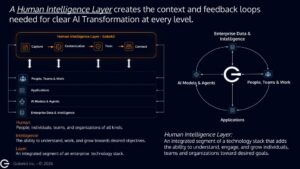
Increasingly, this system also includes AI and other technologies that actively influence how work is performed and decisions are made.
Connecting people strategy to business outcomes therefore requires more than understanding financial metrics. It requires understanding how the entire organizational system behaves—and developing the ability to influence it.
From managing a function to cultivating an ecosystem
This expanded responsibility begins to look less like managing a traditional business function and more like cultivating an ecosystem.
The CPO is not only hiring talent. They are shaping how different forms of capability interact.
They are not only designing organizational charts. They are building pathways through which information, trust, judgment, and decision-making move.
They are not only managing engagement. They are helping people, teams, AI, and organizational systems operate in alignment.
The metaphor of a gardener is useful. A gardener cannot control every outcome, but can understand the conditions required for growth, recognize how different elements affect one another, identify where something is thriving or struggling, and decide when intervention is necessary.
Most importantly, a gardener sees patterns as they develop over time.
That kind of visibility will become increasingly important to the CPO role.
Outputs do not explain how value is created
Organizations have developed sophisticated methods for measuring results. They can show what a team delivered, how long it took, and whether it met its targets.
They have far less visibility into the underlying dynamics that produced those results.
How did the team function while completing the work? Where is capability strengthening or stalling? How are decisions being made? How effectively does context travel across the organization? What patterns are emerging in collaboration, adaptability, judgment, and leadership?
These conditions ultimately determine whether an organization can perform consistently and adapt to change. Yet they are often understood through intuition, periodic surveys, retrospective reviews, and incomplete data.
As expectations for CPOs grow, business fluency alone will not be enough. They will need a more complete view of the organization as a living system comprising individuals, teams, relationships, behaviors, workflows, and intelligent technologies.
The CPO as steward of organizational intelligence
The central question is no longer simply: How do we align people strategy with the business?
It is: How do we see, understand, and shape the system that produces the business?
Without that visibility, even the most sophisticated people strategy rests on approximations. Leaders are asked to influence complex organizational dynamics using partial data, periodic snapshots, and professional intuition.
The language surrounding the CPO role is beginning to catch up with this reality, but the systems used to understand organizations have not.
The future CPO will not merely administer the people function or report its contribution to financial performance. They will help the organization understand itself—how talent develops, how relationships affect performance, how human and artificial intelligence interact, and how the conditions for sustainable value creation can be cultivated over time.