
Building the Best Possible Future White Paper
Who gets to direct intelligence—and who is directed by it? Danny Done’s white paper proposes a Human Intelligence Layer connecting personal agency, organizational self-awareness, and governed exchange to help people and institutions shape the future of AI.
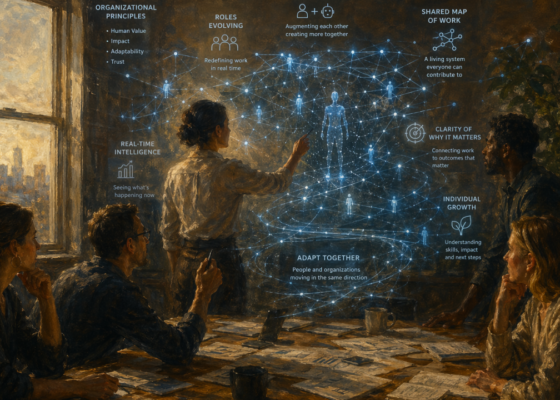
We’re Asking People to Reinvent Their Roles Without Acknowledging What That Requires
Organizations are asking employees to reinvent their roles around AI while the future of work remains unclear. This article explains why AI adoption is not simply a tooling or training challenge—it is a human alignment and organizational-design problem.

It’s Time to Throw Out the Resume
Application volume is rising, hiring cycles are growing longer, and employers still struggle to see real capability. This article explains why the resume has become obsolete—and how Universal Talent Passports can replace noise and proxies with portable, verifiable talent data.

Becoming the Source of Truth
As AI makes polished resumes, pitches, and online identities abundant, traditional signals of trust are losing meaning. This article explores how people can become the source of truth about their own experience—and how self-understanding and evidence can restore agency and opportunity.

We’re Scaling Artificial Intelligence Faster Than We’re Scaling Human Agency. That’s the Risk.
AI capabilities and the energy systems supporting them are scaling at unprecedented speed, while people remain represented by static resumes, job titles, and outdated credentials. This article explains why human agency must become scalable infrastructure—and why leaders must invest in people and AI with equal seriousness.

PDF Resumes Are Collapsing the Job Market in the Age of AI—Help Create What’s Next
AI has made polished resumes abundant while verification remains manual, weakening trust across the job market. This article explores how Learning and Employment Records and person-owned talent passports can replace static claims with portable evidence—and restore agency to individuals.
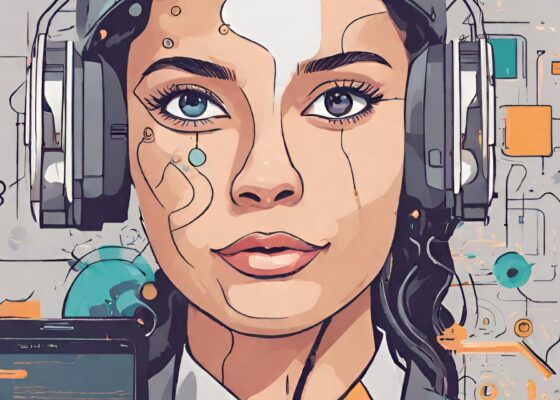
AI Should Expand Young Career Possibilities—Not Choose Their Future
AI can help young people explore careers, recognize their capabilities, and prepare for meaningful opportunities—but it should never attempt to decide their future. Ethical career guidance must preserve agency, privacy, explainability, human support, and the freedom to change.