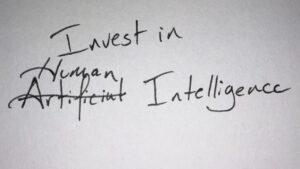
“Our economy of talent is built on a foundation of paper (the resume), and it is being ripped apart in a hurricane of AI.”
Brian Jensen left a thoughtful comment pushing back on the framing — particularly on whether AI is really the problem, and whether the talent economy was ever truly built on résumés in the first place.
His response made me realize I had compressed too much into a single sentence. This post is my attempt to unpack what I was really pointing at — and why AI isn’t breaking the system, but exposing a structural weakness we’ve been relying on for far too long.
Who gets to direct intelligence—and who is directed by it? Danny Done’s white paper proposes a Human Intelligence Layer connecting personal agency, organizational self-awareness, and governed exchange to help people ...
The Learning and Employment Record ecosystem has spent years making learning and workforce data portable, verifiable, and individually owned. This article explores how that infrastructure can now support a Human ...
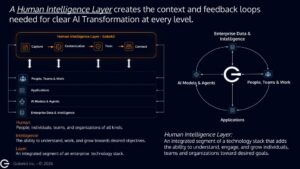
Organizations can measure AI adoption but often cannot determine whether AI is improving the work. This article introduces the Human Intelligence Layer: infrastructure connecting people, evidence, workflows, and outcomes so ...
Organizations are restructuring teams around what AI can automate, often without understanding how roles actually function. This article explains why effective AI-era organizational design must account for judgment, relationships, workflows, ...
Chief People Officers are being asked to connect people strategy with business performance—but the deeper challenge is understanding how the organization creates value as a living system. This article explores ...