
EMPLOYER USE CASE · A FICTIONAL SCENARIO
Help the Whole Store
Work Better Together
The numbers show a busy shift. Your people know where the work is getting stuck.
Checkout needs support. Shelves need replenishing. Returns are backing up. Every team has a reasonable priority—but changing one assignment can create a problem somewhere else.
Follow Glenn, Sandra, Jonah, and Dina at Cloud 9 through a retail scenario connecting frontline experience with clearer decisions, stronger handoffs, and employee growth.
This fictional scenario uses Cloud 9 and characters from Superstore. It is not a customer case study or an endorsement. Illustrations and any figures within them are examples, not measured results. See current product availability.
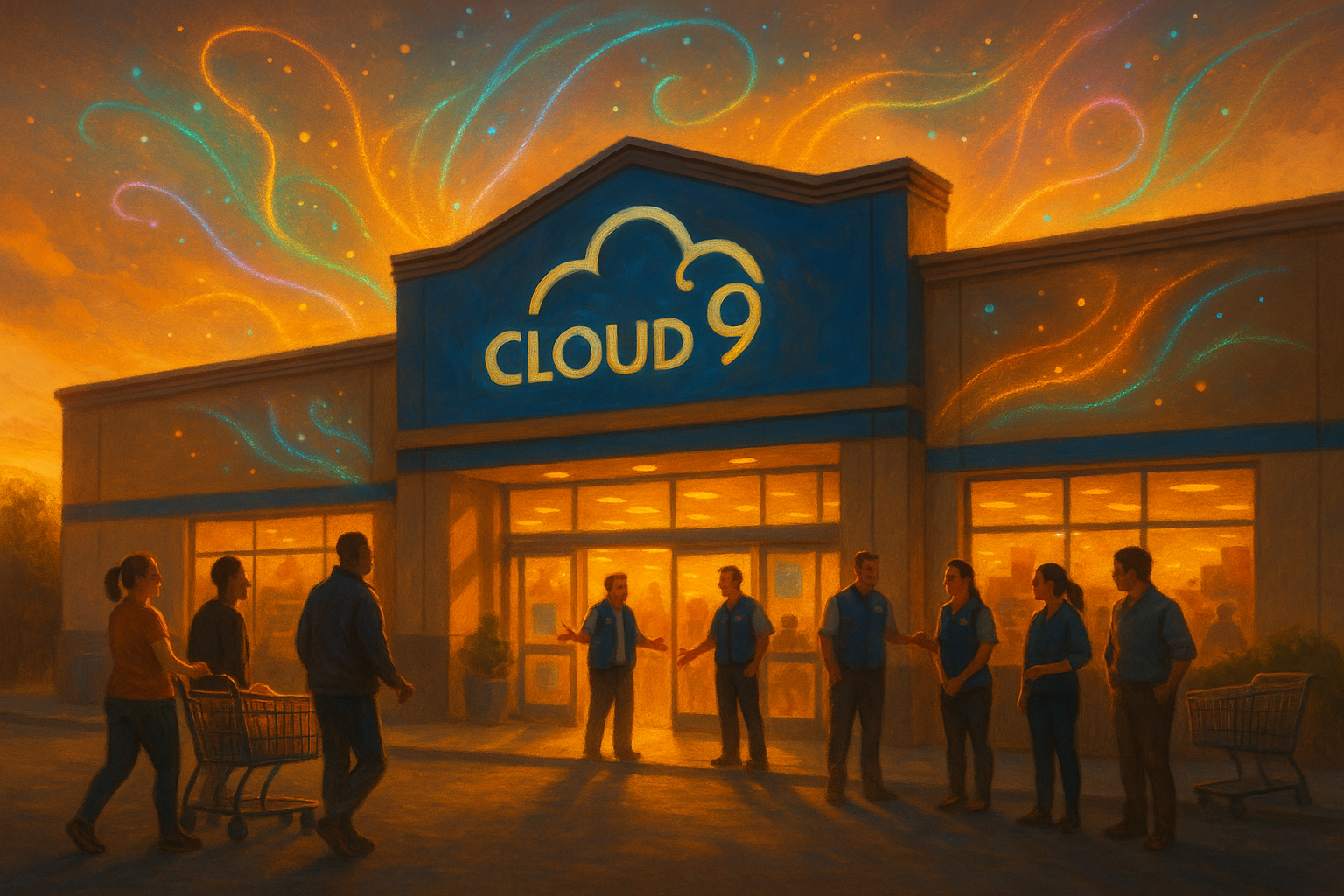
A local fix can move the problem to another aisle.
Suppose checkout queues grow during a busy period. Glenn considers moving someone from replenishment to the front end.
Before deciding, he needs more than the queue length. What work would be left uncovered? Who can help? What support does the person need? Who will reassess the arrangement?
What would improve the whole shift, rather than just the most visible problem?
01 · SEE THE SHARED WORK
Give Glenn context for the decision.
A focused Team or Workflow Profile could connect checkout demand with responsibilities, coverage, open issues, and observations from the floor.

Relevant operational records can contribute context where a supported connection exists. Pythia could help Glenn organize questions for the team and distinguish a recorded pattern from an explanation that still needs checking.
- What is driving the queue: demand, an exception, equipment, or unclear process?
- Which other responsibilities depend on the available people?
- What change can the team realistically support?
- When will they review whether it helped?
Glenn remains responsible for the decision. The intended role of TalentSync is to make the surrounding work easier to understand—not to automatically reassign employees.
02 · MAKE THE DEPENDENCIES VISIBLE
Bring Sandra’s view into the plan.
Sandra knows what is happening with replenishment. A delivery may be waiting, a priority item may need attention, or a colleague may already be covering another task.

Her contribution helps Glenn consider the consequences of a move before agreeing to it. A short-term coverage change needs a clear handoff and a plan for the work it interrupts.
The Talent Tree provides a way to connect responsibilities, activities, capabilities, and supporting evidence. It can help the team discuss who brings relevant experience and what remains uncovered.
The person closest to the work can explain a dependency the schedule does not show.
One store. Connected responsibilities.
Checkout, replenishment, returns, and safety affect one another. Better coordination starts with understanding those connections.
03 · LEARN FROM THE FRONTLINE
Turn Jonah’s observation into a useful improvement.
At the returns desk, Jonah notices that the same question repeatedly brings a transaction to a halt. He has an idea for making the approved process clearer.

Pythia could help him describe the situation, his contribution, and the examples that would help a manager review it.
The team checks the idea against the existing process, agrees on a small test, and reviews what happened. A quicker transaction is useful only if the required work is still done well.
Jonah could then discuss whether he wants to help explain the improvement to colleagues, with time and support for that responsibility.
04 · KEEP ACCOUNTABILITY IN VIEW
Include Dina before a process change creates another problem.
Dina brings the perspective of loss prevention and safety to the proposed changes. She can help identify which steps, escalation routes, or responsibilities need to remain clear.
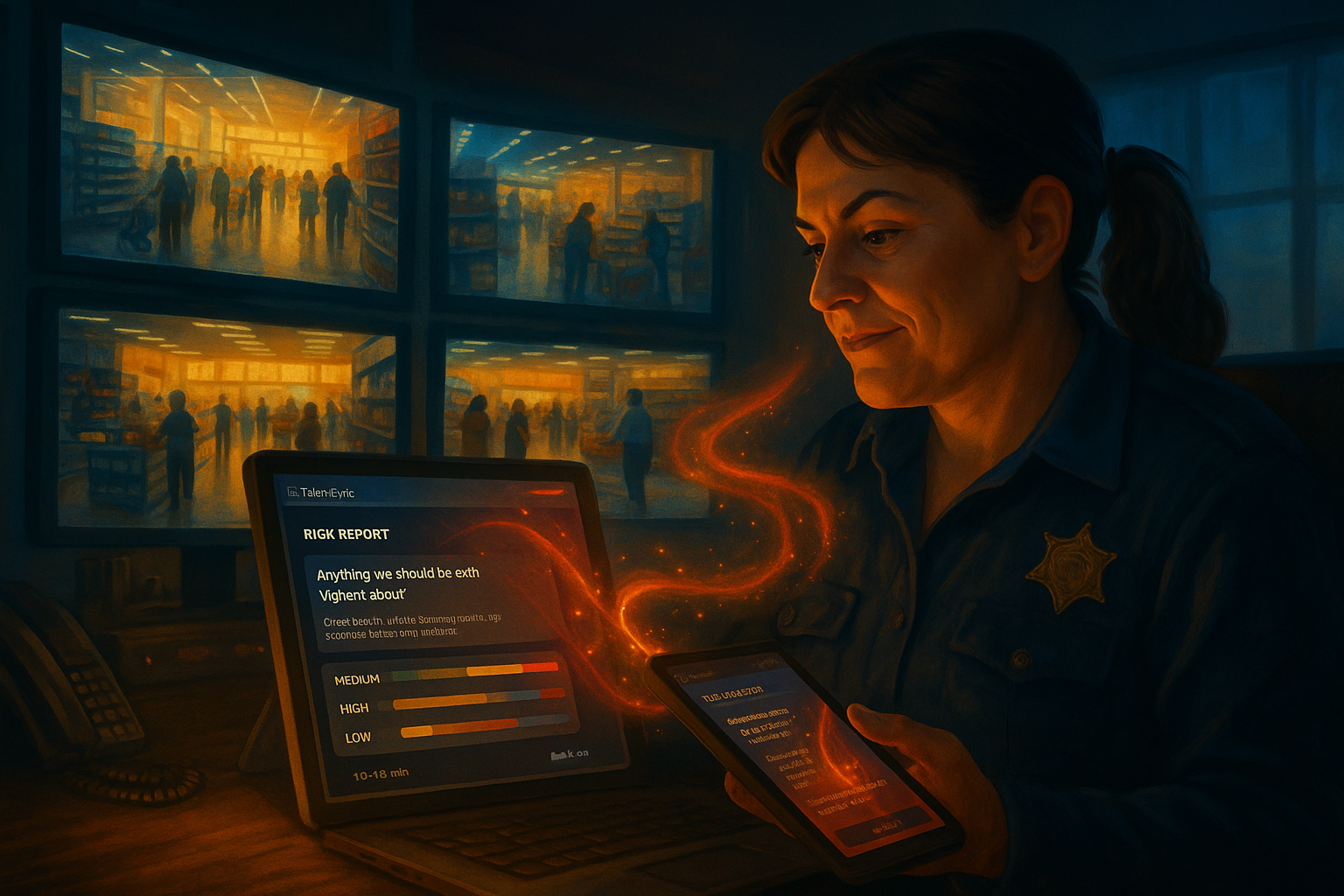
A shared review could document the proposed change, the people responsible for assessing it, and the questions still open.
An unusual transaction or an incomplete record is a reason to investigate through the established process. It should not automatically become an accusation against a worker or customer.
The goal is a change that the team can explain and review. TalentSync does not certify compliance or replace the people responsible for those decisions.
05 · RECOGNIZE AND CARRY FORWARD
Make the next shift better informed.
At the review, the team considers what helped, what remained difficult, and what needs a different approach. The next shift receives the relevant context and agreed responsibilities.

Sandra’s coordination, Jonah’s process insight, and Dina’s review may all deserve recognition. A useful account explains each contribution and the support behind it.
Passport Pages provide the intended framework for exchanging relevant recognition and resources with a person’s TalentPass. Workers could retain reviewed evidence of their experience while personal reflection and sensitive operational information remain appropriately separated.
The store keeps learning from the work. Employees gain a clearer account of what they contribute.
Evaluate the whole shift.
Customer flow
Did waiting or repeated handoffs improve, and what else changed during the period?
Work coverage
Did support for one area leave important tasks unresolved elsewhere?
Employee support
Were expectations, preparation, and escalation routes clear?
Learning and accountability
Can the team explain the decision, its evidence, and what should happen next?
These are questions to evaluate—not customer results. This fictional scenario does not establish sales gains, loss reduction, or a causal effect on employee retention.
Where is store coordination getting stuck?
“We have people, but the work is not consistently covered.”
Connect demand with capacity, responsibilities, and realistic workforce responses.
“New hires are left to figure it out.”
Clarify preparation, support, and handoffs before expecting people to work independently.
“Our associates have more to contribute than we can see.”
Explore how experience and interests can connect people with new internal responsibilities.
Questions about retail team coordination
Does TalentSync replace our POS or workforce scheduling system?
This scenario focuses on responsibilities, work context, and team learning. Existing systems can continue to handle transactions, inventory, and scheduling. Specific connections depend on available capabilities and implementation scope.
Does TalentSync automatically move staff between departments?
No automatic reassignment is promised here. Managers and employees need to confirm the work, availability, preparation, and coverage implications of a change.
Does it score employee culture or performance?
This scenario uses contextual evidence and human review. It does not reduce a person’s contribution or a team’s culture to a single score.
Can employees retain recognition from their work?
TalentPass is intended to provide a continuing professional record. Relevant reviewed recognition can be exchanged through defined sharing arrangements, without including sensitive customer or operational information.
Are Cloud 9 and these results real customers?
No. Cloud 9 and the characters are fictional references from Superstore. This page is an illustrative scenario, not an endorsement, deployment report, or claim of measured results.
Can we begin with one department or shift?
Yes. Start with one coverage problem, onboarding process, or recurring handoff. A workshop can clarify next steps before a product implementation. Review current product availability.
Give the next shift
a clearer picture of the work.
Start with one recurring problem. Bring the people who understand it into the conversation, define a practical change, and review what happens.