
EMPLOYER USE CASE · AN ILLUSTRATIVE SCENARIO
Keep the Right Crew Connected
Through Every Season
The work changes with the season. Your understanding of the team should keep up.
Adrian runs RiverCity Handyman & Home Services. Summer brings painting projects, winter brings holiday installations, and the months between bring repairs and property upkeep.
Each transition changes the work, the people available, and the support crews need. Follow Adrian as he connects project requirements with crew experience—and helps workers carry their progress into the next season.
RiverCity and Adrian are illustrative. This scenario describes intended TalentSync capabilities, not a completed customer deployment. See current product availability.
A full calendar does not explain whether the team can deliver.
A delayed painting job overlaps with the next booking. A returning worker has gained relevant experience elsewhere. Another crew member wants more responsibility but needs support before leading a project.
Adrian can see appointments and names. The harder questions concern the work behind them:
- What does each project actually require?
- Who brings relevant experience—and who is available?
- Where are materials, handoffs, or supervision likely to hold things up?
- What needs to happen before the next service season begins?
TalentSync’s intended role is to bring that human context into view alongside the operational information Adrian already uses.
01 · PLAN THE CREW
Connect the job with the experience it needs.
Adrian begins with one upcoming painting project. He and the crew lead clarify the scope, preparation, customer expectations, responsibilities, and support required.
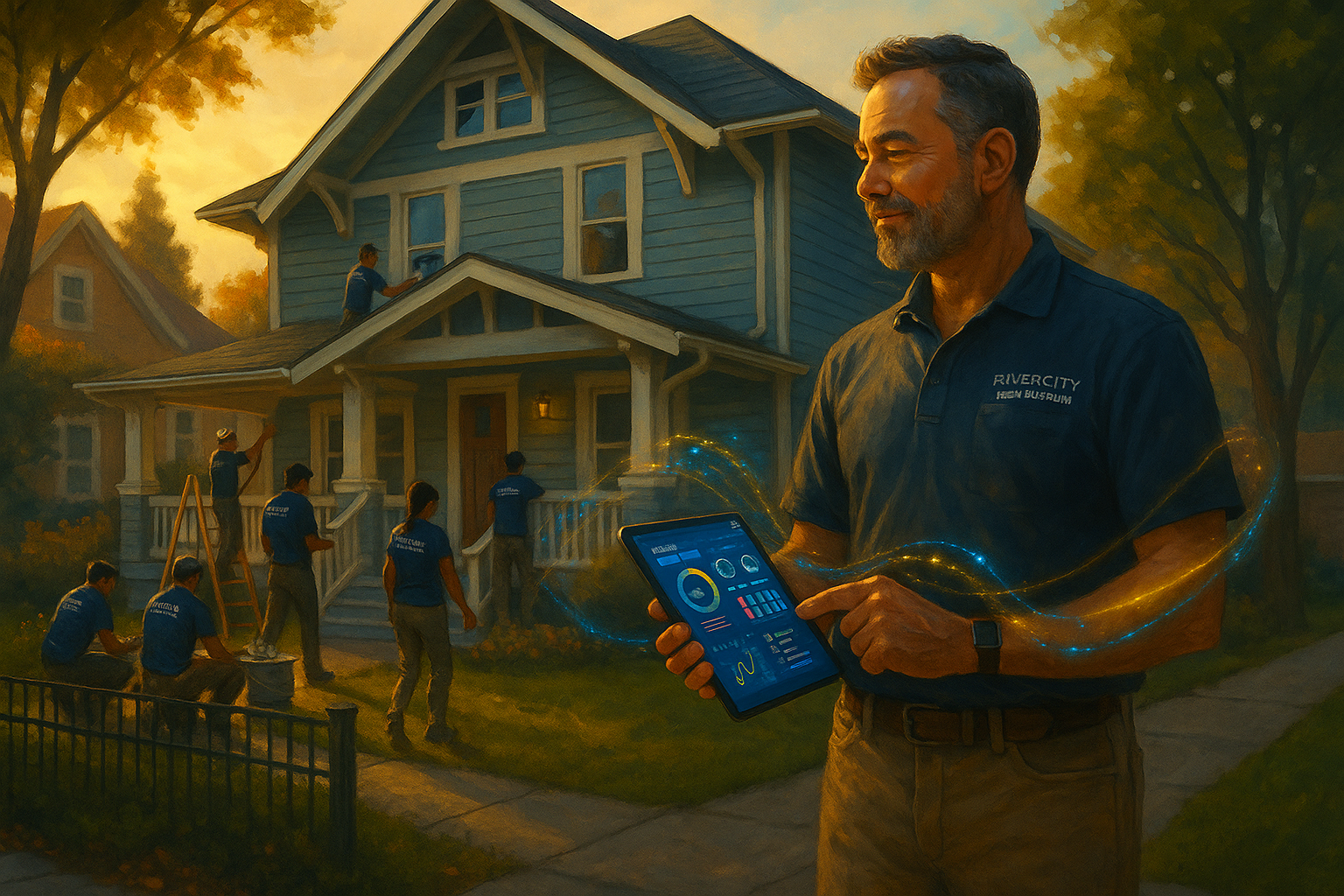
A Project Profile could bring those requirements together. Selected worker experience can then help the team discuss who should take on which responsibilities.
The Talent Tree provides a way to connect activities, capabilities, and supporting evidence. Availability, travel, workload, equipment, and supervision still need confirmation before an assignment is agreed.
A useful crew plan explains why the arrangement makes sense—and what it depends on.
02 · PREPARE FOR THE NEXT SEASON
Reconnect before the next busy period.
As the work shifts toward holiday installations, Adrian reaches out to people who may want to return. Their circumstances and experience may have changed.

Pythia could help a returning worker organize a focused update: relevant recent projects, current interests, availability to discuss, and preparation they may need.
The worker reviews what to share. Adrian and the crew lead confirm the responsibilities, onboarding, and support needed for the upcoming work.
Any learning or preparation activity should have clear expectations about timing, support, and participation. Staying connected should not imply that someone is available or committed to return.
Build continuity between seasons.
Carry forward what people have learned, what the work requires, and what both sides have agreed.
A returning worker should not have to start their professional story from zero.
03 · UNDERSTAND THE WORK
Learn why a job went well—or needed another visit.
Suppose a project takes longer than planned. A completion time alone does not explain why.

Adrian and the crew review the circumstances: preparation, materials, changing scope, customer communication, and the handoffs between people.
A focused project review could connect relevant work records with the crew’s account and appropriate customer feedback. It should distinguish a worker’s contribution from conditions outside their control.
What should change before the next similar job?
The answer might be a clearer scope, a materials check, different support, or a better customer handoff. Relevant findings can inform the next Project Profile.
04 · RECOGNIZE CONTRIBUTION
Help people keep evidence of the work they do.
A crew member may have solved a difficult preparation problem, helped a colleague learn, or handled a changing customer request well.
Those contributions deserve an account that explains what happened, who was involved, and what supports the recognition.
Passport Pages are intended to support purposeful exchange between the business and a person’s TalentPass. Reviewed recognition could become part of a professional record the worker chooses to retain.
Project photographs or customer feedback should only be shared where appropriate, with private customer details excluded from portable records.
A discussion about future work can then draw on that experience and the worker’s goals. Development opportunities still need practical support and agreement.
05 · SHARE RESPONSIBILITY
Make the plan usable beyond the owner’s memory.
Adrian wants crew leads to coordinate work without every question returning to him.

A useful team view could connect priorities, responsibilities, open questions, and the decisions that need escalation. Crew leads contribute updates as conditions change.
RiverCity’s scheduling and customer systems can continue to serve their existing purposes. TalentSync’s intended contribution is the context behind the work: what matters, who is responsible, what has changed, and what the team has learned.
A stronger handoff gives the next person enough context to act.
Evaluate what changes across the season.
Project delivery
Are recurring causes of delay, rework, or additional visits being addressed?
Crew preparation
Do people understand the assignment and have the support it requires?
Seasonal continuity
Can returning workers and managers confirm expectations earlier?
Growth and recognition
Can people explain their contributions and see useful next opportunities?
These are outcomes to investigate—not measured results from this fictional business. Retention, revenue, and delivery outcomes depend on many factors beyond a software setup.
Where is seasonal coordination getting stuck?
“Demand changes faster than our staffing plans.”
Connect upcoming work with capacity, capability, and realistic response options.
“We rely on seasonal or independent workers.”
Clarify participation, responsibilities, and preparation across a flexible workforce.
“Every returning crew needs to get up to speed again.”
Bring onboarding, project expectations, and team handoffs into a clearer preparation process.
Questions about home-services workforce planning
Is this a scheduling or dispatch system?
This scenario focuses on crew experience, responsibilities, preparation, and learning from work. It does not promise automatic dispatch, route optimization, or replacement of a field-service platform.
Can seasonal workers keep their TalentPass between engagements?
TalentPass is intended to give individuals a continuing professional record. Sharing with a particular business should be purposeful and should not imply continuing availability or a commitment to return.
Does TalentSync automatically assign the best worker?
The intended approach supports a discussion using relevant experience and evidence. Managers and workers still need to confirm availability, scope, support, and the working arrangement.
Can customer feedback become part of a worker’s record?
Where appropriate sharing arrangements permit it, relevant feedback can contribute context. It should be reviewed alongside the work and should not expose private customer information.
Will this improve retention or reduce overruns?
Those are outcomes to evaluate in a defined engagement. This fictional scenario does not establish a causal effect or promise specific business results.
Can we start with a workshop?
Yes. Start with one seasonal coordination problem, returning crew, or upcoming service line. A workshop can clarify requirements and next steps before a product implementation. Review current product availability.
Prepare the next season
with a clearer picture of your people.
Start with one service line, returning crew, or recurring project problem. Connect the work ahead with the people and support needed to deliver it.