Microcredentials Need Translation—Not One Universal Taxonomy
Microcredentials are created within communities that already have their own ways of understanding learning and work.
A nursing program, manufacturing association, university, software company, workforce board, and military training provider may all issue credentials describing human capability.
But they will not describe that capability in the same language.
Each field develops terms that reflect its tools, practices, responsibilities, culture, and history. Even organizations within the same industry may define similar ideas differently because their programs, roles, and expectations are different.
This diversity is not a design failure.
It is an unavoidable consequence of trying to represent real human experience.
The problem begins when those locally meaningful credentials need to travel.
A learner may need an employer to understand a credential issued by a school. A worker may need one industry to recognize capabilities developed in another. An AI system may need to interpret records created by hundreds of organizations using different terminology and structures.
The future of microcredentialing therefore does not depend on forcing everyone into one master skills taxonomy.
It depends on building trustworthy semantic bridges that allow different languages to connect without erasing the context that made each one meaningful.
Product availability note: This article describes the standards ecosystem, Gobekli’s current architectural direction, and longer-term capabilities being developed through TalentPass, TalentSync, the Talent Tree, Passport Pages, and STAMP. Visit our Product Availability page to distinguish functionality available today from limited tests, active development, and the broader product vision.
Every community develops its own language
Specialized language exists because specialized work exists.
A manufacturing team may talk about tolerances, changeovers, root-cause analysis, preventive maintenance, and lean practices.
A healthcare team may describe triage, care coordination, patient education, clinical escalation, and interdisciplinary collaboration.
A software team may talk about deployments, observability, technical debt, architecture, and incident response.
A university may describe learning through outcomes, competencies, credits, assessments, and levels of mastery.
These terms contain more than dictionary definitions.
They encode:
- Context
- Relationships
- Tools
- Standards
- Risk
- Responsibility
- Professional identity
- Expectations for performance
- Shared history within the community
Replacing all of this language with a generic skills list may make the data look consistent while stripping away the meaning people actually need.
Taxonomies are not merely lists of words
Several related concepts are often collapsed into the word “taxonomy.”
They perform different responsibilities.
Vocabulary
A vocabulary defines the terms a community uses.
Taxonomy
A taxonomy organizes terms into categories and hierarchical relationships.
Competency framework
A competency framework describes capabilities, often with levels, criteria, behaviors, or expectations for performance.
Ontology
An ontology represents different kinds of entities and the relationships among them.
Schema
A schema defines how information is structured and exchanged between systems.
Registry
A registry makes defined resources discoverable and gives them persistent identifiers and descriptive metadata.
A credential ecosystem may need all of these.
A shared data schema does not require every organization to use the same vocabulary. A credential can follow a common technical format while pointing to a locally defined competency framework. A registry can connect many frameworks without declaring that one is universally authoritative.
This is the distinction between standardizing the container and standardizing all human meaning inside it.
Why one master taxonomy cannot solve the problem
The desire for one universal taxonomy is understandable.
If every organization used the same terms, systems could seemingly compare credentials, match people with opportunities, and analyze capability without translation.
But a master taxonomy creates several problems.
Human capability changes
New tools, practices, roles, and forms of work appear continuously. A centralized taxonomy will always struggle to keep pace.
Meaning depends on context
“Leadership,” “communication,” “quality,” and “analysis” may describe very different activities in different environments.
Communities need precision
Specialized fields should not have to abandon language that carries important technical, cultural, or professional meaning.
Control becomes concentrated
Whoever governs the master taxonomy gains significant influence over which capabilities are visible, how they are classified, and whose knowledge counts.
Translation is mistaken for equivalence
Two terms may overlap without being identical. Mapping them to one universal label can create false precision.
People become flattened
A list of standardized skills can remove the experiences, relationships, evidence, responsibilities, and conditions that explain what someone can actually do.
The goal should not be universal sameness.
It should be meaningful interoperability.
Local language should be preserved
A well-designed credential should be able to express the issuer’s authentic understanding of the achievement.
The issuer should be able to describe:
- What was learned or demonstrated
- Why it matters within the field
- Which criteria were met
- How the achievement was assessed
- What evidence exists
- Which level or scope applies
- What the credential prepares someone to do
- Which local or external frameworks it references
This preserves the meaning closest to the learning and work.
The credential can then add alignments to other frameworks where those connections are useful and defensible.
The local definition remains primary. External mappings help other communities interpret it.
Reference frameworks create shared points of orientation
Common frameworks can help credentials travel without becoming mandatory master languages.
Examples include:
- Occupational frameworks
- Industry competency models
- Academic standards
- Professional frameworks
- Licensing requirements
- Employer-defined capability models
- Public skills and occupation data
- Institution-specific learning outcomes
O*NET, for example, provides extensive public information about occupations, work activities, knowledge, skills, abilities, work context, and other features of work in the United States. It can provide a useful reference point without replacing an employer’s understanding of a particular role.
A credential issuer might preserve its own competency language while aligning parts of it to O*NET, an industry model, or another recognized framework.
These alignments create orientation.
They do not guarantee exact equivalence.
Translation must preserve the kind of relationship
When two concepts are connected, the mapping should explain how they relate.
Possible relationships may include:
- Exact or functionally equivalent
- Broader than
- Narrower than
- Closely related
- Partially overlapping
- Required by
- Builds upon
- Demonstrated through
- Relevant within a particular context
This is much more useful than treating every mapping as “same as.”
For example, an organization’s competency called “leading through production disruption” may relate to leadership, problem-solving, communication, operations, and risk management.
Collapsing it into one generic label would lose important meaning.
A stronger model preserves the original concept and connects it to several relevant reference points.
Mappings also need provenance
A translation is itself a claim.
Someone decided that two concepts are related.
A trustworthy mapping should help users understand:
- Who created it
- Which frameworks and versions were used
- When it was created
- What relationship was asserted
- What evidence or reasoning supports it
- Whether a domain expert reviewed it
- Which context it applies to
- Whether it has changed
- How confident users should be in the relationship
This becomes especially important when AI generates or recommends mappings.
AI can help identify possible semantic relationships. It should not silently convert those suggestions into authoritative equivalencies.
Human expertise, transparent provenance, and review remain essential.
CTDL helps connect credentials, programs, jobs, and competencies
Credential Engine’s Credential Transparency Description Language is a family of open schemas designed for linked open data.
CTDL can describe and connect resources such as:
- Credentials
- Organizations
- Programs
- Courses
- Assessments
- Competencies
- Jobs
- Occupations
- Pathways
- Outcomes
This allows a credential to be described as more than a title and image.
An issuer can publish structured information about what the credential represents, who offers it, what it requires, what it prepares someone for, and how it relates to competencies and other resources.
CTDL does not require every issuer to abandon its own framework.
It provides shared ways to publish, identify, link, and discover meaning across a diverse ecosystem.
Open Badges can carry achievement context
The 1EdTech Open Badges standard enables organizations to issue portable digital achievements.
Open Badges can describe:
- The earner
- The issuer
- The achievement
- Criteria
- Evidence
- Dates
- Alignments to standards or frameworks
Open Badges 3.0 aligns with the W3C Verifiable Credentials Data Model, helping issued achievements become interoperable and verifiable across compatible systems.
The badge format does not eliminate taxonomy diversity.
It gives issuers a common technical structure through which they can preserve their achievement definitions and connect them with outside frameworks.
Again, the standard creates a bridge—not a universal dictionary.
Credential standards and talent standards solve different problems
A credential describes a claim or achievement issued to a person.
A talent model may need to represent much more:
- The experience surrounding the achievement
- Activities performed
- The person’s role
- Evidence
- Relationships
- Time in practice
- Context of application
- Reflection
- Growth
- Changing goals
- How capabilities interact
A microcredential may confirm that someone met defined criteria.
It may not explain how the person later applied that learning or how the capability relates to the rest of their experience.
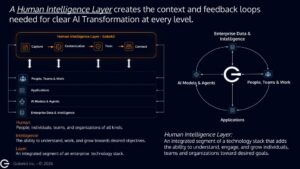
This is where Universal Talent Passports and the Human Intelligence Layer extend the value of credential infrastructure.
Trusted credentials become anchors within a larger person-owned understanding.
The Talent Tree creates a multidimensional reference structure
Gobekli’s Talent Tree is designed to help organize dimensions of human experience that are usually separated across credentials, résumés, skills systems, portfolios, and institutional records.
These dimensions include:
- Motivations
- Abilities and agency
- Interests
- Passions
- Voice
- Domain
- Potential
- Leadership
- Stewardship
- Reputation
- Journey
- Technical skills
- Human skills
The Talent Tree is not intended to replace every occupational, academic, professional, or organizational framework.
It provides a shared structure for connecting them around the person.
A credential can preserve the issuer’s terms while TalentPass connects the achievement to experiences, evidence, activities, goals, and other parts of the individual’s Talent Tree.
STAMP is intended to support translation without erasure
Gobekli’s proposed Standardized Talent Asset Mapping Protocol, or STAMP, addresses the challenge of connecting different talent languages.
Its purpose is not to declare one universal list of skills.
The architectural goal is to preserve:
- The original term
- The source framework
- The organization or community that defined it
- The context in which it was used
- Relationships to other concepts
- Evidence and experience connected to it
- Provenance of mappings
- Change across time
- Different dimensions of talent beyond skills alone
STAMP is intended to help systems express how a concept relates to other frameworks without replacing the original meaning.
This is essential for a Human Intelligence Layer.
Organizations need to speak their own language. People need to carry experiences across organizations. AI systems need enough structure to interpret relationships without flattening everything into keywords.
Translation should happen at several levels
A translatable ecosystem needs more than term-to-term mappings.
Credential-level translation
What does the credential represent, require, recognize, or prepare someone to do?
Competency-level translation
How do the issuer’s capabilities relate to other frameworks?
Experience-level translation
Where and how did the person apply or demonstrate the capability?
Role-level translation
How does the experience relate to different forms of work and responsibility?
Evidence-level translation
What artifacts or assessments support the claim?
Person-level interpretation
How does the credential connect with the individual’s broader experience, interests, goals, and growth?
Without these additional layers, a technically interoperable credential may still be difficult for a learner, employer, or AI system to use meaningfully.
Employers should not treat translated concepts as automatic proof
Semantic alignment can help an employer understand a credential.
It does not establish that the person is qualified for every role associated with the mapped concept.
A credential aligned to “project management” does not prove readiness for all project-management positions. A badge associated with “leadership” does not reveal the scale, context, or quality of someone’s leadership.
Employers must still evaluate:
- The credential’s issuer
- Criteria and assessment
- Evidence
- Recency
- Context
- The person’s actual experience
- Relevance to the opportunity
- What can be learned or developed after entry
Translation improves understanding.
It should not become an automated shortcut around responsible judgment.
Learners should not have to speak every system’s language
Today, individuals often carry the burden of translation.
They must convert:
- Courses into skills
- Military experience into civilian terminology
- One industry’s language into another
- Projects into résumé bullets
- Credentials into employer relevance
- Lived experience into standardized keywords
This places the greatest burden on people with the least access to professional coaching, established networks, or insider knowledge.
A Universal Talent Passport can help preserve the person’s authentic experiences while connecting them to the language needed for a particular opportunity.
The person should not have to erase their own story to fit the receiving system.
AI makes semantic responsibility more urgent
AI can generate mappings quickly and at enormous scale.
It can compare descriptions, identify related concepts, translate language, and suggest alignments across frameworks.
This creates great potential—and serious risk.
If systems treat AI-generated similarities as facts, they may:
- Collapse different capabilities into one label
- Remove cultural and professional context
- Overstate equivalence
- Reproduce biases embedded in existing frameworks
- Infer capabilities without evidence
- Make opaque decisions about people
- Preserve inaccurate mappings across many systems
A responsible Human Intelligence Layer should make mappings inspectable.
People and organizations should be able to see:
- The original concept
- The suggested relationship
- The source frameworks
- Who or what created the mapping
- Whether it was reviewed
- What context applies
- What uncertainty remains
AI should help people navigate semantic diversity—not silently eliminate it.
Principles for a translatable microcredential ecosystem
A healthy ecosystem should follow several principles.
Preserve original meaning
Keep the issuer’s authentic description and framework.
Use persistent identifiers
Make credentials, competencies, frameworks, and organizations referenceable across systems.
Align rather than overwrite
Connect concepts to external frameworks without replacing the original definition.
Describe the mapping relationship
Distinguish exact, broader, narrower, related, and contextual connections.
Preserve provenance
Show who created the credential, definition, and mapping.
Include context and evidence
Help users understand where the capability came from and what supports it.
Version everything
Frameworks, definitions, and mappings change. Systems should preserve which version was used.
Keep mappings contestable
Allow experts, issuers, individuals, and communities to challenge or revise inaccurate relationships.
Protect individual agency
Do not use semantic translation to create hidden scores or unsupported inferences about people.
Design for human and machine understanding
Structured data should remain interpretable to the people whose learning and work it represents.
The future is multilingual
The future of microcredentials will not be built on one universal taxonomy.
It will be built on a multilingual ecosystem in which:
- Communities preserve their professional language
- Credential issuers describe achievements transparently
- Standards make records portable and verifiable
- Registries make frameworks and credentials discoverable
- Semantic mappings create responsible connections
- People carry trusted records within larger stories about themselves
- Organizations retain the context that makes their work distinctive
- AI helps interpret relationships without erasing difference
This is more difficult than forcing every credential into one master list.
It is also far more faithful to the complexity of human learning and work.
Microcredentials do not need one language.
They need bridges strong enough to help many languages understand one another.