

Lead Better
A Human Intelligence Layer makes the experience, judgment, capability, relationships, and potential within people and organizations visible and useful. Learn how it helps people, organizations, and AI continuously understand, grow, and adapt together.

Workforce Re-entry Workshop
Help workforce and public-service leaders design stronger pathways for people returning to work, changing careers, or rebuilding after disruption. This workshop identifies gaps in coordination, information, and support—and develops a practical roadmap for helping people carry their progress forward.
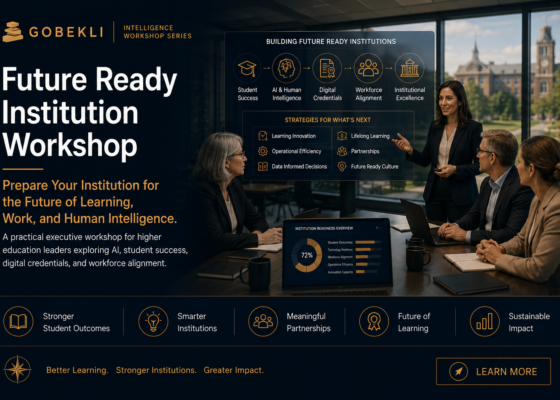
Future Ready Institution Workshop
Help your institution prepare learners for an AI-enabled future. The Future Ready Institution Workshop equips higher education leaders with practical frameworks for innovation, workforce readiness, Human Intelligence, and student success.
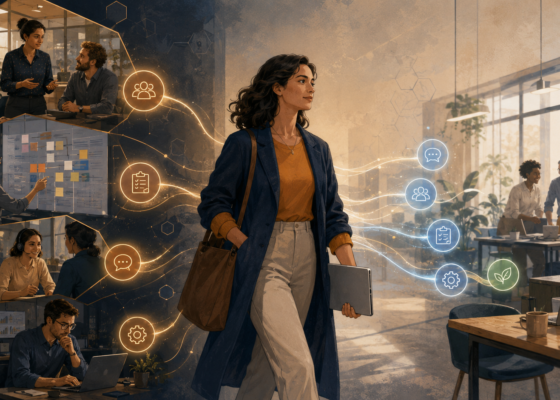
Identifying Your Transferable Skills When Changing Careers
Your experience does not become irrelevant when you change careers—it just needs to be understood in a new context. Learn how to uncover your transferable skills, connect them to real evidence, and communicate their value to prospective employers.
How LER Standards Enable the Human Intelligence Layer
The Learning and Employment Record ecosystem has spent years making learning and workforce data portable, verifiable, and individually owned. This article explores how that infrastructure can now support a Human Intelligence Layer that helps people, organizations, and AI continuously learn together.
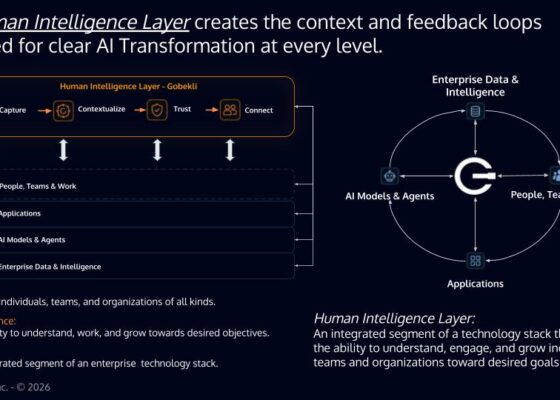
Why AI Transformation Needs a Human Intelligence Layer
Organizations can measure AI adoption but often cannot determine whether AI is improving the work. This article introduces the Human Intelligence Layer: infrastructure connecting people, evidence, workflows, and outcomes so organizations and AI can continuously learn and transform together.

Why AI-Era Organizational Design Must Look Beyond the Org Chart
Organizations are restructuring teams around what AI can automate, often without understanding how roles actually function. This article explains why effective AI-era organizational design must account for judgment, relationships, workflows, and the interaction between people and intelligent systems.

The Future of the Chief People Officer: From Function Leader to System Gardener
Chief People Officers are being asked to connect people strategy with business performance—but the deeper challenge is understanding how the organization creates value as a living system. This article explores the CPO’s evolution from functional leader to steward of organizational intelligence.

Why Skills-Based Hiring Is Really Competency-Based Hiring
Employers may list skills in job descriptions, but they make decisions based on something more complex: competency. This article explores how applied capability emerges across skills, experience, behavior, and context—and why organizations need better ways to observe its development.
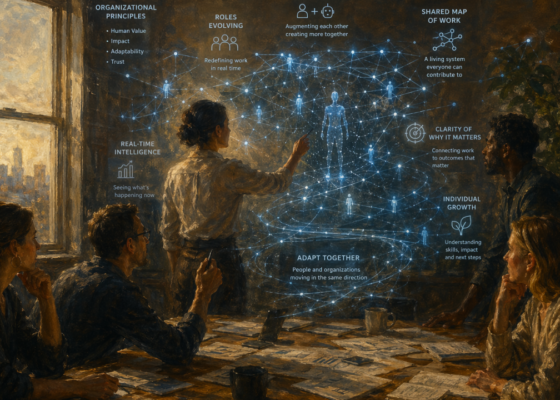
We’re Asking People to Reinvent Their Roles Without Acknowledging What That Requires
Organizations are asking employees to reinvent their roles around AI while the future of work remains unclear. This article explains why AI adoption is not simply a tooling or training challenge—it is a human alignment and organizational-design problem.