
EMPLOYER USE CASE · AN ILLUSTRATIVE SCENARIO
Transform Work and
Scale AI Intelligently
AI usage is growing. Is the work getting better?
Horizon Financial Services can track licenses, pilots, and activity. Its harder questions concern the work: what is improving, where effort is shifting, and which changes deserve to scale.
Follow Horizon as it connects system records with the experience of the people doing the work.
Horizon is fictional. Screens show product concepts and example interfaces. This scenario describes the intended TalentSync experience, with capabilities at different stages of development. See current product availability.
A faster draft can still leave a slower process.
Suppose Horizon introduces AI-assisted preparation into a commercial lending workflow. Initial summaries arrive sooner. But reviewers report missing context, repeated checks, and uncertainty about who should resolve exceptions.
The adoption dashboard records activity. It does not explain whether the complete process is faster, whether quality has improved, or whether work has simply moved to another team.
Horizon chooses this workflow as a starting point.
What changed between the first draft and the completed review—and what would make the whole process better?
01 · DEFINE THE WORK
Define the work and the decision.
Horizon begins with the people, responsibilities, systems, and handoffs involved in the selected workflow.
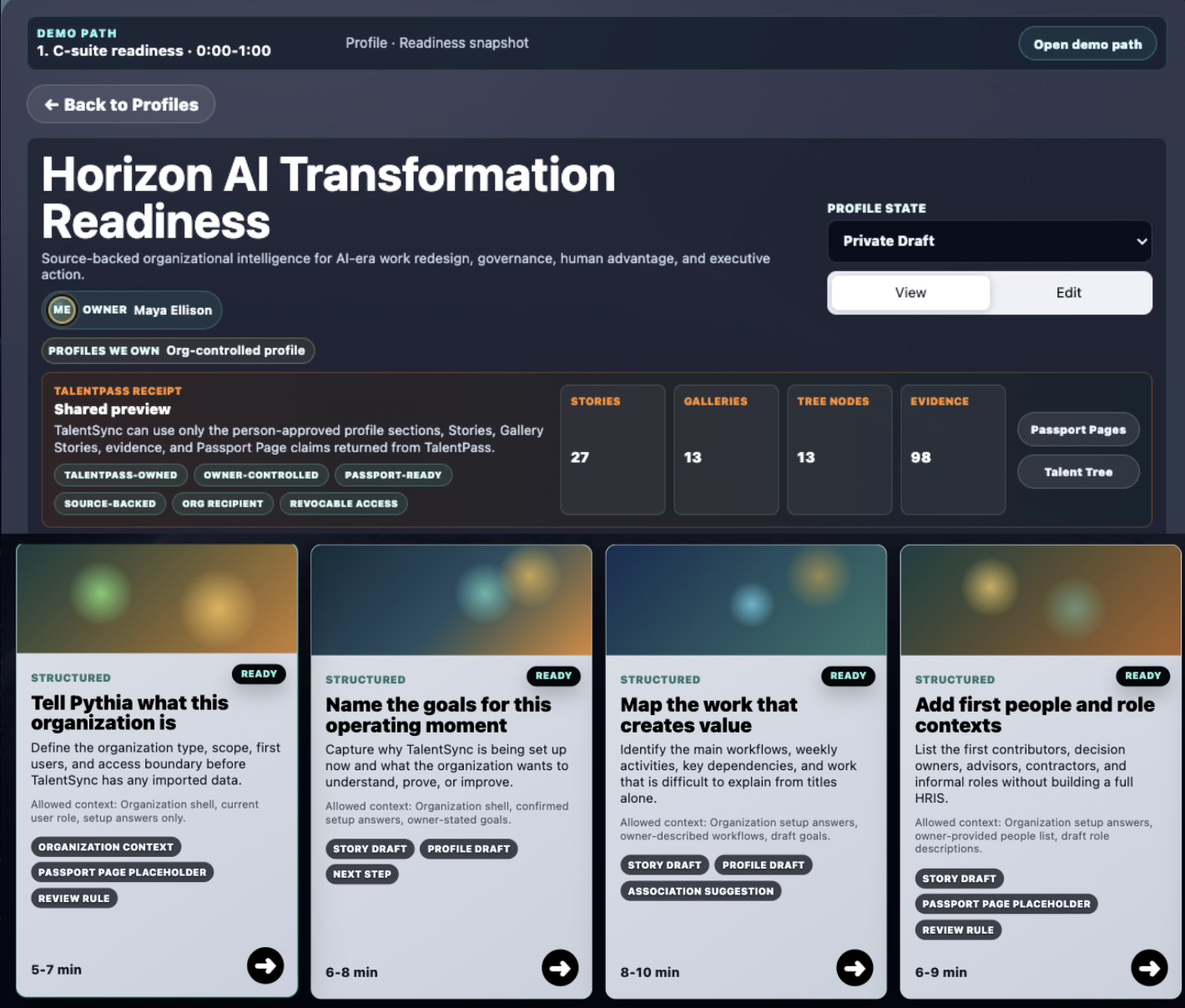
- The outcome it wants to improve.
- Where AI contributes.
- Where people review, interpret, or decide.
- Which teams depend on each other.
- Who can approve a change.
Existing documents provide a starting point. Managers and employees help establish whether that picture reflects how the work actually happens.
The initial goal is a useful map of one workflow, with enough context to investigate the problem.
02 · CONNECT SOURCES
Connect the records with their sources.
Horizon needs to understand what supports each observation. Relevant sources might include work records, operating instructions, review requests, system activity, and the accounts of people involved.
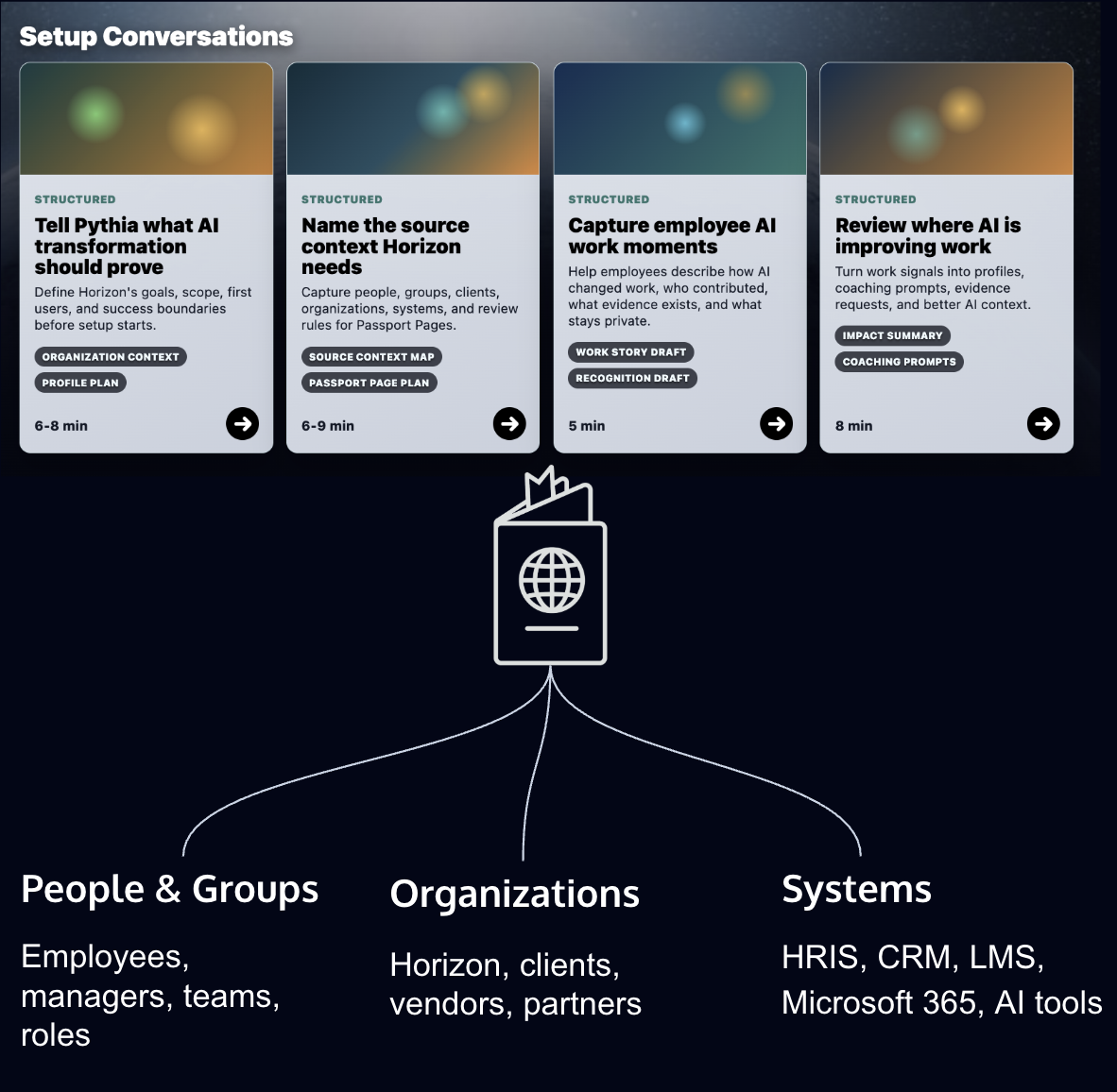
Passport Pages provide the intended framework for defining purposeful exchanges between people and organizational sources.
The team needs to understand where information came from, what it can explain, and who may use it.
A recorded delay can show when something happened. A reviewer may explain why it happened. Both can matter.
03 · FOCUS THE QUESTION
Organize the context around a useful question.
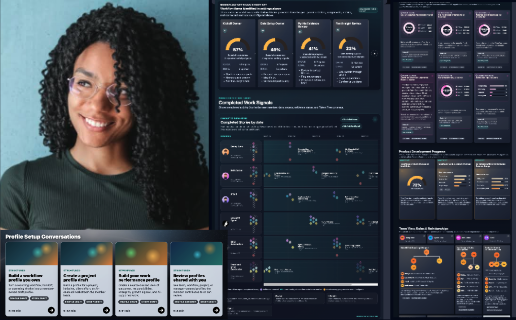
The Talent Tree connects relevant activities, responsibilities, capabilities, relationships, and evidence. For Horizon, that means connecting a reported review problem with the work it affects and the people who can help explain it.
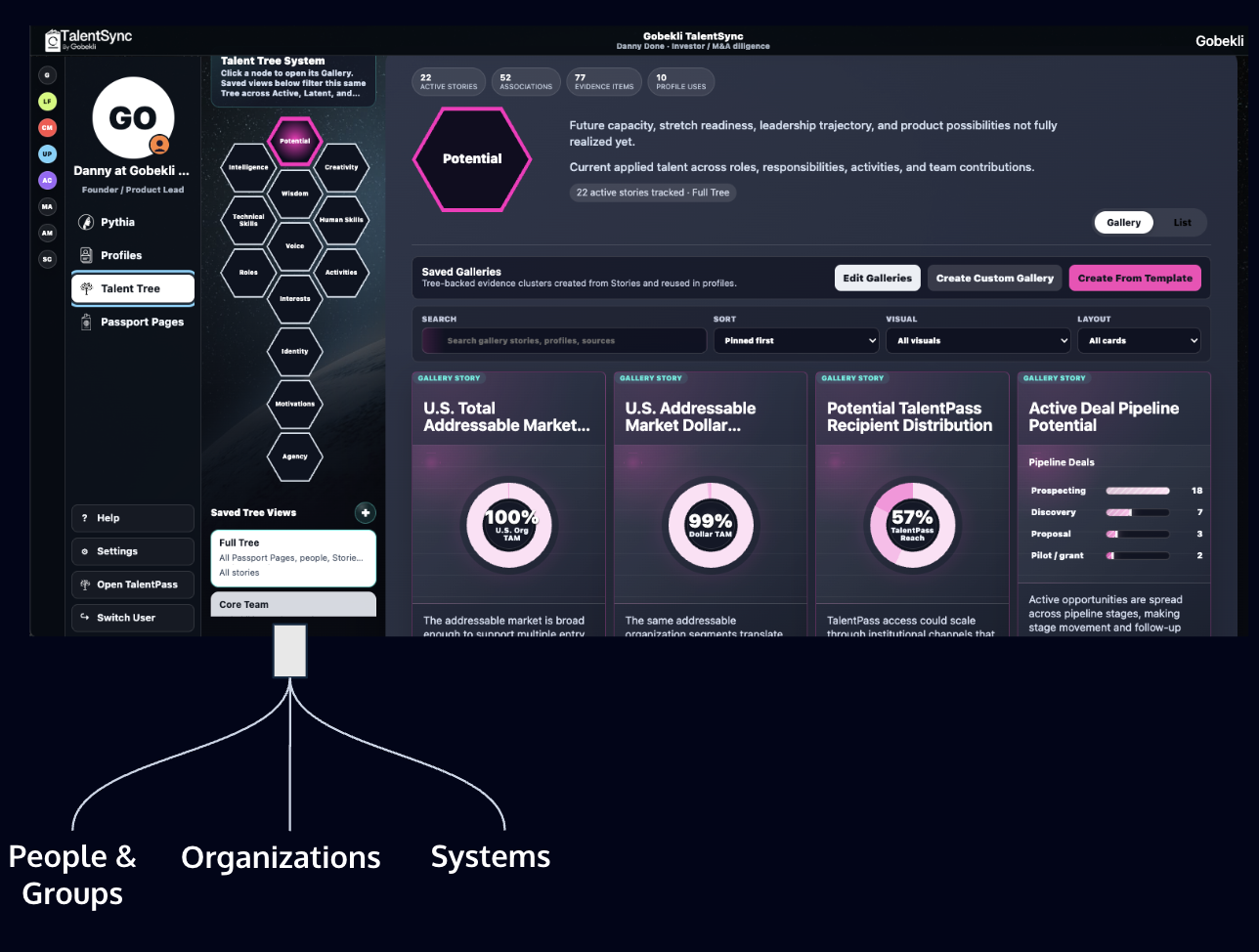
A focused Workflow Profile then brings together what the team needs to examine:
Flow
Where does work wait, return, or require another handoff?
Quality
What makes a summary useful to the person reviewing it?
Responsibility
Who checks the output and resolves an exception?
Support
What knowledge, access, or guidance does the work require?
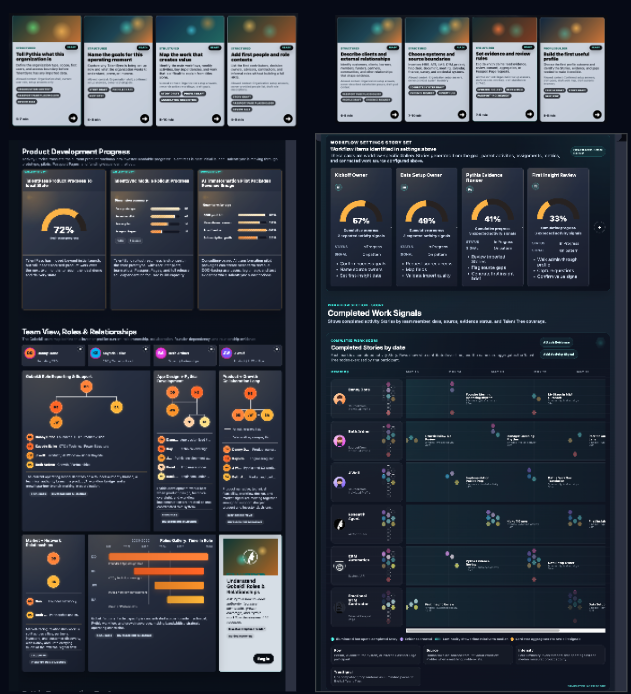
The profile gives the team a shared place to investigate the workflow and track what changes.
04 · INVITE PARTICIPATION
Ask the people who experience the work.
The manager establishes the team’s starting point: current priorities, responsibilities, tools, known problems, and the evidence already available.
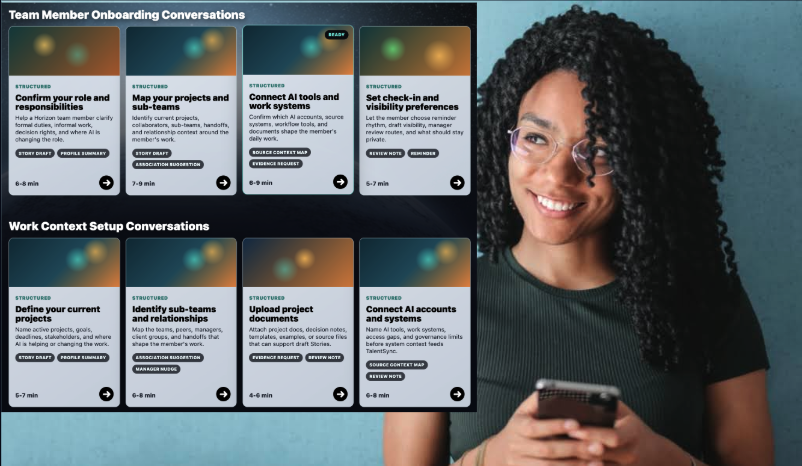
Employees then contribute context from their part of the workflow. One person may explain that AI saves preparation time. Another may identify additional checking. A third may reveal that exceptions arrive without a clear owner.
Pythia could help them describe:
- What changed in the work?
- Where did it help?
- What additional effort appeared?
- Which decisions became harder?
- What support would make a difference?
Participation should have a clear purpose, reasonable effort, and understandable sharing boundaries.
05 · MAKE PARTICIPATION VALUABLE
Give employees value in return.
Employees contribute knowledge that organizational records may never capture. They should also benefit from the resulting improvements.
A purposeful TalentPass connection could support relevant guidance, recognition, development resources, and records of contributions they can carry forward.
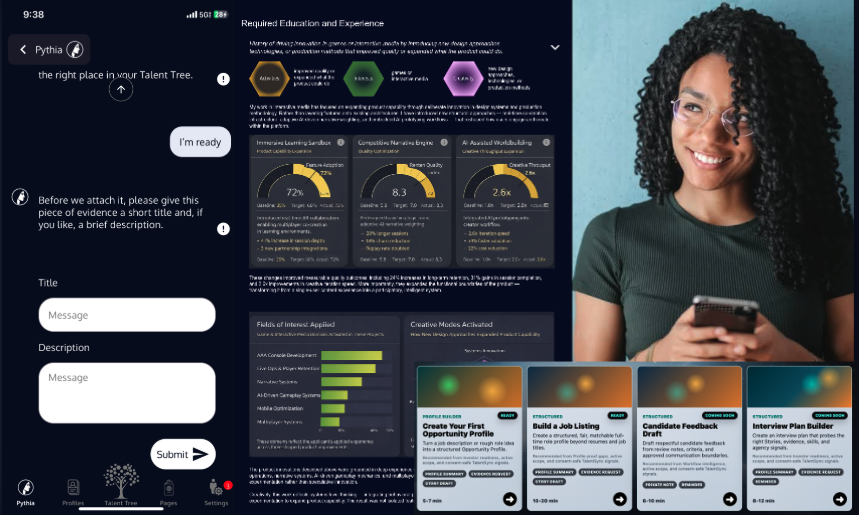
Employees need to understand what they are contributing, who can see it, and what remains personal.
The exchange should help them do their work and develop—not simply create another reporting obligation.
06 · EXAMINE THE SIGNAL
Investigate a signal before turning it into a conclusion.
Suppose a reviewer reports:
“The summaries are quicker to produce, but I spend more time reconstructing the exceptions.”
That is a useful observation. Horizon still needs to examine it. Pythia could help capture the account, identify relevant examples, and prepare questions for the people involved.
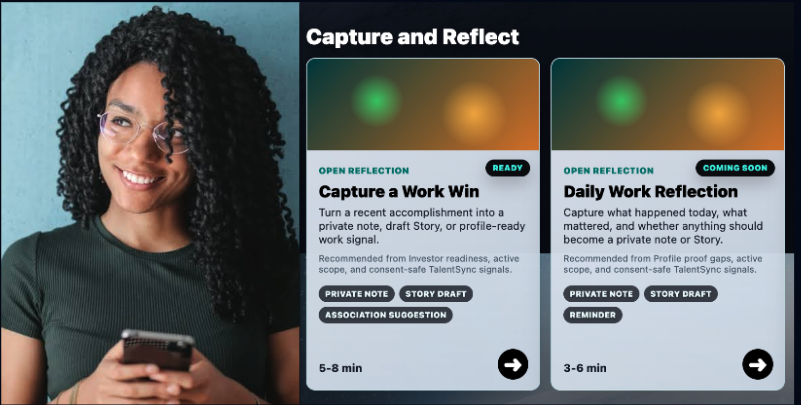
The team examines selected cases:
- What context was missing?
- Was it available to the person or system preparing the summary?
- What additional review did it create?
- Was the problem recurring or specific to those cases?
- What other changes might explain the result?
An observation, an AI interpretation, and reviewed evidence should remain distinguishable.
07 · IMPROVE AND REVIEW
Change the workflow, then review what happened.
Suppose the investigation identifies unclear exception requirements and an ambiguous handoff.
Horizon could test a defined change: clarify the information needed before review, assign exception ownership, and provide guidance for when additional judgment is required.
The team records who owns the change, what it expects to improve, and when it will review the result.
It then examines the whole workflow—preparation, checking, rework, waiting, and completion.
Did the change improve the work, or move the burden somewhere else?
The answer informs whether Horizon should extend the approach, revise it, investigate further, or stop.
08 · RECOGNIZE AND LEARN
Recognize the contribution and carry the learning forward.
The employees who identified the problem and helped improve the process have contributed more than tool usage. Their work may demonstrate coordination, judgment, technical understanding, or the ability to improve a shared process.
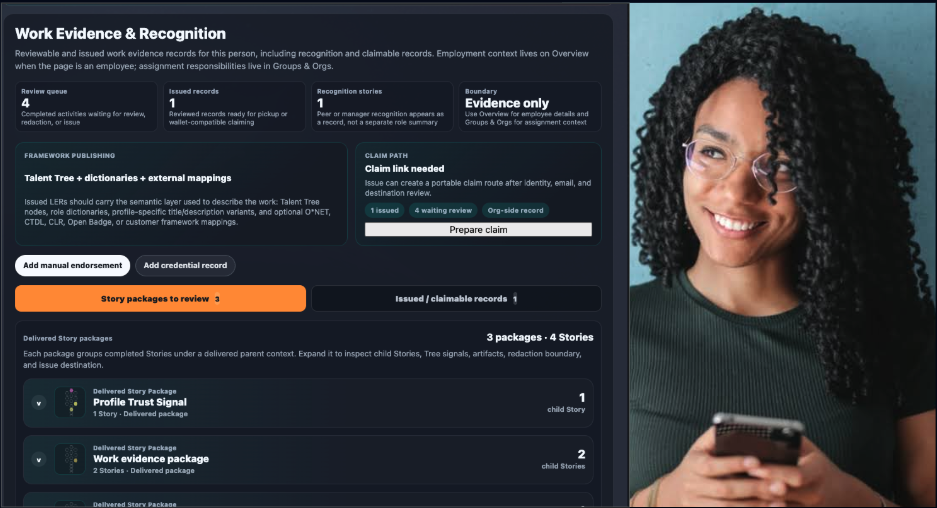
Reviewed contributions could inform coaching, development opportunities, and recognition that employees can choose to retain in TalentPass.
Horizon also updates the relevant workflow context: what changed, why, what supports the decision, and what still needs review.
That maintained context can support people and, where appropriately connected, AI systems working with the revised process.
The organization learns from the work. People gain recognition for helping it improve.
Scale what the evidence supports.
Before expanding the approach, Horizon would need to examine:
Business value
Has the workflow improved in a way that matters, after accounting for implementation and continuing effort?
Quality and accountability
Are outputs useful, exceptions understood, and decision responsibilities clear?
Workforce readiness
Do people have the knowledge, time, access, and support the revised work requires?
Transferability
Which conditions must hold for the approach to work in another team?
These are questions to evaluate—not results achieved by a customer in this fictional scenario.
Where is your AI transformation getting stuck?
“We can see adoption, but cannot explain the business value.”
Start with one priority, a defined workflow, and the evidence needed to decide what should change.
“Automation is creating more work somewhere else.”
Investigate review burdens, unclear ownership, and handoffs between people and systems.
“The tools are available, but people lack the support to use them well.”
Examine the capabilities, knowledge, and coverage required by the changing work.
A workshop can establish useful next steps before any TalentSync implementation.
Questions about AI transformation and TalentSync
How is AI transformation different from AI adoption?
Adoption concerns whether people use a tool. Transformation concerns changes to work, responsibilities, decisions, and outcomes. Usage data can inform the investigation, but does not establish the result.
Does TalentSync calculate AI ROI automatically?
This scenario describes organizing the context and evidence needed to evaluate value. A financial assessment still requires defined costs, benefits, a timeframe, and defensible assumptions. Reported time savings alone do not establish financial return.
Do we need to map the entire organization first?
The starting point can be one workflow, team, or decision. Add surrounding context where it helps explain dependencies or evaluate a change.
Does employee participation mean continuous surveillance?
The intended approach uses purposeful contributions and defined source connections. Teams need explicit boundaries around what is collected, shared, reviewed, and retained. It should not require access to every private reflection or personal record.
How does this give AI better context?
Relevant profiles can connect work requirements with sources, responsibilities, evidence, and reviewed changes. Where a supported connection exists, that context could inform an AI system. It does not automatically make its output correct or remove the need for review.
Is the complete workflow available today?
The page describes an intended application of TalentSync. Available capabilities, integrations, and implementation support need to be confirmed for the selected scope. Review current product availability.
Start with the work
you need AI to improve.
Choose one workflow. Bring the people involved into the picture. Establish what would justify the next change.
