When Learning Becomes Visible, the Value School Must Deliver Becomes Clear
Education leaders are confronting an enrollment cliff, declining confidence in traditional credentials, a labor market that no longer aligns neatly with academic pathways, and AI-driven changes that make technical skills more temporary and resumes less meaningful.
Together, these pressures point toward a more fundamental question: What is school actually for now?
In this new article, Gobekli founder Danny Done argues that the answer becomes clearer when learning is made visible, portable, and owned by the learner.
Learning was never confined to school
People have always learned through work, projects, caregiving, leadership, community participation, curiosity, experimentation, and failure. The problem has never been a lack of learning. It has been our limited ability to make that learning visible, describe it clearly, receive recognition for it, and carry it into new settings.
For much of modern education, the degree served as the primary solution. It was a trusted proxy: complete a program at a reputable institution, and employers could assume a baseline level of knowledge and capability.
That model made sense when degrees were scarce and career paths were more predictable. It works less effectively now.
Degrees are common, careers are nonlinear, and AI has made polished self-presentation easier but less informative. Employers increasingly want evidence of what someone has actually done, built, solved, and produced.
Learning itself has not changed. What is changing is our ability to make it visible at scale.
Learning and Employment Records change the starting point
Institutions across the education ecosystem are beginning to issue transcripts, credentials, and other academic records as portable Learning and Employment Records, or LERs. The goal is to allow learning to travel beyond the institution that originally recognized it.
But issuing portable records at the end of a learner’s journey creates an important implication: learners need somewhere to receive, hold, combine, and use those records.
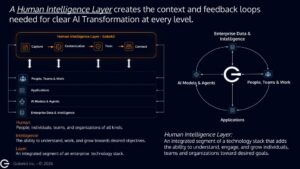
This is commonly described as an LER credential wallet. At Gobekli, we think of it more holistically as a Universal Talent Passport—a learner-owned record that connects education with work, projects, interests, experiences, and evidence over time.
Once learners have a way to receive portable records at the end of an educational experience, it becomes clear that the same infrastructure can be used at the beginning. Institutions cannot fully participate in a portable-record ecosystem if they know how to issue LERs but not how to recognize and ingest them.
That is where a conversation about records becomes a conversation about educational design.
Prior learning becomes the baseline
Prior Learning Assessment is often treated as a specialized program or optional institutional policy. But when learners arrive with portable records of their education, employment, projects, and informal learning, assessing what they already know becomes the natural starting condition.
Learners can share a coherent view of their experience with admissions teams, advisors, and faculty instead of beginning every educational journey from zero.
In this environment, PLA is no longer an exception or headline feature. It becomes a baseline input into education.
What changes inside institutions
Once prior learning is visible, several institutional functions begin to change together.
Advising can begin with evidence of what a learner has already done, what they care about, and where they want to go. Academic planning can respond to real learner inputs instead of relying primarily on generalized pathways. Courses can become opportunities for deeper application and growth rather than repeating knowledge a learner already possesses.
Credentials also become clearer. They remain valuable, but they function as trusted institutional endorsements attached to a broader learner-owned record. This requires institutions to be more explicit about what each credential represents and what a learner can actually do as a result.
Advising, academic planning, curriculum development, prior learning, and credentialing are not separate transformation projects. When learning becomes visible, they naturally reorganize around the learner.
The value of school becomes clearer
As access to information and instruction expands through online learning, work, AI tools, and self-directed exploration, students are increasingly able to learn almost anywhere.
The question shifts from “Where can I learn this?” to “Why should I learn this here?”
Institutions cannot create enduring value by competing solely on access to content. Their greater opportunity is to help learners connect experiences across contexts, develop direction, understand who they are becoming, and grow with intention.
Technology does not replace that institutional role. It makes it more important.
Once learners can see and carry their learning, they are unlikely to accept opacity again. They will favor institutions that recognize what they have already accomplished, build on it thoughtfully, and use it to improve advising and instruction.
The degree was never the problem. It was the best signal available in an analog system. LERs and learner-held credential wallets now make it possible to move beyond signals toward evidence.
When learning becomes visible, the value school must deliver becomes clear: helping learners understand themselves, connect learning across settings, grow intentionally, and receive trusted recognition for what they can actually do.
That is more demanding than content delivery—but it is also far more meaningful.