
EMPLOYER USE CASE · AN ILLUSTRATIVE SCENARIO
Hire Based on
Real Capability
The application looks strong. What tells you someone can do the work?
Give candidates clearer expectations—and your hiring team the experience, evidence, and context to ask better questions.
Follow a logistics company hiring an operations supervisor and Maya, an applicant whose relevant experience reaches beyond her previous job title.
This fictional scenario describes the intended TalentSync Recruiter experience. Capabilities are at different stages of development. See current product availability.
One role. Different assumptions
about what matters.
The recruiter has a job description. The hiring manager has a picture of the person they hope to find. Applicants have their own interpretations of what the role requires.
Those interpretations may not agree. For this operations supervisor role, “leadership experience” could mean scheduling a shift, coaching employees, resolving exceptions, or coordinating across departments.
Maya has done some of that work. Her résumé calls her a customer operations coordinator.
Before deciding whether Maya fits, the team needs to agree on what she would actually do.
01 · OPPORTUNITY PROFILE
Define the work before reviewing applicants.
The recruiter and hiring manager begin with the job description. Pythia could help turn broad requirements into questions they can answer together:
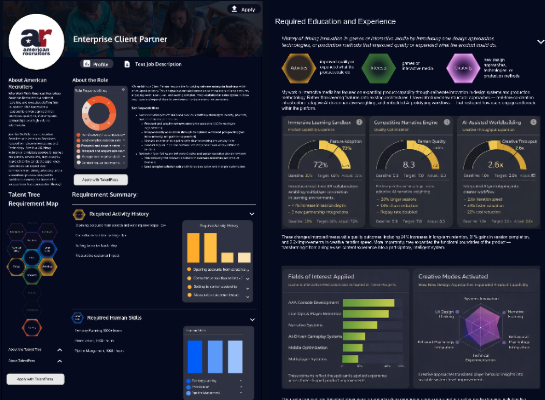
Opportunity Profile · Click to enlarge. The example shown is separate from Maya’s fictional scenario.
- Which responsibilities will this person own?
- What decisions will they need to make?
- Which capabilities are essential at the start?
- What can be learned with appropriate support?
- What experience or evidence would help us evaluate each requirement?
An Opportunity Profile brings the agreed requirements into a shared structure.
BROAD REQUIREMENT
“Leadership experience”
What does that mean for this particular role?
DEFINED WORK
Coordinate shift handoffs
Keep teams aligned when operational exceptions arise.
EVIDENCE QUESTION
What have you done?
Describe a time you coordinated people to resolve an operational problem.
For this role, the team might clarify that coordinating handoffs and responding to operational exceptions matter more than having held one exact title.
The hiring team approves the requirements before using them to review people.
02 · CANDIDATE INVITATION
Give applicants something clear to respond to.
Maya receives the opportunity link through the employer’s existing recruiting process. She can examine the work, understand the stated requirements, and decide whether to continue.
Instead of guessing which résumé keywords matter, she has a clearer question to answer:
“When have you coordinated people across teams to resolve an operational problem?”
THE OPPORTUNITY
Operations Supervisor
Responsibility: coordinate teams and respond to operational exceptions.
MAYA’S RESPONSE
A relevant experience
Consider the handoff problem she helped resolve between customer operations and fulfillment.
Any initial eligibility questions should be relevant to the role and explained clearly. The hiring team also needs to consider how much effort it asks applicants to invest—and what assistance they may need.
03 · APPLICATION PROFILE
Help Maya explain the experience behind her application.
Maya recalls a recurring handoff problem between customer operations and fulfillment. She helped identify where requests were getting lost, brought the teams together, and helped establish a clearer process.
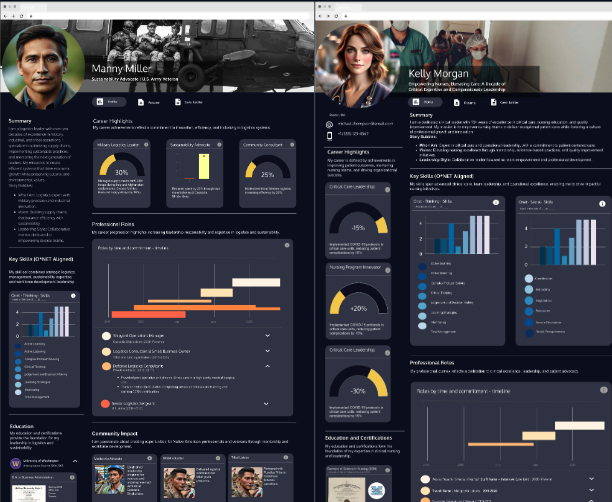
TalentPass Application Profile · Click to enlarge. The example shown is separate from Maya’s fictional scenario.
Pythia could guide her through the details:
Situation
What was happening, and why did it matter?
Contribution
What did Maya do? What did other people contribute?
Result
What changed, and what supports that account?
Relevance
How does this experience relate to the responsibility she is applying to take on?
Her TalentPass Application Profile connects relevant experience with the opportunity. She reviews the account and chooses what to share.
A structured story gives the hiring team more to examine. Supporting evidence still needs interpretation.
04 · TALENTSYNC REVIEW
Review the connection—and the uncertainty.
The recruiter and hiring manager review Maya’s application against the agreed responsibilities. They can distinguish:
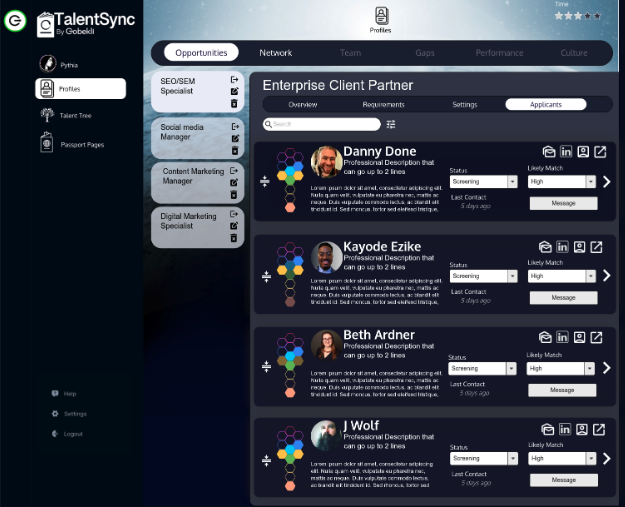
TalentSync Review · Click to enlarge. The example shown is separate from Maya’s fictional scenario.
Relevant experience
Maya has described work that appears connected to the requirement.
Supporting evidence
Records, examples, or other sources add context to her account.
Questions to explore
Some responsibilities remain unclear or need further discussion.
RESPONSIBILITY
Coordinate teams
What does the supervisor need to own?
EXPERIENCE TO EXAMINE
The handoff improvement
What did Maya personally contribute?
OPEN QUESTION
Authority and scope
How would her approach change when directly responsible for the shift?
The Talent Tree provides a way to connect activities, capabilities, and evidence. The review should make the basis of an interpretation visible.
Missing information is a prompt to investigate. It should not quietly become a conclusion that Maya cannot do the work.
TalentSync is intended to support this review without reducing applicants to a single score or selecting who gets hired.
05 · INTERVIEW AND DECISION
Make the interview more useful.
The team now has a specific question:
“You coordinated that handoff improvement without being the teams’ manager. How did you gain agreement, and what would change if you were directly responsible for the shift?”
That conversation can explore the scope of Maya’s contribution, the judgment she used, and the support she would need.
The team continues its interviews, checks, and hiring decisions through its established process. How profile links or information move into an ATS depends on the agreed setup and available capabilities.
The aim is better preparation for a consequential conversation.
Carry useful context into the next step.
Suppose Maya accepts an offer. With appropriate sharing arrangements, selected context could help her new manager understand relevant experience, agreed development needs, and useful starting assignments.
Passport Pages provide the intended framework for that exchange. A hiring application should not become blanket access to someone’s personal TalentPass.
As the team learns what the job actually requires, it can revisit the Opportunity Profile and improve the next hiring conversation.
This is the Human Intelligence Layer in practice: connecting the work, the person’s account, and what people learn together.
Evaluate the process from both sides.
For the hiring team
- Are requirements clearer before screening begins?
- Do applications provide more relevant context?
- Can reviewers explain their interpretations?
- Are interviews resolving meaningful questions?
For applicants
- Are expectations understandable?
- Is the effort proportionate to the opportunity?
- Can they explain experience beyond job titles?
- Can they retain useful stories and evidence for future use?
These are questions to evaluate in a defined engagement—not results established by this fictional scenario.
Where does your hiring process need a clearer picture?
“We receive applications, but struggle to evaluate the evidence.”
Examine what candidates are asked to demonstrate and what reviewers need to understand.
“We are not aligned on what the role actually requires.”
Clarify responsibilities, capabilities, and the work ahead before launching the search.
“Every search starts from zero.”
Examine how future hiring needs connect with relationships, candidate development, and continuing pipeline work.
Questions about hiring with TalentSync
What does skills-based hiring mean here?
It means examining the capabilities needed for defined work and the experience or evidence that helps people evaluate them. Credentials and prior roles can still matter where they are relevant.
Does TalentSync verify every candidate claim?
A structured application does not automatically verify a claim. Reviewers need to understand the source, context, and limits of supporting information and determine what additional checks are appropriate.
Does TalentSync rank candidates or make hiring decisions?
The intended approach organizes relevant information and supports human review. It does not determine who is “best” through a single candidate score or make the hiring decision.
Does it replace our ATS?
The scenario is designed to complement an existing hiring process. Specific profile-sharing arrangements and integrations depend on available capabilities and implementation scope.
What does the candidate retain?
TalentPass is intended to let people retain and reuse their own experience, stories, and evidence. Sharing for one opportunity should be purposeful, with its scope clearly understood.
Can we use this for a live vacancy today?
Start by discussing the role, candidate experience, and required workflow with Gobekli. Confirm which capabilities and support arrangements are available before inviting applicants. Review product availability.
Start with one role
you need to understand better.
Clarify the work. Define useful evidence. Give candidates a meaningful way to respond.
