
EMPLOYER USE CASE · AN ILLUSTRATIVE SCENARIO
Build a Better Service
From What Your Team Knows
The shift is over. The numbers tell part of the story. Your people can explain the rest.
Elena runs Harbor & Hearth, a busy restaurant where the kitchen, servers, and host stand depend on one another. She wants to reduce avoidable waste, deliver a better guest experience, and help people grow.
Follow Elena, Marcus, Lila, Andre, and Sarah as they connect everyday observations with practical changes—and recognize the people who help those changes work.
Harbor & Hearth and the people in this story are fictional. Illustrations and any figures within them are examples, not customer results. This scenario describes intended TalentSync capabilities. See current product availability.

One difficult service. Several different perspectives.
Suppose the kitchen prepares more of a special than guests order. A last-minute menu change reaches some servers but not others. At the host stand, Sarah has difficulty giving guests a reliable expectation of the wait.
Each team member sees a different part of the problem. Elena needs to connect those accounts with relevant records before deciding what to change.
Where did preparation, communication, and service stop lining up?
01 · DEFINE THE SHARED QUESTION
Give Elena a focused view of the service.
Elena begins with one recurring issue: how the team prepares for and communicates the daily special. A Team or Workflow Profile could connect the intended process with responsibilities, relevant records, and open questions.

Preparation
What information helps the kitchen plan the work, and who confirms changes?
Communication
How do servers and the host stand receive the information they need?
Review
What would help the team evaluate waste, remakes, and guest experience?
Existing sales, inventory, and service records can contribute where a supported connection exists. The team’s experience adds context about what actually happened.
02 · UNDERSTAND THE WASTE
Bring Marcus’s kitchen experience into the review.
Marcus, the head chef, notices that the preparation plan and actual demand did not line up. He has an idea for improving the planning process.
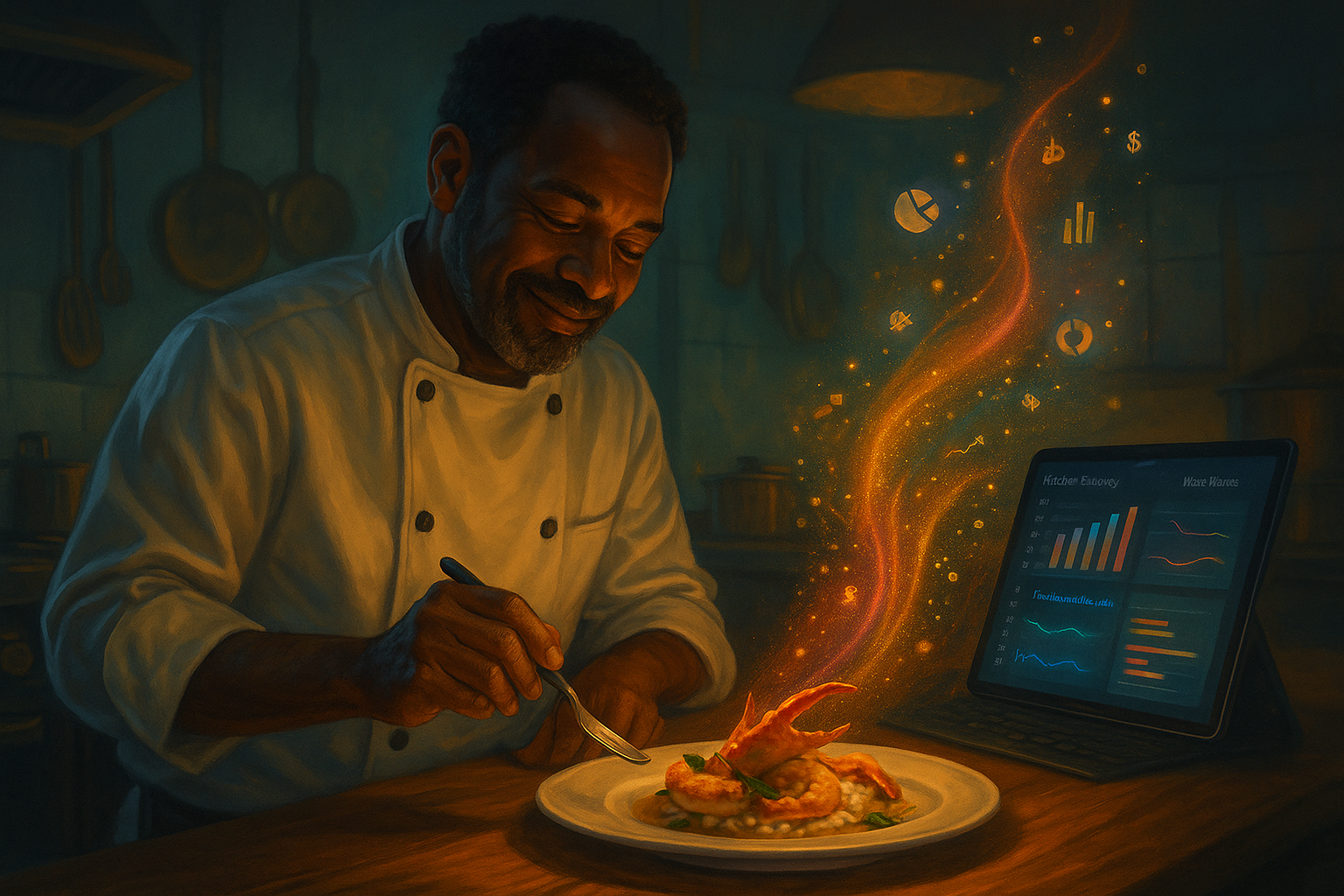
Pythia could help him describe the relevant shift, what was prepared, which information was available, and what changed. Elena and Marcus examine that account alongside appropriate records.
The team might test a change to the planning or communication process, with clear ownership and a review date. Food preparation and handling decisions remain with the responsible staff and established procedures.
Marcus also wants to develop his understanding of menu costing. That goal can inform a supported learning opportunity tied to real work.
03 · CONNECT SERVICE WITH GUEST NEEDS
Let Lila explain what guests are asking.
Lila, the lead server, hears questions that may never appear in a sales report: what is available, how the special differs from another dish, or which options fit the guest’s preferences.

She can help the team identify where information is missing and what would make the pre-service briefing more useful.
A change in order value alone does not explain service quality. The team considers clarity, accuracy, guest choice, and the support servers receive alongside relevant commercial information.
Lila’s interest in developing beverage knowledge could become a focused development conversation, with appropriate guidance and an agreed next step.
Better service depends on the handoffs between people.
A kitchen improvement needs clear communication. A welcoming arrival needs realistic information. The whole team needs room to learn.
04 · CONNECT THE LINE AND THE HOST STAND
Understand what Andre and Sarah need from the team.
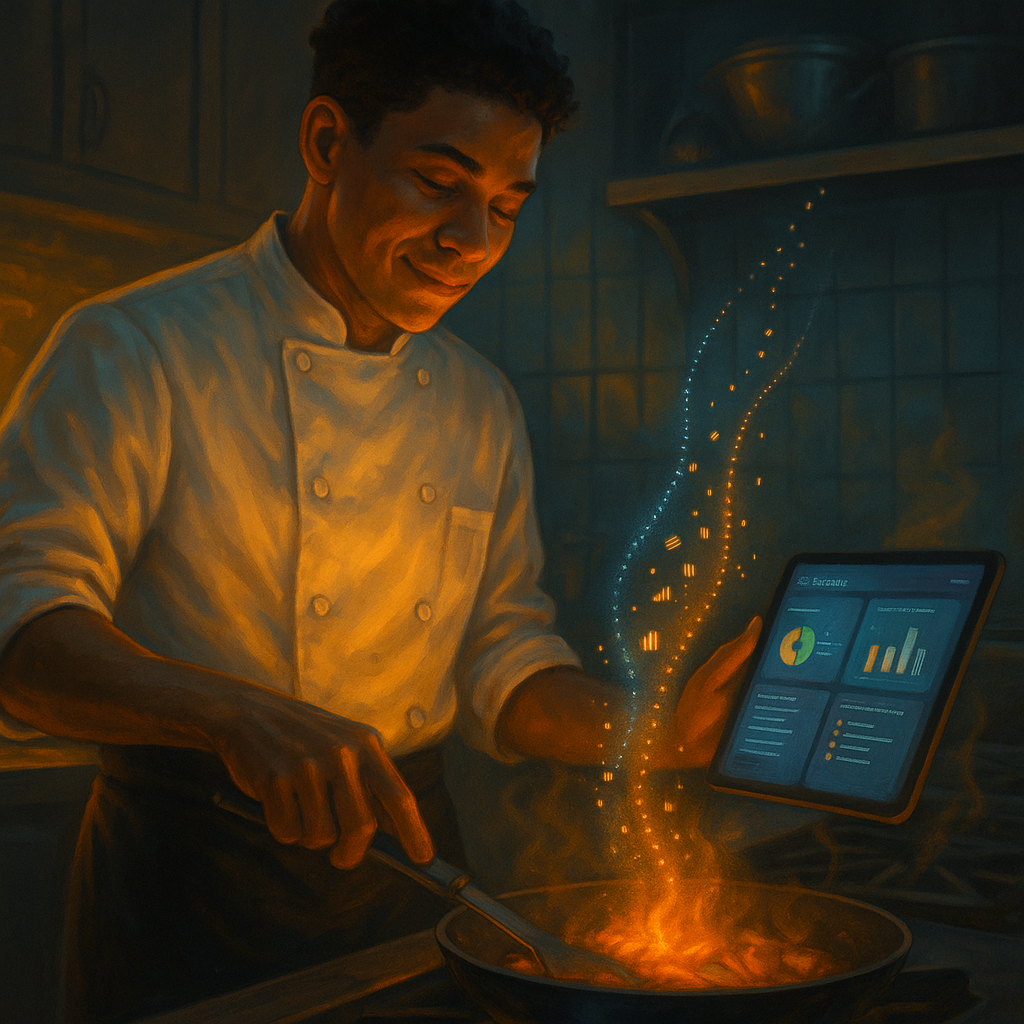
Andre · Line cook
Andre notices where ticket clarification interrupts the flow of work. He can describe the questions that recur, the support he needs, and a possible improvement to review with Marcus.
His interest in greater kitchen responsibility can guide supported practice and feedback. A run of accurate tickets alone does not establish readiness for a new role.

Sarah · Host
Sarah needs timely information to set realistic expectations with arriving guests. She can explain where a delayed update or uncertain table status makes the welcome harder.
The team can clarify who communicates changes and when Sarah should seek help. Her interest in event coordination could inform a future learning assignment.
The Talent Tree provides a way to connect responsibilities, activities, capabilities, and evidence. That context helps the team see both the work that needs support and the experience people are building.
05 · REVIEW THE CHANGE
Test one improvement and learn from the next service.
Elena and the team agree on a clearer briefing and update process for the daily special. They define who confirms the information, how changes are communicated, and what to review afterward.
After a suitable period, they examine:
- Whether staff had the information they needed before service.
- Which questions or corrections still interrupted the work.
- What appropriate records suggest about waste and remakes.
- What changed for guests and for the people serving them.
- What other factors, such as demand or menu changes, could explain the result.
A useful review connects the outcome with the conditions that produced it.
The team decides whether to keep, adjust, or stop the change. One improvement becomes a clearer starting point for the next service.
06 · RECOGNIZE THE CONTRIBUTION
Make the learning valuable to the people who created it.
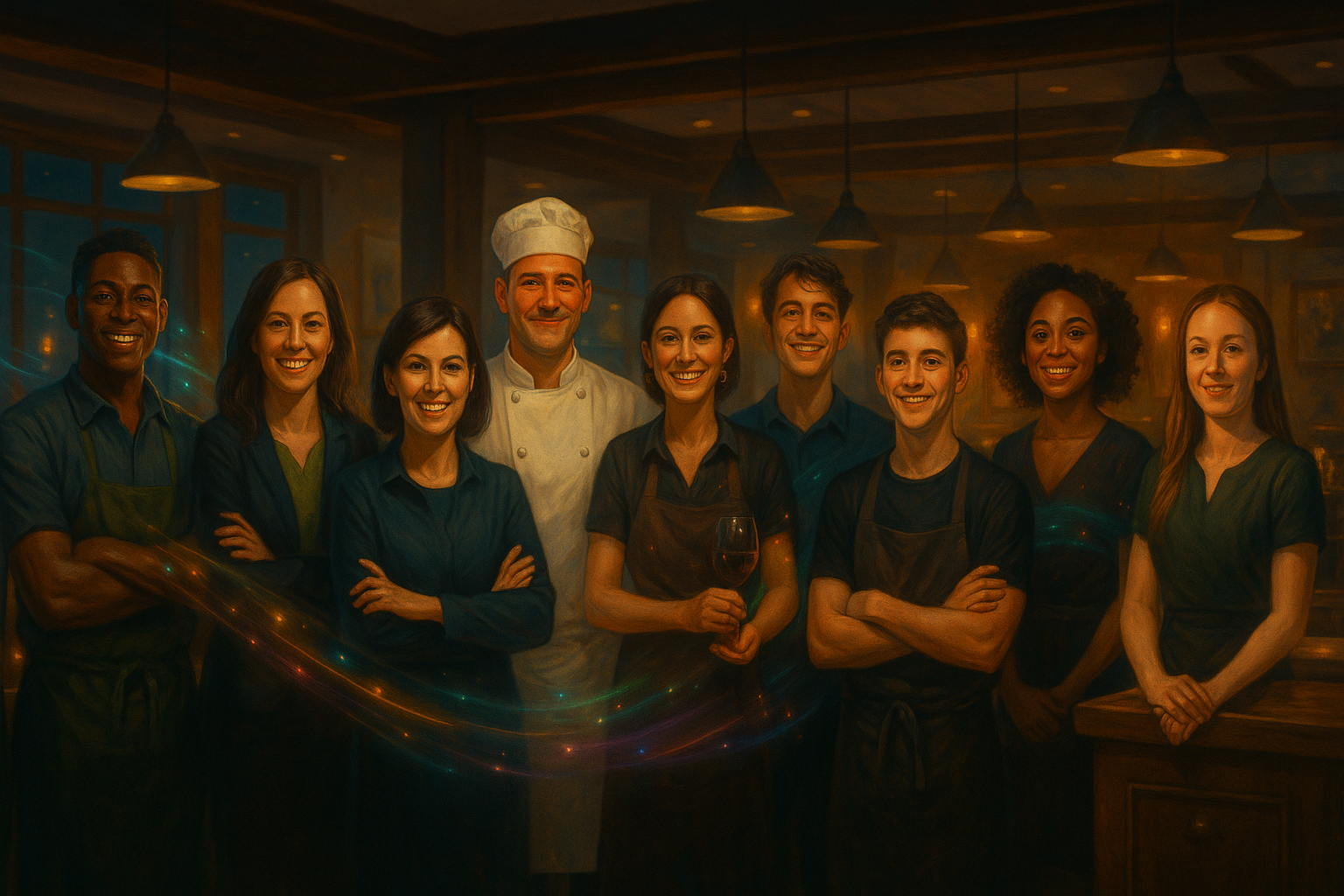
Marcus’s planning insight, Lila’s guest perspective, Andre’s process observation, and Sarah’s coordination can all contribute to a better service.
Reviewed recognition could describe what each person did, who collaborated, and what evidence supports the account. Passport Pages provide the intended framework for exchanging relevant recognition and resources with a person’s TalentPass.
People can choose what to retain in their professional record. Private reflections and sensitive guest or business information need appropriate boundaries.
The restaurant keeps improving its work. People keep a clearer account of what they bring.
Evaluate the service and the working conditions together.
Waste and rework
Are recurring causes being addressed, and what evidence supports that conclusion?
Guest experience
Are expectations, information, and handoffs clearer?
Team support
Do people know their responsibilities and have useful guidance?
Development
Are employees gaining relevant experience, feedback, and recognition?
These are outcomes to evaluate—not measured customer results. This fictional scenario does not establish sales growth, cost savings, review improvements, or reduced turnover.
Where does your restaurant team need a clearer plan?
“New staff learn through avoidable mistakes.”
Clarify preparation, support, responsibilities, and handoffs before expecting independence.
“Busy periods expose gaps in coverage.”
Connect changing demand with capacity, capabilities, and realistic workforce responses.
“Good people want to grow, but need a path.”
Explore how coaching, supported practice, and evidence can connect growth with the work.
Questions about restaurant team development
Does TalentSync replace our POS, reservations, or inventory system?
This scenario focuses on people, responsibilities, work context, and learning. Existing operational systems can continue to serve their purposes. Specific connections depend on available capabilities and implementation scope.
Does TalentSync automatically calculate food-waste savings?
No automatic savings calculation is promised here. Teams need appropriate records, a defined comparison, and an understanding of other factors before attributing a financial result to a change.
Does Pythia tell staff how to prepare or handle food?
This use case concerns reflection, communication, and team development. Food preparation, handling, and safety decisions remain with responsible staff and established procedures.
Are servers evaluated only on sales?
This scenario considers relevant context, guest experience, collaboration, and support. A sales figure alone does not explain the quality of a person’s contribution.
Can employees retain recognition from their work?
TalentPass is intended to provide a continuing professional record. Reviewed contributions can be exchanged through defined sharing arrangements without exposing private guest details or sensitive business information.
Can we start with one recurring service problem?
Yes. A workshop can clarify the work, the people involved, and practical next steps before a product implementation. Review current product availability.
Make the next service better
with the people who know the work.
Start with one recurring problem. Connect the team’s experience with relevant evidence, agree on a practical change, and review what happens.