
EMPLOYER USE CASE · AN ILLUSTRATED SCENARIO
Reveal and Mobilize
Internal Talent
Northstar is looking for its next operations supervisor. Jamal already works there.
He coordinates across shifts, helps new employees find their footing, and solves problems that reach beyond his job description. Much of that experience never reaches the people considering candidates.
Follow Jamal’s path from overlooked contribution to a conversation about greater responsibility.

Northstar and Jamal are fictional. Illustrations show product concepts and example data, not a deployed customer implementation. See current product availability.
The opportunity is visible.
The relevant experience isn’t.
Northstar Distribution operates across six regional centers. As its operations expand, it needs people who can coordinate teams, improve processes, and support increasingly complex work.
Jamal has spent seven years there. His employment record identifies him as a team lead. It says much less about the cross-shift problems he resolves, the colleagues who rely on him, or his interest in operations leadership.
An internal job posting gives him somewhere to apply. It does not necessarily help him recognize his relevant experience—or help another manager understand it.
Who could contribute more, if their experience and interests were easier to see?
01 · REVEAL THE EXPERIENCE
Start with the experience behind the title.
Jamal begins with work he knows well: a recurring handoff problem between shifts, the changes he helped coordinate, and what his colleagues contributed.
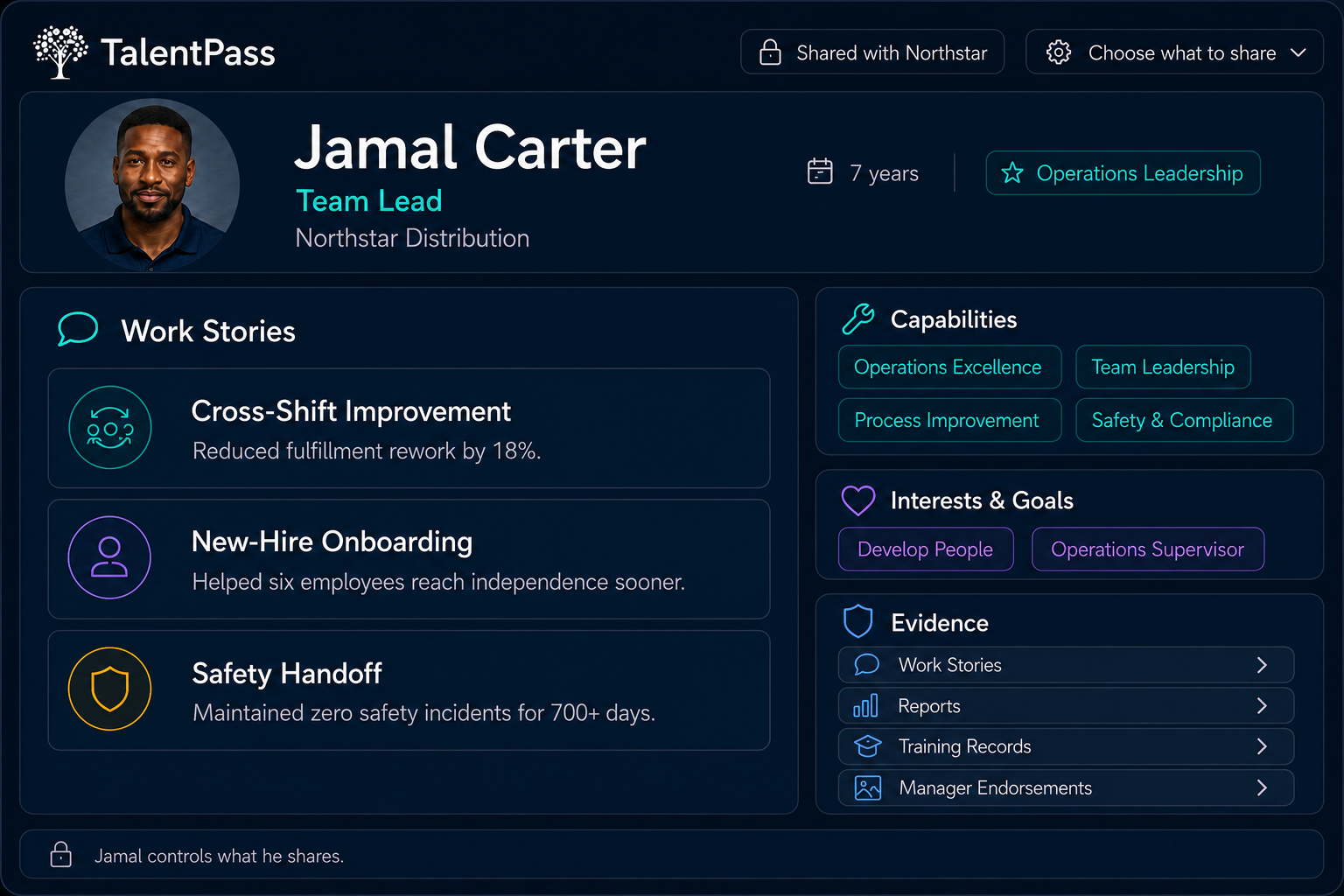
Jamal’s experience becomes something he can explain, support, and choose to share.
Pythia could help him explain:
- What was happening, and why did it matter?
- What responsibility did he take?
- What changed through the team’s work?
- Which evidence or colleagues could add context?
- What would he like to do more of?
TalentPass gives him a way to connect that story with other experience, supporting records, and career interests. He chooses which relevant information to share with Northstar.
His current role becomes one part of his professional story.
02 · CLARIFY THE OPPORTUNITY
Make the opportunity equally clear.
Northstar needs to explain the work behind “Operations Supervisor.” Which decisions would this person own? Which teams would they coordinate? What conditions would they face? What support would be available?
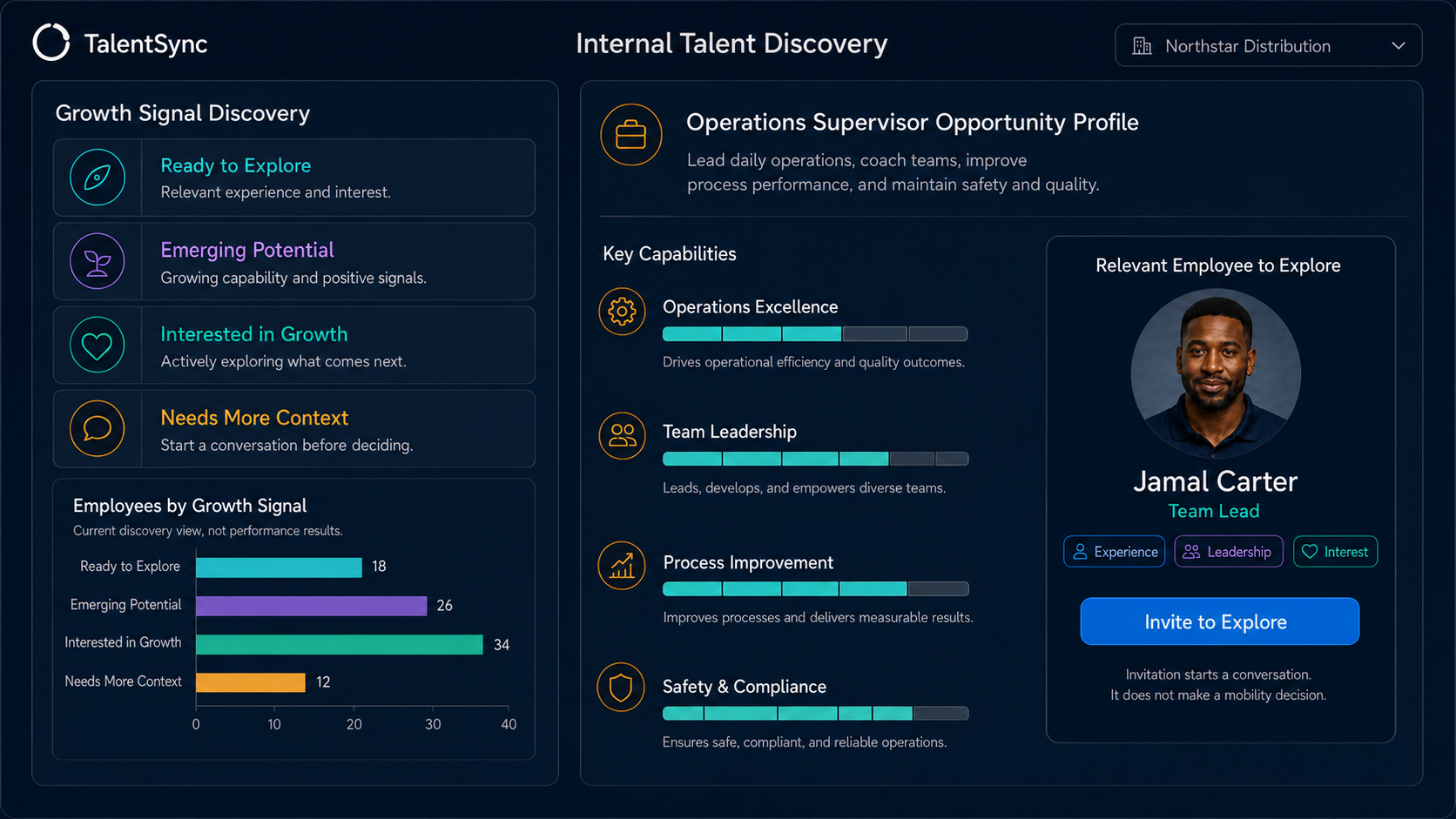
The Opportunity Profile concept connects defined responsibilities with experience people can examine.
An Opportunity Profile could bring those requirements together and help connect them with relevant employee experience and interests.
Jamal’s cross-shift work gives Northstar a reason to invite him into a conversation. Jamal can examine the opportunity and decide whether it fits his goals.
The intended role of TalentSync is to surface connections people can examine. Hiring and mobility decisions remain with the people responsible for them.
03 · REVIEW THE EVIDENCE
Examine the evidence together.
Jamal and the manager considering him review the responsibilities of the opportunity alongside his experience. They need to distinguish three situations.
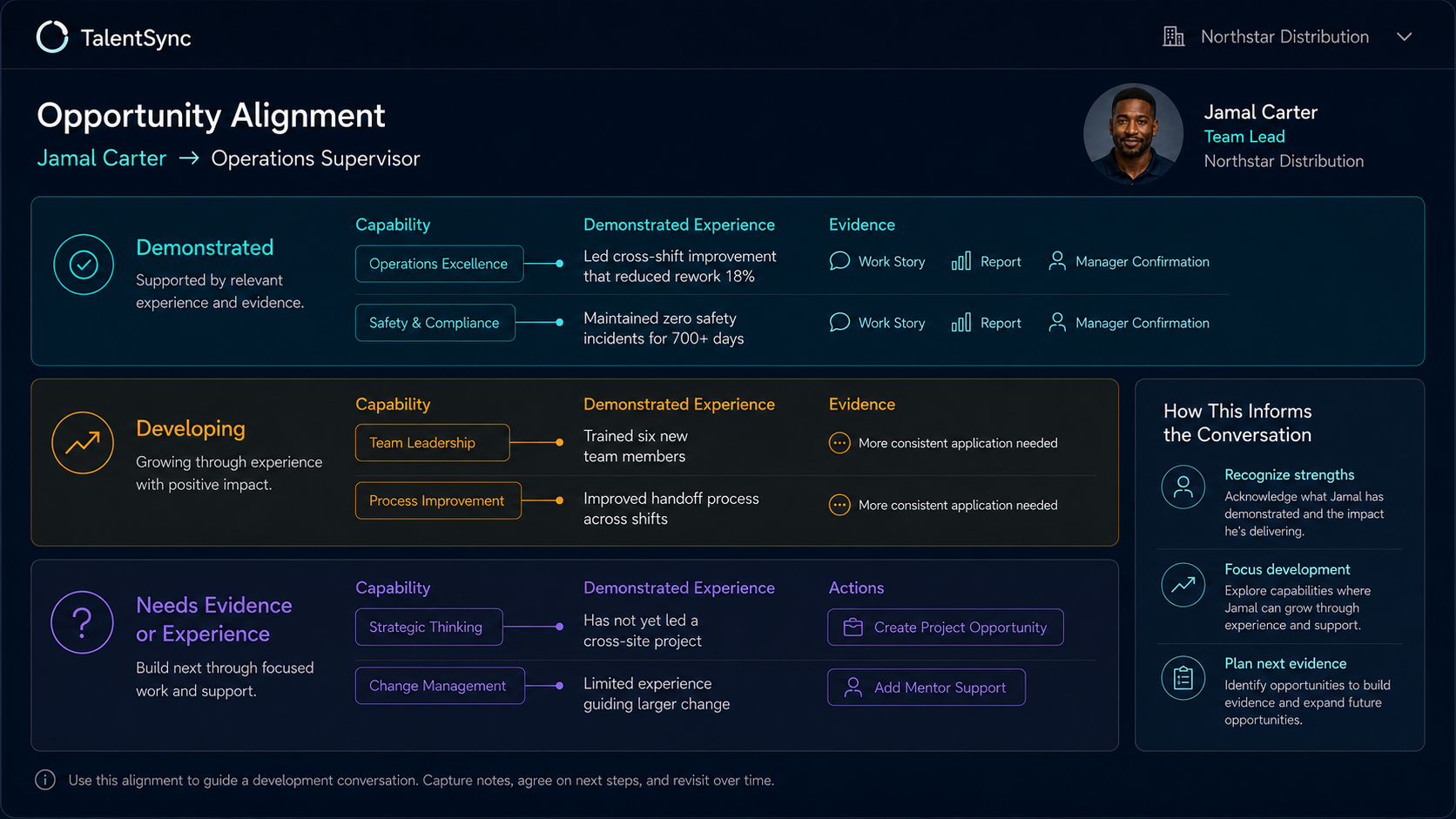
A capability review makes supporting evidence and unanswered questions visible.
Demonstrated
Relevant experience has supporting context or evidence they can examine.
Developing
Jamal has begun building the capability and would benefit from further practice or support.
Needs evidence or experience
They need to investigate further before drawing a conclusion.
The Talent Tree provides a way to connect responsibilities, activities, capabilities, and evidence.
A blank area could mean Jamal has never done the work. It could also mean nobody has asked him about it.
What have we learned—and what do we still need to understand?
04 · SUPPORT THE NEXT STEP
Create a supported next step.
Suppose Jamal wants to pursue the opportunity, but both sides need more evidence of his readiness. They agree on a practical pathway.

An illustrative pathway combines an assignment, observation, focused learning, and review.
- Lead a defined cross-shift improvement project.
- Shadow an operations supervisor.
- Build the safety-leadership knowledge the role requires.
- Document decisions, contributions, and results.
- Review the experience together.
Making this possible also requires an organizational commitment: time away from current duties, suitable supervision, and agreement between the teams involved.
Jamal needs a real opportunity to practice. Northstar needs to arrange the conditions that make it useful.
05 · MAKE AN INFORMED DECISION
Turn new evidence into a decision.
As Jamal completes the assignment, he and his collaborators review what happened. What responsibility did he take? How did he work across shifts? Where did he need support? What does the experience suggest about the proposed role?
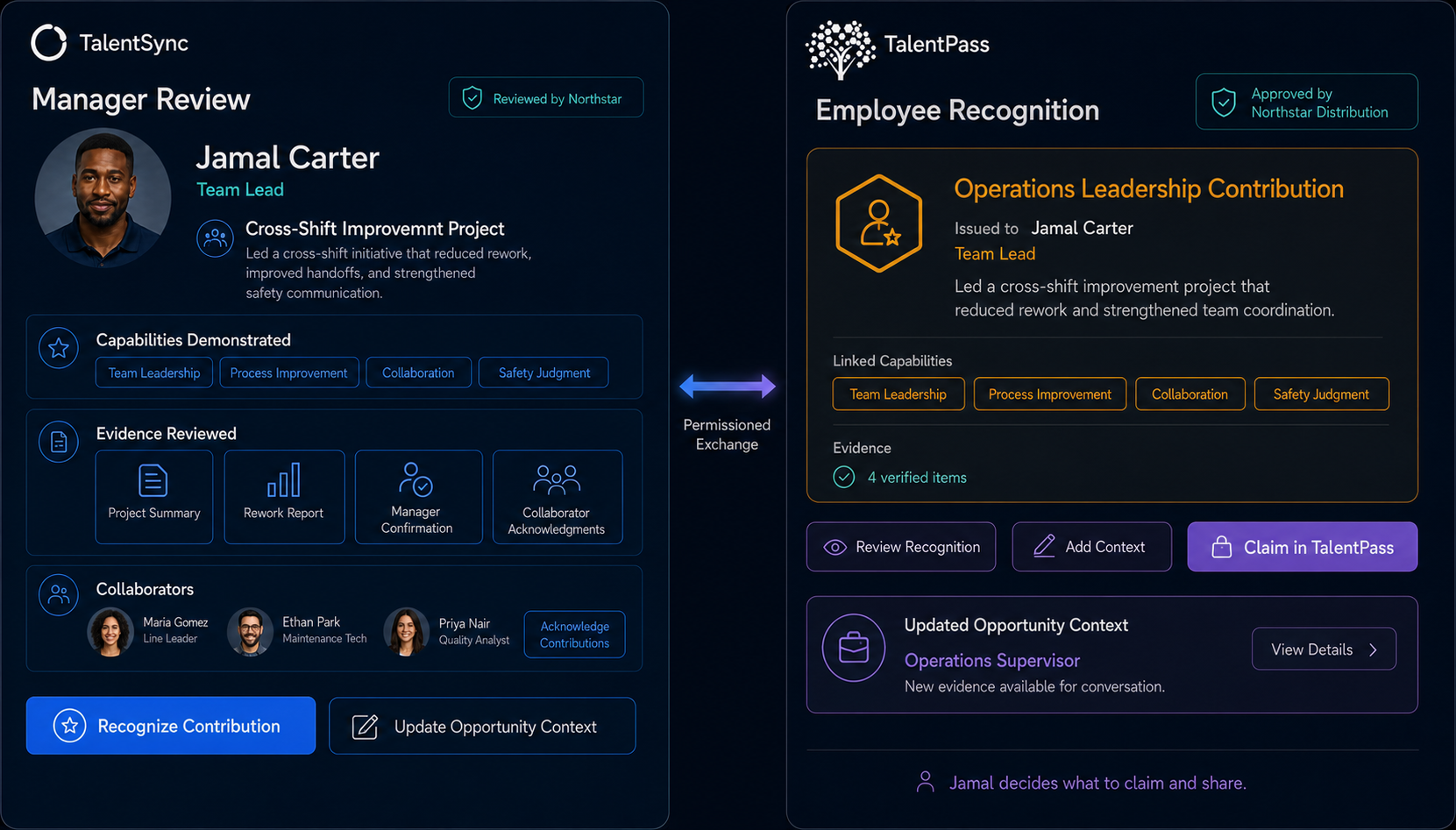
The recognition concept gives the organization more decision context and Jamal evidence he can carry forward.
Passport Pages are intended to support the exchange of relevant evidence and recognition between Northstar and Jamal’s TalentPass.
That gives Northstar more context for its decision and Jamal a record of his contribution he can carry forward.
A move into operations supervision is one possible outcome. Another could be a further assignment, a different opportunity, or a decision to stay in his current role.
The next step should reflect the work, the evidence, and Jamal’s choice.
Internal mobility needs a path
people can actually take.
Visibility starts the conversation. Whether mobility works also depends on what happens afterward.
Access to opportunity
Can people discover openings and assignments beyond their immediate team?
Recognition of experience
Can decision-makers understand contributions beyond familiar titles and credentials?
Practical support
Can employees explore a move without getting stuck between their current responsibilities and a receiving team?
Employee choice
Does the opportunity fit the person’s interests and circumstances?
These are conditions Northstar would need to examine—not outcomes established by this fictional story.
Where is internal movement getting stuck?
“We may already have the talent, but we cannot find it.”
Examine how internal experience, interests, and opportunities become visible to the people who need them.
“We see potential, but need a practical development path.”
Explore how supported assignments, coaching, and evidence can connect someone’s experience with changing responsibilities.
“Our growth plans depend on moving people into new responsibilities.”
Connect workforce demand with internal capability, development needs, and the conditions for deployment.
A workshop can help clarify one defined challenge and produce useful next steps before any TalentSync implementation.
Questions about internal talent mobility
What is internal mobility?
Internal mobility is movement into different roles, projects, assignments, or responsibilities within an organization. It can include lateral moves and temporary opportunities as well as promotions.
How does this differ from an internal job board?
A job board makes openings visible. This scenario also examines the employee’s relevant experience, the actual requirements of the opportunity, and the support needed to explore a move.
Does TalentSync rank employees or choose who advances?
The intended approach helps people examine relevant context and evidence. It does not replace accountable hiring, promotion, or assignment decisions with an employee ranking.
Does missing evidence mean someone lacks a capability?
No. Missing evidence is a reason to investigate. Someone may have relevant experience that has not been documented, or may need an opportunity to demonstrate it.
Does the organization gain access to someone’s entire TalentPass?
The intended model uses selected, purpose-specific sharing. Participation should not require blanket access to someone’s private reflections or complete professional record. Specific permissions need to be confirmed for the implementation.
Is this workflow available now?
This is an illustrative application of the TalentSync vision. Capabilities are at different development stages. Review current product availability to discuss an appropriate starting point.
Find the next opportunity
in the people already there.
Start with one role, project, or recurring capability need. Examine the experience you may be overlooking—and what would help people put it to work.
