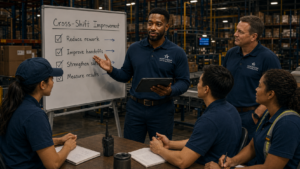
Give managers and employees the shared understanding they need to perform, grow, and adapt together.
TalentSync builds a living view of your team’s skills, experience, responsibilities, and knowledge—so everyone can see the work, close gaps, and improve together.
Atlas Has a Team Structure—But Not a Shared Understanding
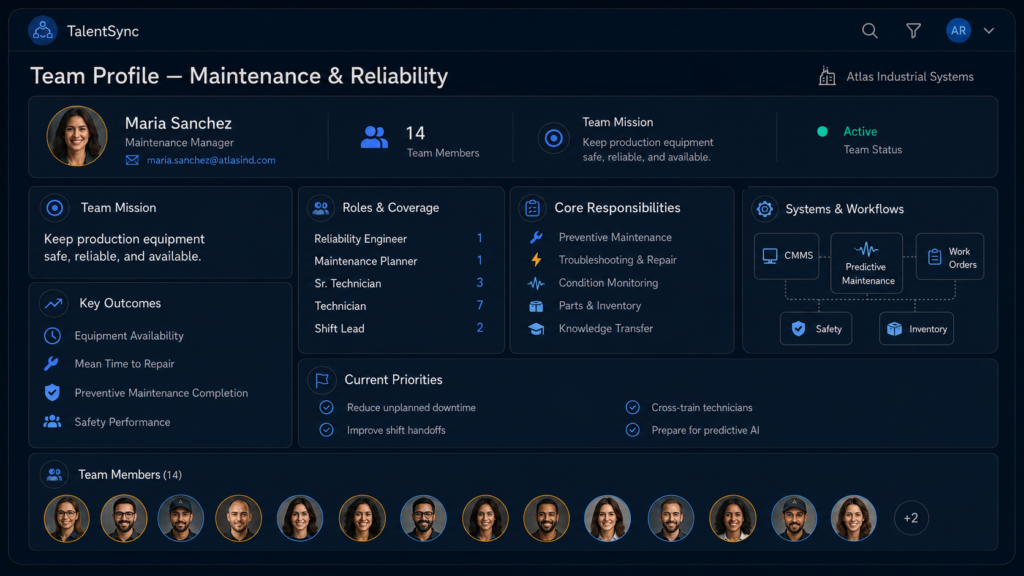
Atlas Industrial Systems has a 14-person maintenance and reliability team responsible for keeping production equipment operating safely and efficiently.
The company has job titles, reporting lines, certifications, and work records. But those systems do not reveal everything the team knows, who people rely on, or how prepared the team is for what comes next.
What the Manager Can See
Roles and reporting structure
Current assignments and open positions
Certifications and training records
Performance and safety metrics
Spreadsheets and manual updates
What Remains Hidden
Who has real hands-on experience
Who can solve problems others cannot
Where critical knowledge lives
Who is ready for what comes next
How the team can adapt to change
Atlas has workforce data. It does not yet have a shared understanding of the people, knowledge, and capabilities behind the work.
Build the Team’s Human Intelligence Layer
TalentSync connects what the organization knows with the experience, capabilities, goals, and work context its people contribute.
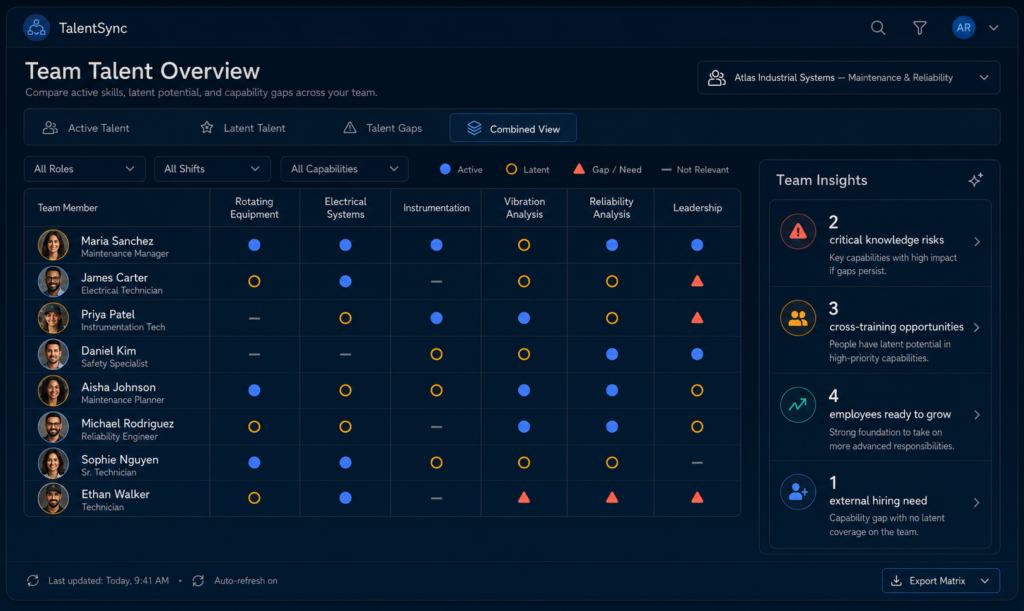
Together, that intelligence creates three connected views of the team.
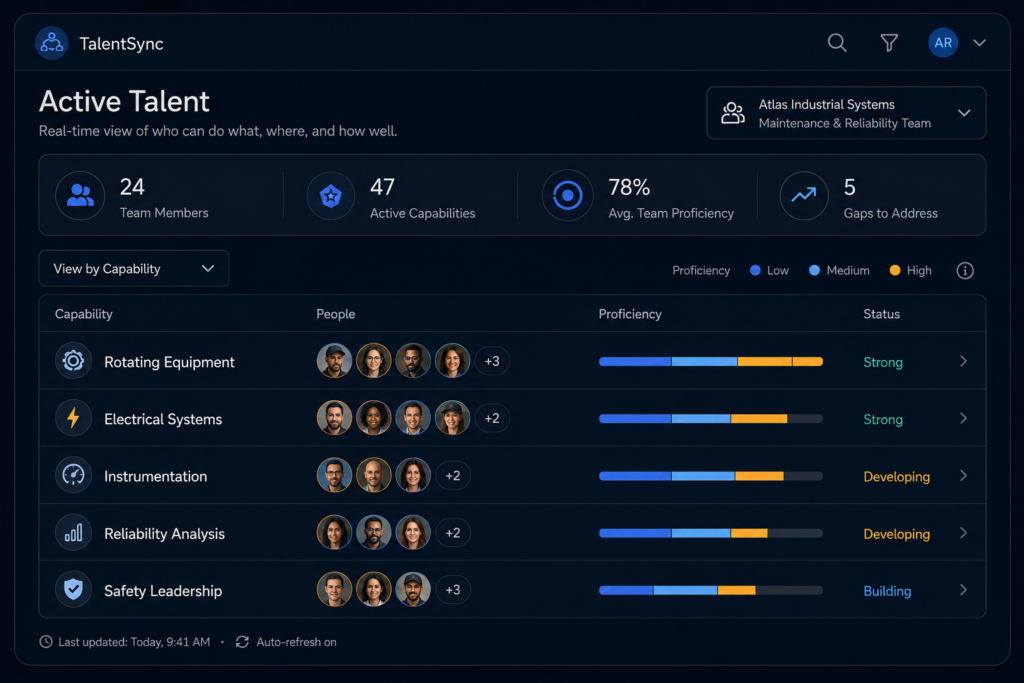
Active Talent
See what the team does today.
A real-time view of who can do what, where those capabilities are being applied, and how they support the team’s current work.
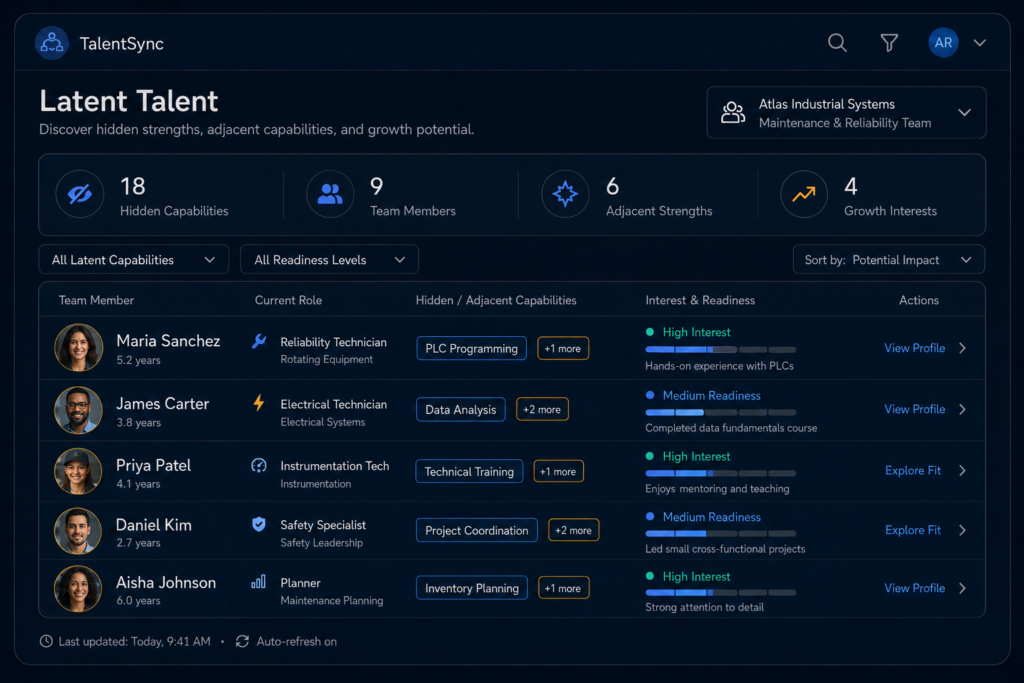
Latent Talent
Discover strengths the team is not yet using.
Reveal hidden experience, adjacent capabilities, interests, potential, and knowledge people could contribute in new ways.
Talent Gaps
Understand what the team needs next.
See which capabilities, knowledge, relationships, or support are missing—and where development, hiring, or work redesign may be needed.
1. Create a Shared Team Profile
Start with the roles, responsibilities, and capabilities the team needs. Then invite employees to help build a more complete and accurate understanding of who does what.
TalentSync helps Atlas:
Define the team’s mission and desired outcomes
Map roles and key responsibilities
Identify important workflows and relationships
Define required skills and experience levels
Connect relevant systems and work records
Invite team members to verify and enrich the profile
The organization establishes the initial structure. Managers and employees add the real-world context that makes it useful.
The result is a living Team Profile—not another static organizational chart.
2. Reveal Active Talent, Latent Talent, and Gaps
TalentSync brings together organizational records, real work signals, and employee-contributed context to show what the team can do—and what it may need next.
Managers can:
See active capabilities and proficiency levels
Understand where capabilities are being applied
Uncover latent talent and adjacent strengths
Identify critical gaps and areas of risk
Recognize knowledge concentrated in too few people
See who may be ready for greater responsibility
Prioritize development, internal mobility, and hiring needs
TalentSync does not reduce people to a single score. It makes relevant context visible so managers and employees can ask better questions and make better decisions.
3. Improve Collaboration and Team Flow
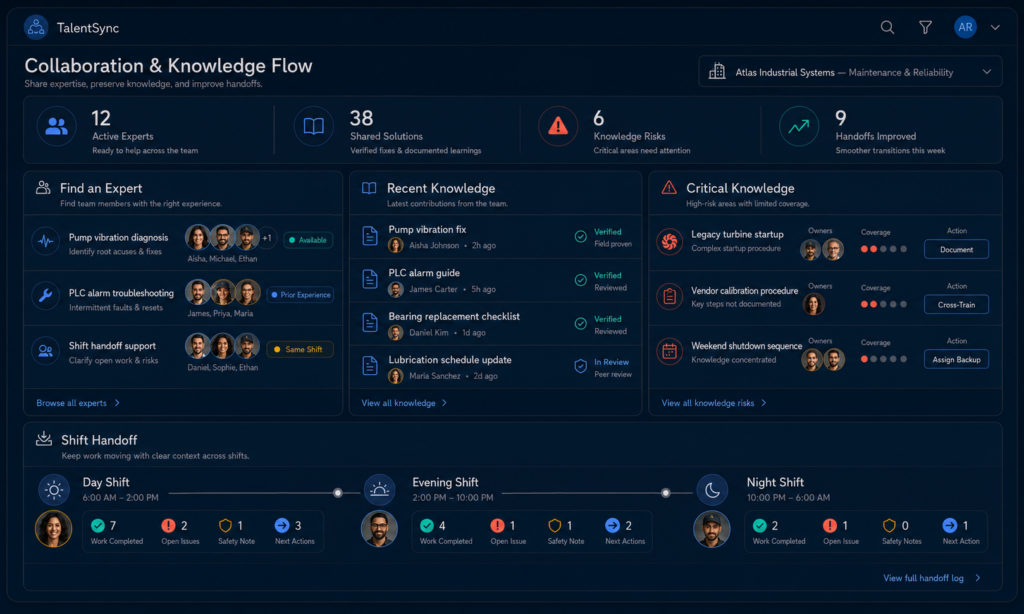
Connect the right people to the right work at the right time. Make knowledge visible, improve handoffs, and help employees learn from one another.
TalentSync helps the team:
Find the best person for a task
Clarify ownership and accountability
Document solutions and lessons learned
Share knowledge across shifts and locations
Connect employees with experienced colleagues
Strengthen handoffs and reduce rework
Recognize recurring friction and support needs
Clarify Responsibilities
Everyone understands their role, ownership, and priorities.
Strengthen Handoffs
Make transitions smoother with clearer context and better knowledge transfer.
Preserve Critical Knowledge
Capture and retain expertise before it walks out the door.
Improve Support
Connect employees with the people, resources, and guidance they need—faster.
4. Help the Team Adapt as AI Changes the Work
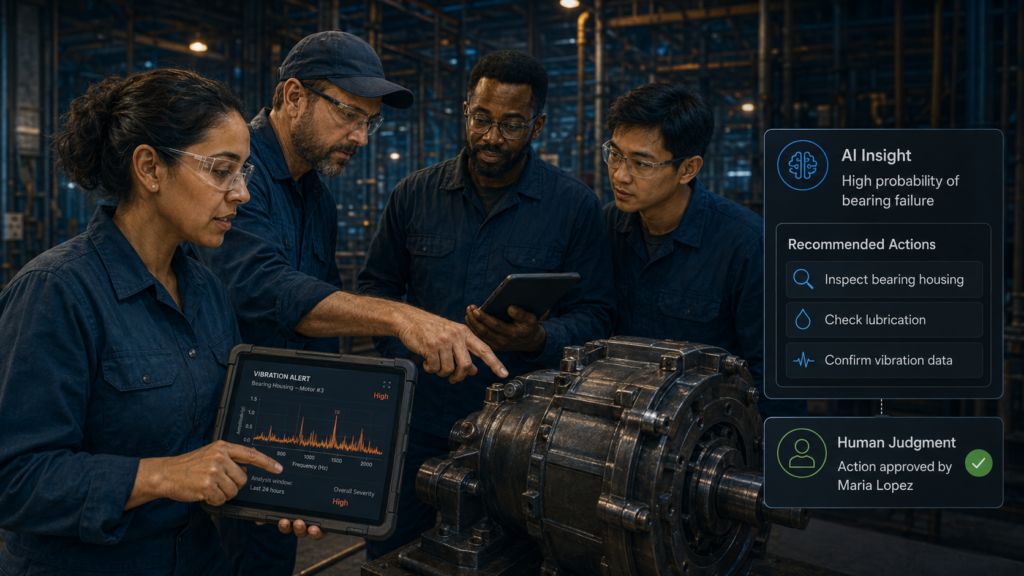
AI can predict, recommend, and automate—but people remain responsible for understanding the context and deciding how to act.
As Atlas introduces predictive-maintenance technology, TalentSync helps the team understand how responsibilities, capabilities, and workflows are changing.
The team can:
Surface AI insights within real work context
Apply human judgment to prioritize actions
Clarify where people remain accountable
Identify new responsibilities created by AI
Capture outcomes to improve future recommendations
Recognize which capabilities are becoming more important
Give employees the training and practice they need
Build future-ready capabilities together
Atlas can redesign the work with its people instead of introducing technology without understanding its effects.
5. Recognize Contribution and Support Growth
Acknowledge impact. Align growth with team and business goals.
Important contributions often disappear inside work orders, project meetings, and informal problem-solving.
TalentSync helps Atlas make those contributions visible and connect them to recognition, development, and opportunity.
Managers can:
Run fairer, more consistent reviews
Recognize meaningful contributions in real time
Connect accomplishments to applied capabilities
Identify emerging leadership and potential
Align development plans with future opportunities
Recommend relevant projects, training, or coaching
Build engagement and improve retention
Employees can review their recognition, add relevant evidence or context, acknowledge collaborators, and claim approved contributions in TalentPass.
The organization gains a clearer understanding of its people, while employees gain recognition and proof they can continue building upon.
A Stronger Team Creates Value for Everyone
Higher Reliability
Fewer failures, better preparation, and faster recovery.
Better Decisions
The right people, better information, and faster action.
Lower Risk
Close critical capability and knowledge gaps before they create larger problems.
Stronger Retention
Help people see a future in the organization—and give them reasons to stay.
Operational Efficiency
Reduce rework, strengthen handoffs, and create smoother execution.
Knowledge Resilience
Capture, share, and preserve critical expertise across the team.
Greater Adaptability
Help people and work adjust to technological and organizational change with confidence.
Stronger Culture
Build collaboration, trust, recognition, and shared purpose.
The Team Continuously Learns and Improves
Assess
Understand the team’s current capabilities, gaps, needs, and priorities.
Align
Set shared goals and create focused development and improvement plans.
Act
Apply capabilities, improve work, share knowledge, and support one another.
Adapt
Measure impact, learn from outcomes, and continuously improve together.
Each cycle strengthens the Team Profile and gives managers, employees, systems, and AI better context for the next decision.
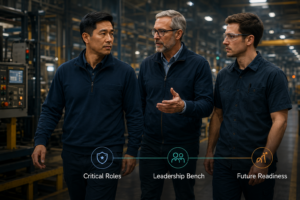
Build workforce and leadership readiness before critical gaps emerge. TalentSync and TalentPass help organizations identify workforce risks, evaluate bench strength, create evidence-based successor pathways, model future scenarios, and keep plans ...
Develop people for the work ahead by connecting changing responsibilities with focused development, real-world practice, manager support, and portable evidence of growth. TalentSync and TalentPass help organizations and employees learn ...
TalentPass and TalentSync help organizations see more of what their people can contribute, connect them with relevant internal opportunities, and support clear pathways for development, recognition, and mobility.
Hiring has entered a new era. AI has made it easier than ever to generate résumés and submit hundreds of applications, making it harder for recruiters to identify real capability. ...