Envisioning the Future of LERs: Bridging the Gap for Workers in 2024
Originally published September 20, 2023. Updated to reflect the continued development of Learning and Employment Records, TalentPass, and the Human Intelligence Layer.
Learning and Employment Records, or LERs, represent one of the most important ideas in the future of education and work.
The vision is compelling: people should be able to carry trusted, portable records of what they have learned and accomplished across schools, employers, training providers, professional organizations, and other parts of their lives.
Instead of repeatedly starting over—with another résumé, another application, another incomplete profile—people could build on a record that grows with them.
Years of investment, standards development, pilots, and collaboration have moved that vision forward. Verifiable credentials are becoming more capable. Learning and employment data are becoming more portable. Schools, workforce organizations, employers, and technology providers are experimenting with new ways to recognize and exchange skills.
But the central challenge remains:
How do we turn better records into something workers can understand and use?
That question matters because portability alone does not create opportunity. A person can possess accurate, verifiable records and still struggle to understand what they reveal, connect them to a goal, or present them effectively to someone making a decision.
Closing that gap is the next major challenge for the LER ecosystem.
The Vision: A Trusted Record That Grows With You
Traditional records capture only fragments of a person.
A transcript may show completed courses and grades. A résumé summarizes selected employment history. A credential confirms that an organization recognized a particular achievement. An employer maintains information about someone’s role and performance. A portfolio may contain projects or examples of work.
Each record can be valuable, but they are usually separated across systems and institutions. They rarely combine into a complete picture that the individual can carry forward.
LERs are intended to create a more connected foundation by making it possible to represent and exchange information such as:
- Degrees, certificates, licenses, and microcredentials
- Courses, training, and other learning experiences
- Employment history and workplace achievements
- Skills and competencies associated with those experiences
- Projects, portfolios, and other evidence of applied ability
- Assessments, endorsements, and recognized accomplishments
- Data that can be read and understood across different systems
In a mature LER ecosystem, people would not have to leave the value of their experiences behind whenever they changed schools, employers, platforms, or communities.
Their records could move with them.
The Progress Is Real
The LER ecosystem has advanced significantly through the work of standards organizations, government agencies, educational institutions, employers, workforce organizations, foundations, and technology providers.
The movement has produced:
- More mature standards for digital credentials and portable records
- Growing adoption of verifiable credential formats
- New approaches to digital wallets and learner-controlled data
- Experiments connecting education records with hiring systems
- Skills-based hiring and advancement initiatives
- State and regional workforce pilots
- Greater attention to privacy, consent, and individual agency
- Increased recognition that learning happens beyond classrooms
These developments are creating essential infrastructure.
But infrastructure only becomes transformative when people can use it to improve their lives.
The Remaining Gap: Records Are Not Understanding
LERs can make talent information more trusted and portable. They do not automatically make it understandable.
A credential may confirm that someone completed a program, but it may not explain how that learning has been applied.
A list of skills may identify capabilities, but it may not reveal the experiences that developed them, the level of responsibility involved, or how recently they were used.
A collection of records may document a person’s past, but it may not help them decide what to do next.
This distinction is critical:
A record can contain data about a person without giving that person a meaningful understanding of themselves.
Workers need more than storage. They need help connecting records with experiences, evidence, goals, interests, relationships, and opportunities.
They need to see how their capabilities have developed over time. They need to understand what is transferable. They need to recognize strengths that may not have been formally credentialed. They need to present different parts of themselves in different situations without surrendering control of their complete record.
In other words, people need an experience layer built on top of trusted LER infrastructure.
What Workers Need From the Next Generation of LERs
For LERs to create immediate and lasting value, the surrounding tools and systems must help workers do several things.
Bring formal and informal experiences together
Much of what makes a person capable is developed outside a classroom or formal training program.
People learn through jobs, projects, volunteer work, caregiving, military service, creative practice, entrepreneurship, community participation, and overcoming difficult challenges.
The future of LERs must leave room for these experiences while distinguishing between personal claims, supporting evidence, endorsements, and independently verified credentials.
Understand what their records mean
People should not need to be credentialing experts or data specialists to benefit from their own information.
They need tools that help them interpret their experiences, recognize patterns, identify capabilities, and understand how different parts of their histories connect.
AI can help with this work, but it should serve the individual rather than make unexplained judgments about them. People should be able to review, correct, contextualize, and control what is created.
Translate their experience into opportunity
Most hiring and advancement systems still depend on job descriptions, applications, résumés, interviews, and applicant tracking systems.
Workers need bridges between emerging LER infrastructure and these existing workflows.
That includes the ability to:
- Connect experiences and evidence with an opportunity
- Translate verified records into language an employer understands
- Build a targeted application or professional profile
- Export information into conventional formats when necessary
- Share richer evidence without creating more work for reviewers
The future cannot depend on every employer replacing its existing systems at once. People need value during the transition.
Control what they share
A lifelong record should not become a lifelong surveillance file.
People need meaningful control over:
- What information is included
- Which claims are private or shareable
- What is presented for a particular purpose
- Who can access it
- How long access lasts
- Whether information can be reused
- How errors or outdated information are corrected
Trust requires verification, but it also requires agency.
Continue learning from their own experience
A useful LER should not only document the past. It should help a person make better decisions about the future.
When records, experiences, capabilities, interests, and goals can be understood together, people can more easily identify:
- Skills they may be overlooking
- Evidence they should preserve
- New roles they could pursue
- Relationships or communities that could help them grow
- Learning that would meaningfully expand their options
- Patterns in the work and activities that give them purpose
This is where a static collection of records can begin to become living intelligence.
LERs as the Foundation of a Human Intelligence Layer
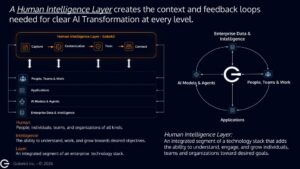
Gobekli believes LERs are an essential foundation for a broader Human Intelligence Layer.
The Human Intelligence Layer is not a replacement for LER standards, credential wallets, or institutional systems. It is the connective layer that helps people and organizations turn fragmented human data into trusted, continuously improving understanding.
For individuals, this means bringing experiences, capabilities, credentials, evidence, goals, and reflections together in a source of truth they own and control.
For organizations, it means developing a clearer understanding of the people, teams, relationships, workflows, and capabilities that make the organization function.
Trusted LER data strengthens that layer. It allows verified achievements to move across systems and become part of a larger picture. But the larger picture also requires context contributed by people, evidence from real activities, reflection over time, and feedback created through work and relationships.
The goal is not merely to issue more records.
It is to help people turn everything they have learned and done into intelligence they can use.
How Gobekli Is Building Toward That Future
TalentPass is Gobekli’s person-controlled platform for building a living understanding of your experiences, capabilities, evidence, goals, and growth.
Rather than asking you to create one permanent profile for every audience, TalentPass allows you to organize your information and use selected parts of it for specific purposes.
Pythia, Gobekli’s private AI guide, helps you reflect on your experiences, build profiles, prepare for opportunities, and communicate what you can do.
The Talent Tree provides a developing framework for connecting experiences with capabilities and personal growth. Profiles and Passport Pages help you present relevant information for a particular application, professional relationship, or other purpose.
TalentSync extends this approach to organizations, creating opportunities for employers, schools, membership organizations, and public institutions to work with richer, more trustworthy human intelligence.
LER interoperability is an important part of this vision. As the ecosystem matures, verified credentials and portable records can become trusted inputs within a system that also helps people understand, contextualize, and use them.
Building the Bridge While Building the Future
The LER movement should continue investing in standards, interoperability, verification, and institutional adoption.
But workers cannot wait for the entire ecosystem to reach maturity.
They need tools that work with today’s hiring and learning systems while preparing them for what comes next. They need immediate value from their information. They need support understanding their own experience. They need practical ways to communicate it. Above all, they need to remain active participants in how their identities and capabilities are represented.
The future of LERs will not be achieved when every person has a digital wallet full of records.
It will be achieved when people can use trusted records to better understand themselves, demonstrate what they can do, continue growing, and pursue opportunities that might otherwise remain invisible.
The infrastructure is being built.
Now we must make it useful to the people it was meant to serve.
Product availability notice: This article discusses Gobekli’s broader vision for Learning and Employment Records and the Human Intelligence Layer. Some capabilities described may be in development, expanding release, or available only through Launch Partnerships. Visit the Product Availability page for the current status of TalentPass, TalentSync, Pythia, Profiles, Passport Pages, and the Talent Tree.