Schools and learning providers are under increasing pressure to recognize the full range of what students know, can do, and are becoming.
Some learning happens in classrooms. Some happens through work, military service, caregiving, community leadership, independent projects, volunteering, creative practice, internships, online programs, certifications, and lived experience.
But most institutional systems still recognize only a narrow slice of that learning.
Transcripts, grades, and course completions matter. They remain important academic records. But they often fail to capture the full story of a learner’s capabilities, growth, goals, evidence, and readiness for what comes next.
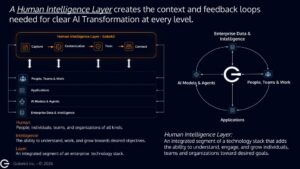
Gobekli helps schools and learning providers build a Human Intelligence Layer: a trusted, living layer of context that helps learners, educators, institutions, systems, and AI understand learning, evidence, skills, experience, and opportunity over time.
This use case explores how a school could measure, verify, recognize, and potentially award credit for more of each student’s past and present learning.
Imagine a university, community college, workforce training provider, or adult learning program that wants to better serve a diverse student population.
Some students are recent high school graduates. Some are working adults. Some are veterans. Some are parents returning to school. Some have industry certifications. Some have years of experience that never translated into formal academic credit.
The institution wants to support inclusive excellence, but it also wants to be rigorous. It does not want to simply accept every claim at face value. It needs a way to understand, evaluate, verify, and recognize learning with care.
That means asking better questions:
A Human Intelligence Layer helps the institution move beyond isolated records and toward a more complete, evidence-aware understanding of each learner.
Traditional admissions processes often rely on transcripts, test scores, essays, recommendations, and demographic or background information. Those inputs can be useful, but they do not always capture the depth of a learner’s experience.
A school using Gobekli could create a more holistic admissions process by defining the kinds of learning, experience, values, capabilities, and evidence that matter for a program.
This does not mean lowering standards.
It means making standards clearer, more inclusive, and more connected to real human development.
For example, a program might want to understand whether applicants have demonstrated:
Applicants could use TalentPass to share a purpose-specific profile that includes relevant experiences, credentials, reflections, evidence, and goals. The institution could then evaluate a richer picture of the applicant while still applying consistent criteria.
This helps admissions teams see more than whether a learner followed a traditional path. It helps them understand what the learner brings, what they need, and where they may thrive.
TalentPass gives learners a place to build and control a living record of their talent, learning, experience, goals, evidence, and growth.
For schools, this matters because learner records should not be trapped inside one institutional system.
Students move between schools, jobs, programs, internships, industries, and life circumstances. They need a way to carry meaningful evidence of learning forward.
A learner-owned TalentPass profile could include:
This gives students a better way to explain who they are and what they can do.
It also gives schools a better foundation for advising, placement, credit evaluation, employer partnerships, and lifelong learner support.
To recognize more learning, schools need a way to map diverse experiences to institutional expectations.
That mapping might involve courses, competencies, program outcomes, industry standards, workforce skills, licensure requirements, or internal placement criteria.
Gobekli can help schools think about learning as structured evidence, not just self-reported activity.
For example:
The goal is not to flatten every experience into a generic skills list.
The goal is to understand what the experience means, what evidence supports it, and how it connects to a learner’s path.
Once learning is understood and evaluated, the institution can decide how to recognize it.
Recognition may take different forms:
Some forms of recognition may be informal. Others may be formal academic credit. Some may require faculty review, assessment, documentation, or institutional approval.
Verifiable Credentials can help make recognized learning more portable and trustworthy.
A school might issue a credential for a completed course, demonstrated competency, internship milestone, portfolio review, or credit-awarded prior learning assessment. The learner could hold that credential and share it with employers, transfer institutions, graduate programs, or workforce partners.
This strengthens the connection between education and opportunity.
Recognition is not only about looking backward. It also helps learners plan what comes next.
When advisors understand a student’s existing learning, they can provide more relevant guidance.
A student with strong workplace experience may not need the same introductory pathway as a student entering a field for the first time. A student with strong technical credentials may need support building communication or leadership skills. A student with a rich creative portfolio may need help translating that work into academic credit or career opportunity.
TalentSync can support the institutional side by helping schools understand patterns across learners, programs, and pathways.
Leaders and advisors could ask:
This turns recognition into a continuous learner success strategy, not a one-time administrative process.
Over time, a school can use this approach to improve its curriculum.
If many students arrive with certain capabilities, introductory coursework may need to change. If students repeatedly struggle to demonstrate a particular competency, the program may need stronger supports. If employers consistently value certain experiences or credentials, the school can strengthen alignment between learning and opportunity.
Curriculum mapping can connect:
This kind of mapping becomes especially important as AI enters advising, admissions, curriculum planning, and career navigation.
AI tools need trusted human context. They need to understand not only what a student completed, but what the student can do, what evidence supports it, and what path may fit.
A Human Intelligence Layer helps make that context more reliable.
Recognizing more learning requires careful trust design.
Students should not be pressured to expose personal history, trauma, private family responsibilities, sensitive work experiences, or unrelated identity information in order to receive support.
A responsible system should make clear:
The goal is not to collect everything about a learner.
The goal is to help learners safely translate meaningful experiences into recognition, support, credit, and opportunity.
When schools can measure, verify, and recognize more learning, they can serve students more fully.
Learners gain a clearer way to understand and communicate their growth. Advisors gain better context. Faculty can evaluate prior learning more consistently. Employers can see stronger evidence of capability. Institutions can improve programs based on a richer understanding of student experience.
This is especially important for adult learners, working learners, transfer students, veterans, first-generation students, and anyone whose learning journey does not fit neatly into a traditional transcript.
The future of inclusive excellence is not just admitting more diverse learners.
It is recognizing more of what those learners already know, helping them build what comes next, and giving them portable evidence of the growth they have earned.
This article describes Gobekli’s product vision and related future-state use cases. Current product capabilities, availability, and implementation options may differ as TalentPass, TalentSync, Passport Pages, Pythia, and related features continue to develop. For the latest status, see our Product Availability page.