- Home
- /
- Workshops
- /
- Member Intelligence Workshop Module
- /
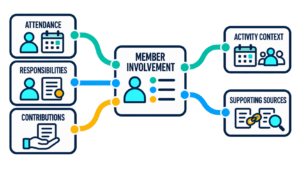
- Gobekli creates a Human Intelligence Layer that makes visible:
Gobekli creates a Human Intelligence Layer that makes visible:
MEMBER INTELLIGENCE WORKSHOP MODULE
Member Segmentation & Representation Gaps
Do your decisions reflect the members affected—or mainly the members you hear from?
Examine whether current categories support the decision at hand and identify whose experiences, needs, or perspectives are missing from the available picture.
Module 5 · Member Intelligence Workshop
Does this sound familiar?
Membership categories describe administration better than member experience
Dues tiers and account types help run the organization but reveal little about the differences relevant to a program or service decision.
A strong response total hides uneven coverage
The organization receives substantial feedback without examining which parts of the affected membership contributed to it.
Active members become the default voice of everyone
Frequent attendees, committee members, and familiar contacts shape the picture while less visible members remain difficult to understand.
Organization-wide averages conceal important differences
A generally positive result can sit alongside a different experience for members at a particular career stage, location, or working arrangement.
Missing information is treated as a member characteristic
A blank field or absent response is interpreted as no interest, no need, or no relevant experience.
The same segments are reused for unrelated decisions
Categories developed for billing or communications continue to guide research and planning even when the question requires a different view.
What are member segmentation and representation gaps?
Member segmentation groups members according to characteristics relevant to a particular purpose.
A useful segment helps the organization examine a meaningful difference. Depending on the decision, that difference might concern:
- Career stage or transition.
- Professional role or responsibility.
- Organization size or type.
- Employment or independent-work arrangements.
- Geography or service area.
- Chapter or affiliation.
- Membership tenure.
- Goals or development needs.
- Relevant experience.
- Access to particular opportunities.
- Participation patterns within a defined period.
A representation gap appears when the evidence available for a decision does not adequately include or explain an affected part of the membership.
The gap may involve people who were not reached, did not participate, could not be identified in the records, or whose experiences were combined into a category too broad to interpret.
Member Segmentation & Representation Gaps helps participants examine those issues for one defined decision.
Here, representation concerns whose experience appears in the evidence. Formal voting rights, elected representation, and governance arrangements are separate questions unless included in the workshop’s scope.
The categories you use shape what you can see.
A membership category may be accurate and still be unhelpful for the current question.
“Individual member” may establish a membership arrangement. It does not necessarily distinguish someone entering a profession from someone preparing to retire.
“Corporate member” may identify an organizational relationship while concealing differences among employees, roles, locations, or company sizes.
Before relying on a segment, the organization needs to understand:
- What the category means.
- Why it matters to the decision.
- Whom it includes and excludes.
- Which records support membership in it.
- Whether the information is current.
- Whether members can belong to several groups.
- How missing information is handled.
- Whether important differences remain hidden inside it.
- Which evidence is available for the group.
- What conclusions that evidence can support.
The purpose is to create a useful view for the decision while preserving the limits of that view.
Connect the affected membership to the evidence being used.
Decision Population
Decision to be supported
Members affected
Relevant time period
Unit being examined
Known exclusions
Meaningful Differences
Goals and circumstances
Roles and career stages
Organizational context
Access conditions
Differences relevant to the decision
Current Categories
Definitions and purpose
Available source fields
Group membership
Overlapping affiliations
Unknown or outdated information
Evidence Coverage
Members reached
Members contributing
Available experiences
Missing perspectives
Source limitations
Interpretation and Response
Supported conclusions
Important uncertainties
Categories to refine
Further input needed
Responsible next steps
A useful segmentation review connects the members affected by a decision with the differences that matter and the evidence available to understand them.
How a partial member picture becomes a broad conclusion
STAGE 1 — Information is gathered through familiar channels
The organization collects feedback from events, surveys, committees, programs, or staff conversations.
STAGE 2 — The evidence is summarized using existing categories
Reports group responses by membership type, chapter, or another readily available field.
STAGE 3 — Coverage differences remain unexplored
The team sees the overall result without examining who contributed, who was absent, or which distinctions the categories conceal.
STAGE 4 — A finding is applied beyond its evidence
A conclusion about participating members begins shaping decisions for a wider population whose experience has not been adequately examined.
“Members told us” needs a clearer account of which members.
A large amount of feedback can be useful while still leaving important parts of the membership poorly understood.
The review asks who the evidence describes and how that relates to the decision.
“Members prefer in-person professional development” can become:
“Members responding through our annual conference favored in-person development. We need to understand whether members who could not attend face different needs or access conditions before choosing the wider program format.”
The finding remains useful. Its scope becomes clearer.
The segmentation review should clarify:
Define the population the organization is preparing to serve, support, or make a decision about. Distinguish that population from the people whose information happens to be available.
Identify the circumstances that may affect how members experience the issue. Avoid adding categories without explaining their relevance.
Examine what the existing labels describe and what they combine. Identify where a category is too broad, unclear, outdated, or unrelated to the question.
Review who was reached, who contributed, and what is known about those participants. Compare that coverage with the population affected.
Distinguish absent records, unknown category membership, nonresponse, and an explicit answer such as “not interested.” Record uncertainty without inventing an explanation.
Identify whether to refine a category, seek additional perspectives, qualify the finding, or refer the analysis for deeper review.
Examine segmentation across six dimensions.
Purpose
Explain how each proposed distinction relates to the decision being made.
Population
Define the members affected and the unit being counted or examined.
Category Meaning
Clarify the definition, source, and limitations of each group.
Coverage
Examine which parts of the population appear in the available evidence.
Missingness
Distinguish different kinds of missing information and unresolved participation gaps.
Interpretation
State what the findings support and where additional evidence or review is needed.
Use categories that help explain the issue.
Distinctions that may support the decision
Depending on the question, useful categories might distinguish:
- Members entering a role from those established in it.
- Small employers from larger organizations.
- Independent practitioners from employed members.
- Members with local access from those facing travel barriers.
- Recent joiners from longer-standing members.
- People seeking an opportunity from those already using it.
- Members experiencing a transition from those considering one.
- Participants from eligible members who have not participated.
Each distinction should have a stated reason for inclusion.
Signs that a category needs review
Closer examination may be needed when:
- Its administrative purpose is unrelated to the decision.
- Staff interpret the label differently.
- Members with substantially different circumstances are combined.
- The underlying information is outdated or largely missing.
- Overlapping groups are treated as mutually exclusive.
- A label implies a motive the evidence does not establish.
- A small group becomes identifiable in reporting.
- The organization cannot explain what decision the distinction would change.
A useful segment is a view for a purpose, not a permanent definition of a person.
Conference feedback may miss the members a new format should reach.
Imagine an association reviewing its professional development format.
Conference participants report that in-person sessions provide valuable discussion and networking. Staff consider expanding the same format.
The decision affects a wider membership, including people who did not attend.
Participants examine:
- Who was eligible to attend.
- Which groups were reached by the invitation.
- Which members attended and provided feedback.
- What is known about members who did not attend.
- Whether travel, scheduling, employer support, or other conditions could matter.
- Whether current membership categories reveal those differences.
- Which questions require further member input.
The review does not assume that non-attendees prefer virtual delivery or lack interest.
It identifies that their experience is missing from the current evidence and develops a focused plan to understand it before committing to a broader format.
Absence from the evidence is an unanswered question.
A member may be missing from a report because they were not invited, did not see the invitation, chose not to respond, could not participate, or could not be connected to the relevant category.
These possibilities have different implications.
A blank field does not establish a lack of need. Nonresponse does not establish satisfaction or dissatisfaction. Low participation does not explain the reason for low participation.
The review records what is missing and identifies which explanations remain untested.
Designing the follow-up questions and collection approach can continue through Member Listening & Feedback Intelligence.
A subgroup view can reveal a difference without explaining its cause.
Comparing groups can identify patterns worth examining. It does not automatically establish why the difference exists.
A lower participation rate might relate to opportunity availability, communication, eligibility, scheduling, interest, or several connected conditions.
Participants distinguish a descriptive finding from an explanation and identify what would help interpret it.
Where a decision depends on population estimates, weighting, small samples, or more complex analysis, the workshop can identify questions for a qualified research or analytical review.
THE MATCHING WORKSHOP MODULE
Module 5: Member Segmentation & Representation Gaps
This practical minicourse helps membership teams learn a repeatable method for examining whether their categories and evidence fit the decision they need to make.
Participants apply the method to one population and one source of member information, such as a survey, program report, participation dataset, or consultation summary.
They define relevant distinctions, examine coverage, identify missing perspectives, and clarify which conclusions are supported.
The exercise also establishes the population, category, evidence, and coverage relationships a subsequent Gobekli configuration would need to preserve.

This module helps your team:
- Define the population affected by the selected decision.
- Clarify the unit being counted or examined.
- Identify differences that could matter to the outcome.
- Examine the purpose and meaning of current categories.
- Recognize overlapping or unclear group definitions.
- Compare the affected population with available evidence.
- Identify missing or weakly represented perspectives.
- Distinguish unknown information from an explicit answer.
- Separate observed differences from assumed explanations.
- Qualify findings according to their actual coverage.
- Develop a focused representation-gap response plan.
- Outline a potential segmentation and evidence-coverage configuration.
What should happen when a representation gap appears?
Several responses may apply. The module produces a clearer basis for interpretation and follow-up.
Clarify the Population
Identify whom the decision affects and distinguish that group from the available respondents or participants.
Refine the Categories
Adjust definitions where current labels conceal a difference relevant to the decision.
Check the Coverage
Examine who was reached, who contributed, and which experiences remain missing.
Preserve the Unknowns
Record missing information without treating it as a confirmed member characteristic.
Seek Missing Perspectives
Identify the additional member input needed to understand a consequential gap.
Qualify the Conclusion
State the limits of the finding and determine whether further review is needed before acting.
Several responses may apply. The module produces a clearer basis for interpretation and follow-up without claiming that every gap can be resolved during the workshop.
What should a segmentation and representation review examine?
The Decision Population
Which people or organizations are affected, and what time period is relevant?
The Meaningful Differences
Which circumstances could change the interpretation or organizational response?
The Category Definitions
How are groups defined, sourced, maintained, and distinguished from one another?
The Evidence Coverage
Whose experience is available, through which channels, and with what limitations?
The Missing Perspectives
Who is absent or difficult to identify, and which unanswered questions could matter?
The Responsible Interpretation
What can the organization conclude now, what should remain qualified, and what needs further investigation?
Learn the method. Check one member picture before using it.
Bring one report, survey result, participation summary, or consultation finding that will inform a decision.
STEP 1
Define the decision and affected population
State the organizational choice, the members affected, the relevant period, and the unit being examined.
STEP 2
Identify meaningful distinctions
List the differences that could affect member experience or the decision. Explain why each proposed category matters.
STEP 3
Examine the existing categories
Review definitions, sources, overlapping memberships, outdated fields, and unknown information. Identify where the current structure needs clarification.
STEP 4
Compare the population with the evidence
Map who was reached, who participated, and whose experience is available. Mark coverage that cannot be established from current records.
STEP 5
Identify gaps and qualify the findings
Separate supported observations from broader assumptions. Prioritize missing perspectives or uncertainties that could materially affect the decision.
STEP 6
Develop the follow-up and configuration brief
Assign the next questions and review responsibilities. Specify the population definitions, categories, source relationships, and coverage indicators a future implementation would need.
Participants leave with a Member Segmentation & Representation Brief, a coverage map, priority gaps and follow-up actions, and a starting configuration brief.
The output distinguishes a useful descriptive review from claims that would require additional evidence or statistical analysis.
- Define the decision and affected population.
- Identify meaningful distinctions.
- Examine the existing categories.
- Compare the population with the evidence.
- Identify gaps and qualify the findings.
- Develop the follow-up and configuration brief.
FUTURE PRODUCT CONNECTION
Keep the membership population and the evidence in view together.
The workshop identifies the group definitions and source relationships needed to understand whose experience informs an organizational decision.
A potential TalentSync configuration could connect the relevant membership population, purpose-specific group views, participation or feedback sources, and the coverage information needed for human review.
Where appropriate, TalentPass could let members provide or update relevant context and choose what to share for the agreed purpose.
The starting configuration brief could identify:
- Population definitions: the people or organizations affected by the decision, with relevant dates and exclusions.
- Identity and affiliation references: the records needed to establish whom the population includes.
- Purpose-specific segments: groups defined by distinctions relevant to the selected question.
- Category definitions: meanings, source fields, assignment rules, and known limitations.
- Overlapping relationships: ways to preserve multiple relevant affiliations without accidental double counting.
- Evidence sources: surveys, participation records, consultations, or other information informing the decision.
- Coverage views: what is known about who was reached, who contributed, and whose experience remains missing.
- Unknown information: explicit distinctions among missing fields, nonresponse, unavailable records, and confirmed answers.
- Member contributions: relevant context members choose to provide, confirm, or correct.
- Human review: responsibility for interpreting differences, qualifying conclusions, and deciding what further input is needed.
For example, an initial configuration might compare the population eligible for a professional development program with the members represented in the evidence used to plan it.
The implementation brief would define the relevant population, sources, group views, access boundaries, and criteria for determining whether the configuration improves decisions.
PRODUCT AND DECISION BOUNDARIES
Keep categories, coverage, and conclusions distinct.
A connected configuration should preserve the difference between:
- An administrative category and a meaningful distinction for the decision.
- A person’s identity and a purpose-specific group assignment.
- Being invited and having a practical opportunity to respond.
- A large response total and adequate population coverage.
- A missing field and an explicit member answer.
- Nonresponse and lack of interest.
- An observed group difference and an explanation of its cause.
- A descriptive comparison and a statistically supported population estimate.
- A useful group view and disclosure that makes individual members identifiable.
Use member-provided or otherwise appropriate information for the agreed purpose. Sensitive personal characteristics should not be guessed from names, appearance, or unrelated profile details.
Organizational teams remain responsible for interpreting findings. Questions requiring specialist research, privacy, or statistical judgment should be routed to the appropriate reviewer.
Product availability, configuration requirements, integrations, and any additional development would be confirmed during scoping.
The workshop produces a useful segmentation and representation brief independently of product adoption.
What to bring into the conversation
Begin with one finding the organization is preparing to use beyond the people who directly contributed to it.
A useful starting question is: “Whose experience does this finding describe, who else is affected by the decision, and what are we missing?”
Useful inputs may include:
- The decision established through Member Intelligence Direction.
- A definition of the affected membership population.
- Current membership categories and their meanings.
- Relevant identity and affiliation definitions.
- A survey, consultation, or program report.
- Information about who was invited or eligible.
- Available participation and response summaries.
- The collection period and channels used.
- Relevant source-field definitions.
- Counts of missing or unknown information.
- Known overlaps among member groups.
- Examples of conclusions drawn from the findings.
- Suspected gaps or contradictory observations.
- People responsible for research, interpretation, and follow-through.
Use aggregate or de-identified examples where individual detail is unnecessary.
A complete member dataset is not required. Where population or coverage information is unavailable, that limitation becomes part of the review.
What this module can help your team produce
A Member Segmentation & Representation Brief
A clear account of the decision population, meaningful distinctions, current categories, and interpretation needs.
An Evidence Coverage Map
A structured view of the members affected, the experience available, and the groups or circumstances whose coverage remains uncertain.
A Priority Gap and Follow-Up Plan
A focused set of missing perspectives, questions, proposed collection or review actions, and assigned responsibilities.
A Starting Configuration Brief
An outline of the population definitions, group views, category rules, source relationships, unknown-information states, and review needs a subsequent Gobekli implementation would require.
These outputs begin with the decision and evidence examined during the module. Final scope depends on the available information, relevant participants, and foundation established through Member Intelligence Direction.
Where might the work lead next?
A coverage review may reveal unclear population definitions, a need for further listening, or member circumstances that existing categories do not explain.
Member Identity & Affiliation Clarity
Clarify which people and organizations the records describe so populations and overlapping affiliations can be interpreted consistently.
Member Listening & Feedback Intelligence
Develop a focused approach to gathering and interpreting the perspectives missing from the current evidence.
Member Goals, Needs & Career Transitions
Understand the goals and circumstances behind differences that administrative categories may conceal.
Findings may also inform the Member Engagement Workshop when participation barriers need attention, or Member Intelligence Governance & Currency when category definitions and coverage views need ongoing maintenance.
Frequently asked questions
Questions membership organizations ask before beginning.
It is the grouping of members according to characteristics relevant to a particular purpose. Useful segmentation makes a meaningful difference easier to examine rather than simply reusing the categories already available.
It is a gap between the population affected by a decision and the experience adequately reflected in the available evidence. Some members may be absent, difficult to identify, or combined into categories that hide relevant differences.
The module primarily concerns representation in information and evidence. Formal governance, voting, and elected representation are separate questions unless specifically included in the workshop’s scope.
They can be useful when their meaning relates to the decision. A category created for dues or administration may not explain differences in member goals, circumstances, or experience.
Not by itself. The review examines which members were reached, who responded, and how that coverage relates to the affected population. Strong overall participation can coexist with important gaps.
Record what is known, how the boundary was defined, and which parts remain uncertain. The exercise can identify the identity, affiliation, or source questions that need to be resolved before broader conclusions are drawn.
Yes. A person may belong to several relevant groups. The review clarifies overlaps and how they should be handled for the particular comparison or count.
Keep missing or unknown information distinct from a confirmed answer. A blank field should not automatically become “none,” “not interested,” or another inferred characteristic.
It establishes that a response was not obtained through the method used. It does not, by itself, explain the member’s interest, satisfaction, circumstances, or reason for not responding.
Only where a proposed distinction is relevant to the decision and there is an appropriate purpose and method for obtaining it. The module begins by identifying the question, not by assuming that more personal information is necessary.
The organization should consider both the limits of interpretation and the risk of identifying individuals. Some findings may need restricted review, a different grouping, further evidence, or specialist guidance before reporting.
The module can identify coverage issues and questions requiring deeper analysis. It does not automatically establish statistical representativeness or replace specialist review when population estimates or sampling methods are consequential.
This module examines whether the categories and evidence adequately reflect the population affected. Listening & Feedback examines how to gather and interpret member input, including follow-up designed to address identified gaps.
Identity & Affiliation establishes whom records describe and how entities connect. This module uses that foundation to examine meaningful groups, evidence coverage, and the limits of broader conclusions.
Include people who understand the selected decision, membership definitions, evidence sources, and interpretation process. This may involve membership operations, research staff, program leaders, systems owners, and appropriate member perspectives.
The exercise identifies the population definitions, purpose-specific groups, category meanings, evidence sources, coverage views, and review needs that should remain connected. These become a starting point for implementation scoping.
No. The segmentation brief, coverage map, and follow-up plan can be used with existing tools and processes. A Gobekli configuration is a possible continuation when its available capabilities fit the agreed needs.
SEE WHO YOUR EVIDENCE REPRESENTS
Make decisions with the affected membership in view.
Examine your categories, identify missing perspectives, and clarify what the evidence can support. Leave with a focused coverage map and a practical plan for the gaps that matter.
This module is part of Gobekli’s configurable Member Intelligence Workshop. Begin with Member Intelligence Direction, then select the modules that address your organization’s particular challenges.